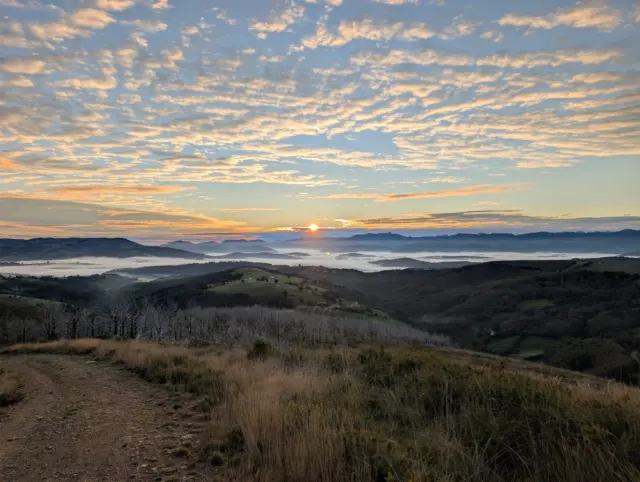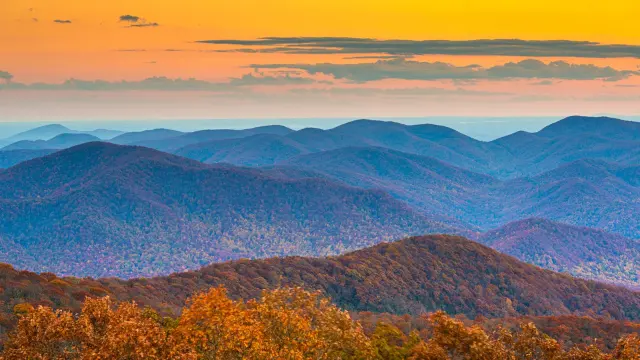
There's a version of Haute-Savoie that doesn't involve skis, summit fever or Chamonix crowds — and it works beautifully in summer, when the heat stays down in the valley and the mountain air turns cool by evening.
Start with the spa town of Saint-Gervais, where Alpine tourism began decades before anyone strapped on skis. A spring discovered in 1806 by local farmer Joseph-Marie Gontard turned out to be rich in minerals — water that, according to the thermal centre, fell as precipitation on Mont Blanc around 6,000 years ago before resurfacing. Early visitors stayed for weeks, and the demand they created led to the Tramway du Mont-Blanc, a red rack railway that opened in stages from 1909. Its long-delayed final stretch to the Nid d'Aigle at 2,372 metres has now opened, making it France's highest rack railway. You don't need to be a climber to enjoy it: from the new station there's an easy walk towards the Bionnassay Glacier, and the Refuge du Nid d'Aigle does a solid blueberry crêpe.
A different surprise awaits in the vineyards of Ayze, on steep slopes 450–600 metres above the Arve Valley. Here a handful of growers — only three professional producers remain — cultivate Gringet, an ancient grape found almost nowhere else. Domaine Belluard, now run by third-generation Nicolas Montessuit, works biodynamically, with sheep grazing among the vines. Ayze's producers famously refused to join Crémant de Savoie in order to protect Gringet, and their lightly sparkling, mineral wines are better for it. The village just earned Atout France's Vignobles & Découvertes label, and the terrain is easy to explore by e-bike.
Then there's Sixt-Fer-à-Cheval, where a limestone cirque funnels more than twenty waterfalls during snowmelt. Victorian mountaineer Sir Alfred Wills loved the place enough to build a chalet here, and the village's 12th-century abbey later became an inn for early tourists. The old tramline from Annemasse is long gone, but one of its tunnels now serves as a natural maturing cellar for Reblochon and Tomme cheeses.
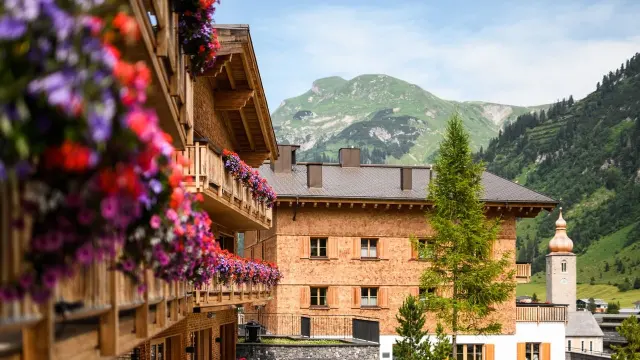
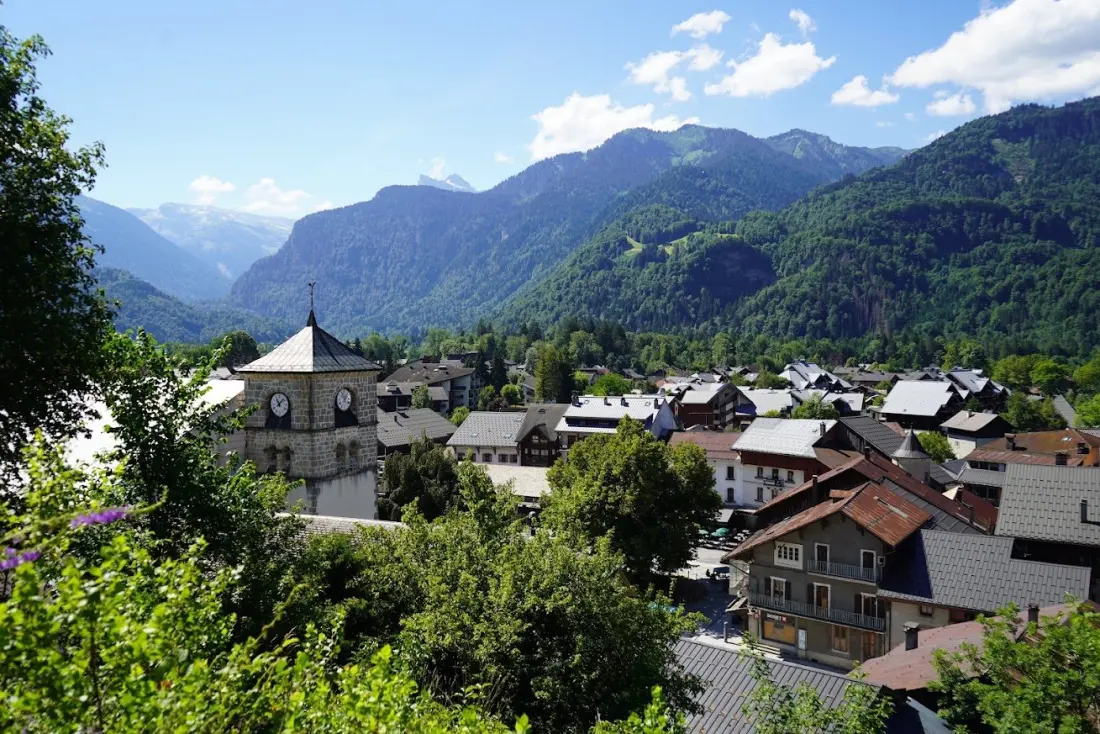
Base yourself in Samoëns, a village of stone fountains and slate roofs shadowed by the pyramid of Le Criou. Its stonemason tradition dates to the fifteenth century, and its hillside alpine garden — the Jaÿsinia, created between 1903 and 1906 by La Samaritaine department store founder Marie-Louise Cognacq-Jaÿ — marks its 120th anniversary this year with around 60,000 plants and a role as a climate research site. For an easy leg-stretcher, the five-kilometre return walk to La Bourgeoise delivers views across Mont Blanc, the Aravis and the Giffre valleys, with cowbells for a soundtrack.
And yes, you can still eat fondue in August. Several refuges above Samoëns serve bubbling Beaufort-Comté-Emmental pots on summer evenings, ideally finished with a café à la grolle — shared coffee passed around a carved wooden pot with multiple spouts. In a region better known for winter, summer turns out to be Haute-Savoie's quieter, more interesting season.