Two small French towns quietly changed the way the world sees itself. Chalon-sur-Saône in Burgundy gave us the first photograph; Lyon, 80 miles south, gave us the movies. A trip linking the two makes for a surprising culture trail through east-central France.
Start at the Musée Nicéphore Niépce on the riverbank in Chalon-sur-Saône, dedicated to the town-born inventor (1765–1833) who figured out how to 'fix' an image permanently. His breakthrough, which he called héliographie or 'sun writing', produced the famous Point de vue du Gras — a blurry courtyard view captured from an upstairs workshop at his family estate in nearby Saint-Loup-de-Varennes, with a bitumen-coated pewter plate exposed for hours, possibly days. The original now lives at the University of Texas, but the museum's Discovery Room tells the story superbly, with English translations throughout. The collection runs to 8 million images and 4,000 cameras, and it mixes amateur snaps with professional work to show how photography shaped society, not just technology. Niépce also teamed up with Louis Daguerre, whose daguerreotype became the first commercially available form of photography. For the full picture, detour to the Le Gras estate itself in Saint-Loup-de-Varennes, now a small museum on the authentic site.
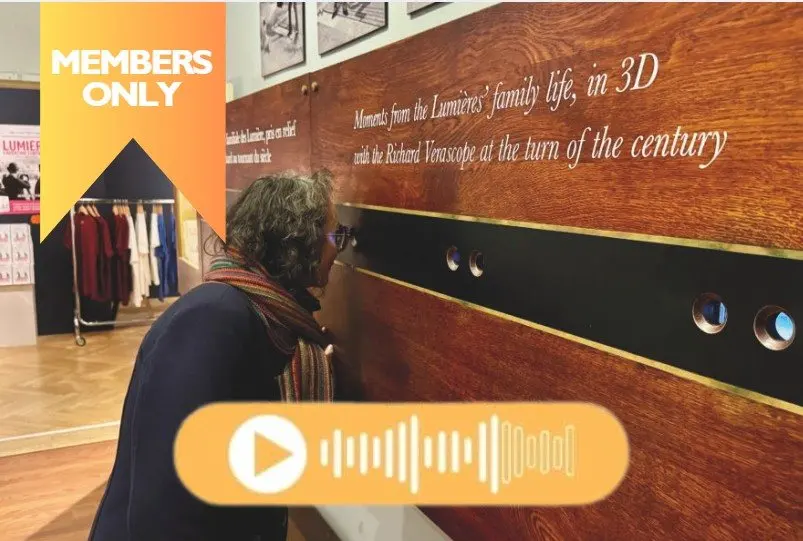
Then head south to Lyon — better known for its food, but a pilgrimage site for film lovers. The Musée/Institut Lumière in the Monplaisir district occupies the Belle Époque villa of Antoine Lumière, father of Auguste and Louis. Its centrepiece is Cinématographe No. 1, the mid-1890s three-in-one machine that recorded, printed and projected film — a leap beyond Edison's Kinetoscope. With it, the brothers shot the 46-second Workers Leaving the Lumière Factory in 1895, the first documentary and the first film publicly screened, wowing audiences at Paris's Grand Café. Their earlier hits included the Étiquette Bleue dry plates (developed when Louis was just 17) and the autochrome colour process, plus more than 1,400 short films. Don't miss the magic lantern display, the spinning zoetrope by Emilie Tolot, or the Mur des cinéastes wall of fame outside, signed by visiting directors from Clint Eastwood to Tim Burton and Justine Triet.
A short ride away, the Hangar du Premier Film marks the spot where that first film was shot — little of the original shed survives, but standing on the camera-position markers is a geeky thrill. Back in town, add the Musée Miniature for special-effects fans, and time a visit for October's internationally renowned Lumière film festival.
Why go? Because these aren't dusty memorial museums — the Lumière site, saved from demolition in the 1980s by director Bertrand Tavernier and critic Bernard Chardère, also runs a film theatre, exhibitions and France's biggest cinema bookshop. Anyone who has ever pointed a camera at anything will find the whole story began here, in French.
Original reporting by France Today.