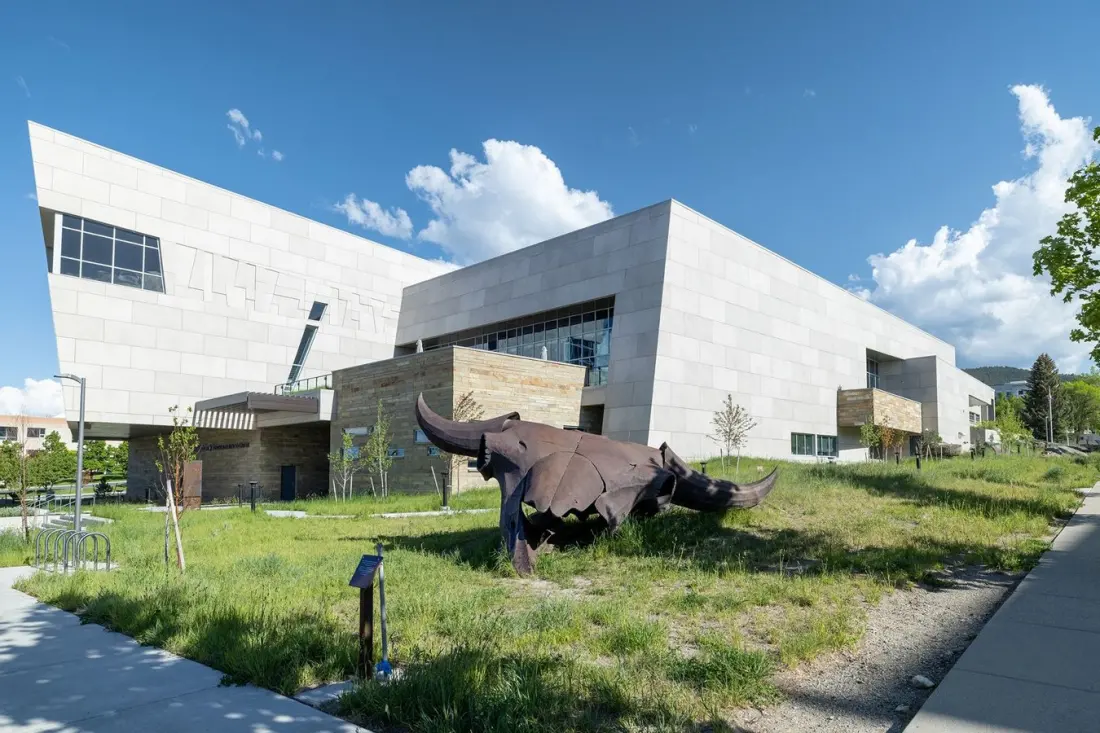
A small, windowless room just inside the entrance of the new Montana Heritage Center in Helena might be the most thoughtful part of the building. It's a smudge room — a space where members of Montana's 13 sovereign tribal nations can burn pine, sage, cedar or sweetgrass and waft the smoke over themselves before and after encountering items in the museum's collection. For many Native visitors, those objects aren't inert artefacts; they're living things, tied to ancestors and still holding energy, so cleansing on the way out matters as much as on the way in.
What makes this one unusual is that it's open to everyone. Other institutions have ceremonial spaces — the Smithsonian's National Museum of the American Indian keeps one at its Cultural Resources Center in Maryland — but those are typically reserved for tribal members by appointment. Here, the room sits in plain view, brightly lit, curved, built from natural materials with stones set into the floor and tactile wood strips on the walls, all backed by a powerful HVAC system that makes indoor burning safe. It doubles as an introduction for non-Native visitors: why such a room exists, and what smudging means.
The reason most museums don't have one comes down to money — ventilation and fire suppression for ceremonial burning is expensive — and to people. Architect Major Robinson, a Northern Cheyenne tribal member from Lame Deer who previously designed theme park attractions for Disney, Universal and Sanrio, was brought on as a cultural design liaison by architects Cushing Terrell. He championed the room and shaped the wider building around Indigenous values: curved walkways echoing natural forms, an entrance modelled on the arbour used for powwow dance circles, and the smudge room itself placed on the eastern side, since Plains tribes traditionally orient their lodges toward the rising sun. Construction began with a ground blessing rather than a groundbreaking.
The centre itself opened in December 2025 after a 20-year effort to renovate the 1950s Veterans and Pioneers Memorial Building, home to the Montana Historical Society since the agency's territorial origins in 1865. The project added 70,000 square feet to the 95,000-square-foot structure, with galleries drawing on vast archives, a Central Commons for markets and events, a café and an events centre. Among the draws: work by cowboy artist Charles M. Russell, who produced over 2,000 paintings and sculptures of the American West. Before the smudge room existed, ceremonies meant improvising outdoors or shutting down the fire suppression system and notifying state authorities — hardly a dignified arrangement.
For travellers, the centre is a reason to put Helena on a Montana itinerary, not just pass through on the way to Glacier or Yellowstone. It's also a window into why the state treats Indigenous history differently: Montana is the only U.S. state with a constitutional mandate requiring it be taught in all public schools, and the museum carries that spirit into its design. Whether you're drawn by Russell's art or the building's approach to living Native cultures, the smallest room is a good place to start.
Story first reported by Smithsonian Travel.