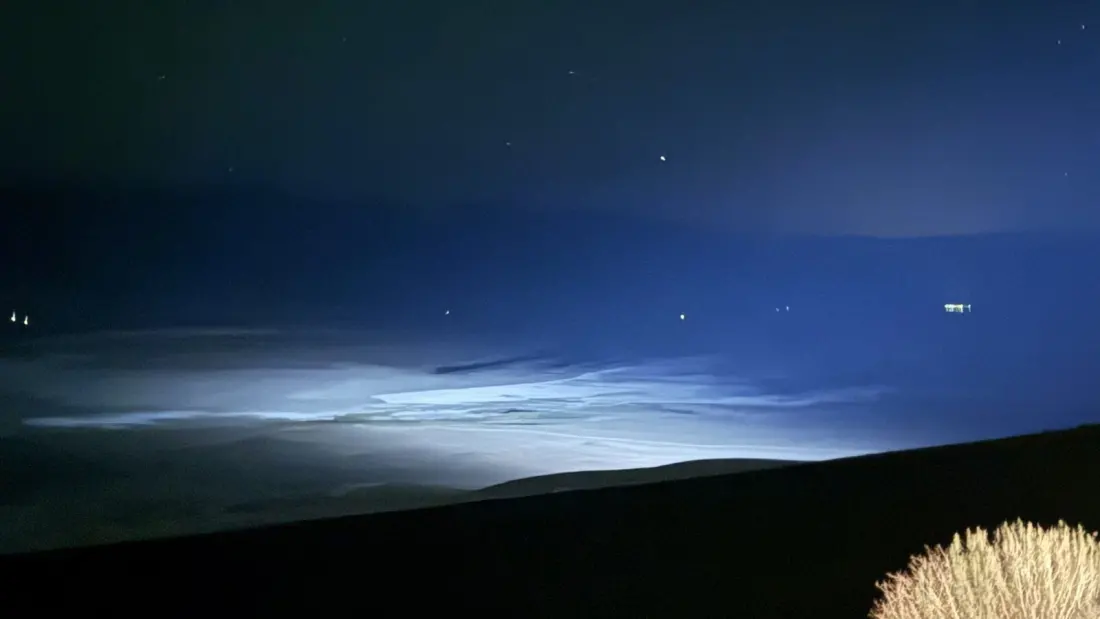
Picture a cone of light three miles wide and ten miles long suddenly flooding a pitch-black night in the foothills of Mt. Whitney. That's what a handful of volunteer rescuers experienced on a country road outside Lone Pine, California, during a field test run by Reflect Orbital — a Los Angeles startup that wants to put swarms of mirrored satellites in low Earth orbit to bounce sunlight to any spot on Earth, on demand. For this exercise, a ground-based floodlight stood in for the satellites, creating a light field roughly the size of Manhattan and about twice as bright as a full moon.
The company pitches its tech for agriculture, entertainment, defense — and, intriguingly, search and rescue. But the crews on the ground weren't sold. Teams from China Lake Mountain Rescue Group and Inyo County SAR ran grid searches, stretcher carries, and rope rigging twice: once in darkness, once under the giant light. Operations leader Phillip Cash admitted some ground-level perks — better peripheral vision, fewer rolled ankles — but the enthusiasm ended there. Glare wrecked night vision, something rescuers already guard against with hats. Helicopter crews rely on night vision anyway, so aerial search gains looked slim. And a subtle human problem emerged: a lost person seeing a massive light might decide to keep wandering alone, believing they can now find their way out.
Then there's the money. Reflect Orbital hasn't published pricing, but Sky & Telescope reported a ballpark of about $5,000 per hour, with multi-satellite constellations costing far more. Compare that to roughly $2,500 an hour to run an Airbus H125 helicopter — the type the Kern County Sheriff's Office already flies. Cash's blunt verdict: most California SAR teams are volunteer nonprofits funded by bake sales and donations; they simply can't pay for that.
The bigger story is what happens above. The FCC has cleared Reflect Orbital to launch its first functional satellite, and the company's stated plan would put 50,000 mirrors in orbit by 2035. DarkSky International, the dark-sky advocacy group that documents the night sky's value for stargazers and astrotourists, warns that even without acting as floodlights, that many reflective satellites would visibly brighten the night sky worldwide — with unknown consequences for migratory birds, insects, and anyone who travels for dark skies. Worryingly, the project has been allowed to proceed without a government environmental review.
Why should travellers care? If you plan trips around dark-sky parks, astrotourism destinations, or simply a night sky unmarked by human light, this technology could change what you see overhead by the mid-2030s. And for anyone who hikes or climbs in places like the Sierra Nevada, the people who would come looking for you have weighed the idea and found it mostly wanting. As Cash put it, rescue teams are already pretty good at working in the dark — daylight is best left to the daytime.