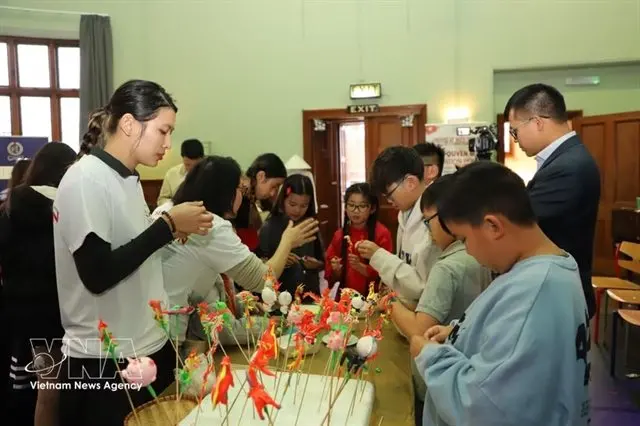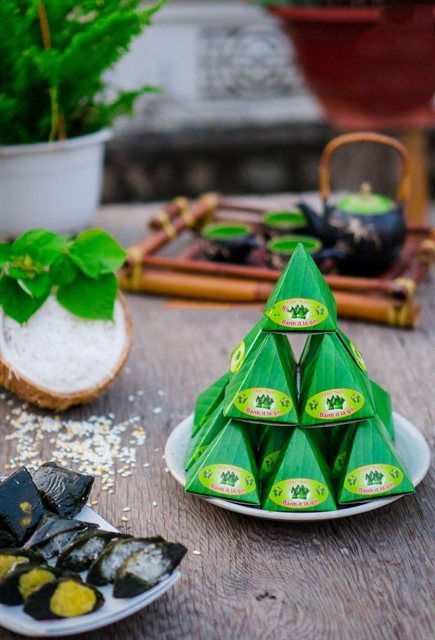
It doesn't look like much — a small, dark, pyramid-shaped bundle in a banana leaf. But bánh ít lá gai, the signature sticky rice cake of Vietnam's Gia Lai Province (which now includes the former Bình Định Province), keeps winning people over after the first bite. At a recent Gia Lai Days event in Hà Nội, one food writer nearly walked past the stall until a provincial official insisted they try it; the writer ended up taking several home and now asks travelling friends to bring some back.
The cake has royal folklore attached. One legend credits a daughter of King Hùng VI, who created it for the New Year festival by combining the wrapping style of bánh chưng with the ingredients of bánh dày. A second explanation ties the name — which translates roughly as 'little cake' — to wedding customs, where brides made small versions of every variation (wrapped or unwrapped, square, round or flat, filled with coconut or mung bean) as a modest gift for their parents and ancestors.
The making of it is a slow, hands-on process. Ramie leaves are boiled and ground in a stone mortar until their green turns black — that's what gives the cake its dark colour and distinctive flavour. Glutinous rice is ground into flour and mixed with the leaves and a boiled sugar syrup, while beans are soaked for hours, steamed, mashed with a touch of ginger and rolled into filling balls. The whole thing is wrapped in flame-softened banana leaves into little cones that deliberately echo the shape of the Chăm towers, an iconic symbol of the old Bình Định region, then steamed.
The result is chewy, fragrant and mildly sweet — best eaten with tea, whose bitterness balances the sugar. It's a fixture at Tết, death anniversary ceremonies and weddings: a local shopkeeper quoted in the story notes that a ceremonial tray can lack meat or fish, but never bánh ít. In marriage rituals, the bride's family presents it to the groom's family as proof of the bride's skill.
The good news for travellers: it's everywhere in the region. Markets and shops across the former Bình Định Province sell it for around 4,000–5,000 VNĐ per piece (roughly 15 US cents), depending on size and filling. Vendors say tourists routinely arrive to try one and leave with a stack — it's cheap, travels reasonably well and makes an authentic edible souvenir. The cake has even found overseas markets, with exports reaching Japan, where one visitor to the Hà Nội event was delighted to discover he could buy it at home.
For anyone heading to Vietnam's south-central coast around Quy Nhơn, this is exactly the kind of modest regional speciality worth seeking out: a few thousand dong, a cup of tea, and a direct taste of local tradition that predates the tourist trail.