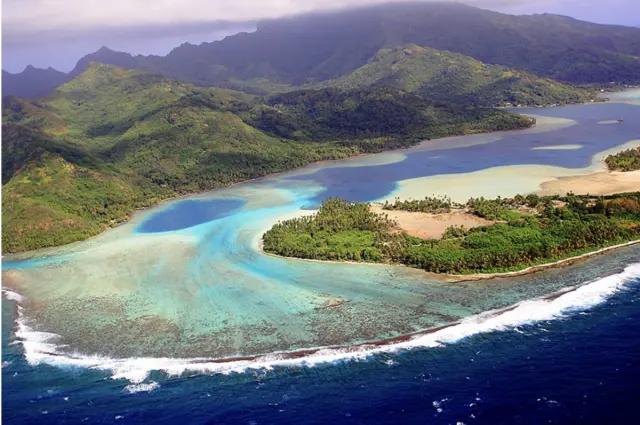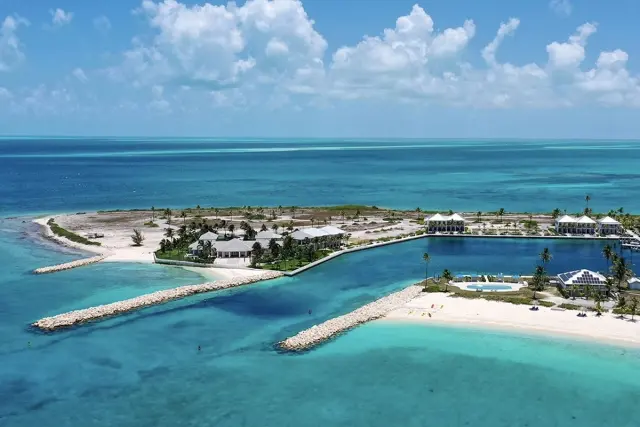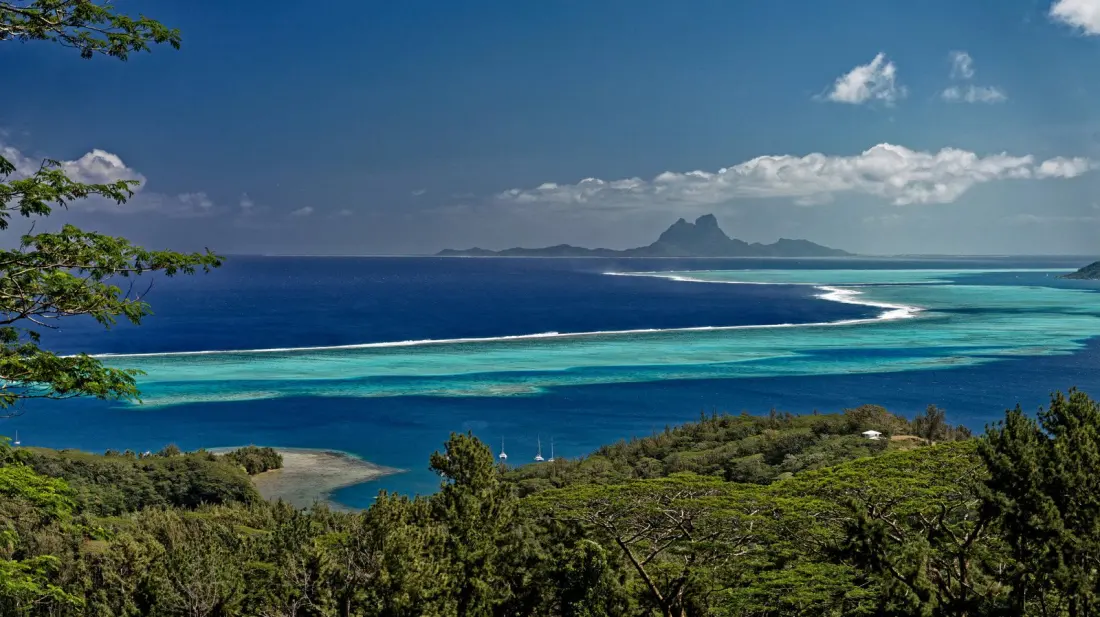
The waters around the Islands of Tahiti just got the strongest legal protection of any ocean zone on Earth. Tainui Atea, spanning roughly 1.9 million square miles across French Polynesia's five archipelagos, was formally designated a Marine Protected Area at the United Nations Ocean Conference (UNOC3) in 2025. First set up as a managed area in 2018, the upgraded status legally restricts human activity across nearly the entire territory's Exclusive Economic Zone - 200 nautical miles out from land, over an area roughly the size of Europe.
The rules matter in practice, not just on paper. Industrial fishing is banned in fully protected zones, seabed mining is prohibited everywhere in the MPA, and some lagoon and coastal waters are reserved for traditional, small-scale fishing only. French Polynesian president Moetai Brotherson framed it as both ecological sovereignty and a message to the wider world: the ocean here is, in his words, the source of life, culture and identity.
For travellers, this is why the diving and snorkelling in Tahiti and her islands keeps getting better rather than worse. The territory shelters 21 shark species, several of them threatened or endangered - scalloped hammerheads, oceanic whitetips, blacktip reef sharks - and sharks hold cultural weight locally as tāura, totem animals representing ancestors and protectors.
Where to actually see them: Rangiroa, the region's largest atoll lagoon, draws scalloped hammerheads to its Tiputa Pass during mating season from January to March, with manta rays taking over from roughly July to October. Fakarava, with its calm lagoons, offers chances at tiger, great hammerhead and lemon sharks alongside dense coral and fish life.
Not dive-certified? Plenty is accessible from the surface. Reef sharks are commonly spotted while snorkelling, sometimes right from the beach. Moorea, Tahiti's sister island, is the place for humpbacks: whales migrate from Antarctica to calve and breed there between July and November, and the sheltered bays also host sea turtles. Moorea is also home to the Garden of Roses, an underwater field of rose-shaped corals at depths of 70 to 140 feet - one for scuba divers only.
Easier still is the drift snorkel off Taha'a, known as the Vanilla Island, where you float on the current past vivid corals and reef fish into the lagoon. Many islands have coral gardens reachable by boat tour or straight from the sand. One etiquette note locals would thank you for: pack reef-safe sunscreen, since the healthiest reefs in the world are the whole point of the place.
Tainui Atea isn't just a conservation headline - it changes what a trip to French Polynesia feels like. You're swimming in waters where industrial fishing and seabed mining are legally locked out, and where sharks, whales and corals are actively protected rather than merely tolerated. For divers, snorkellers and wildlife lovers, the Islands of Tahiti are now arguably the most compelling marine destination in the South Pacific.