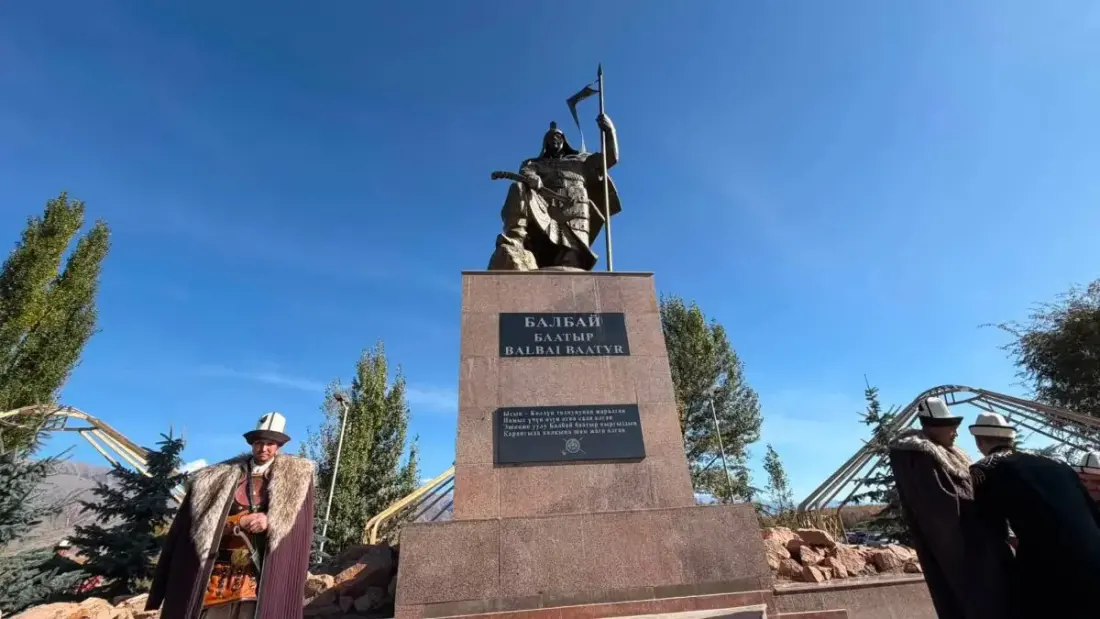
A bronze-and-stone reason to linger a little longer on Kyrgyzstan's most famous lake: a monument to the folk hero Balbai Baatyr was unveiled on October 18 in Tyup district, on the northern shore of Lake Issyk-Kul.
The ceremony drew local residents and national figures, including Akylbek Tumonbaev, who leads the Eldik parliamentary group in the Zhogorku Kenesh. Tumonbaev, who championed the project from the start, used his address to talk about Balbai Baatyr's place in Kyrgyz history — his reputation for bravery and patriotism — and argued that remembering figures like him is how a country passes its story down the generations. Locals in attendance credited him with getting the monument built.
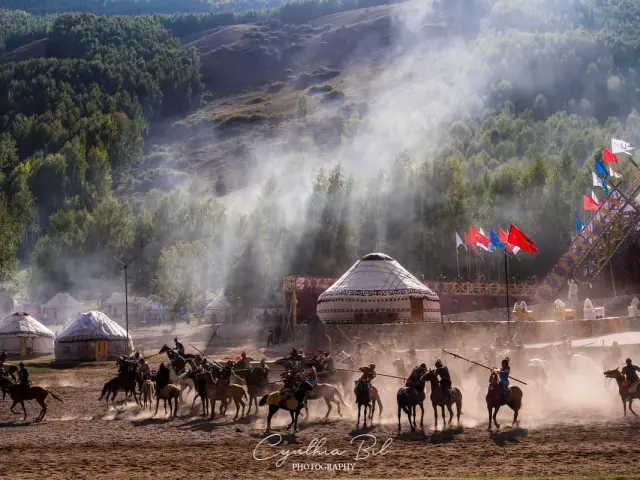
But the day wasn't only about speeches and statuary. Alongside the unveiling, organisers staged a national-level aitysh — a traditional contest between akyns, the improvising poet-musicians who hold a near-legendary status in Kyrgyz culture. Dozens of performers took part, competing in improvised poetic duels that can shift from humour to philosophy in a couple of verses. It's an art form recognised by UNESCO as intangible cultural heritage, and it's still very much alive in the country's rural regions.
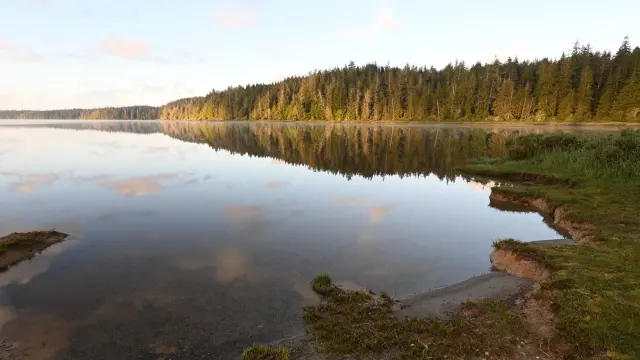
For travellers, the timing is interesting. Issyk-Kul is already Kyrgyzstan's headline attraction — the world's second-largest alpine lake, ringed by snow-capped peaks and dotted with sanatoriums, guesthouses and Soviet-era resort towns like Cholpon-Ata. The Tyup district, closer to the eastern end of the lake near the Kazakh border, sees far fewer foreign visitors. A new heritage site there gives independent travellers a fresh excuse to loop around the lake's quieter side, where villages, orchards and horse pastures sit close to the water.
Who is this for? Anyone travelling Kyrgyzstan in spring or summer, particularly those doing the classic Issyk-Kul circuit by marshrutka or hired car. If you're interested in the country beyond trekking routes and yurt camps, the monument plus the living tradition of aitysh — still performed at festivals across the region — offers a genuine window into how Kyrgyz history and identity are kept alive. Pair a stop in Tyup with the nearby barrows and rock carvings scattered around the lake's eastern shore, and you've got a day that most tour itineraries skip.
The unveiling is a small story, but a telling one: Kyrgyzstan is actively investing in markers of its own heroes, and visitors who catch the region at the right moment may find ceremonies, competitions and celebrations that weren't in the guidebook. Story credit: 24.kg.