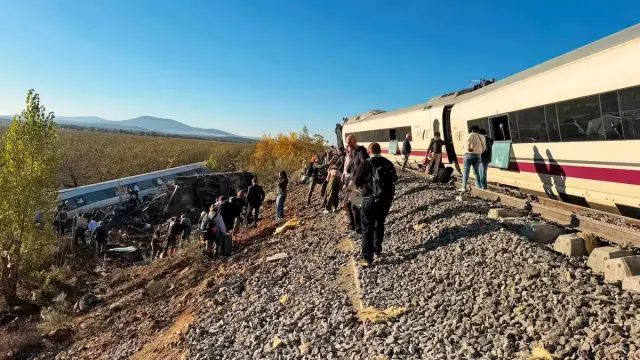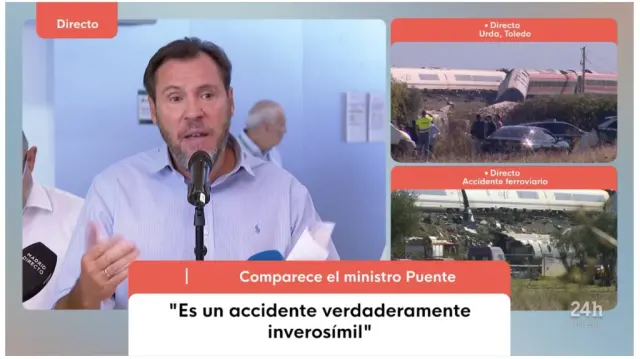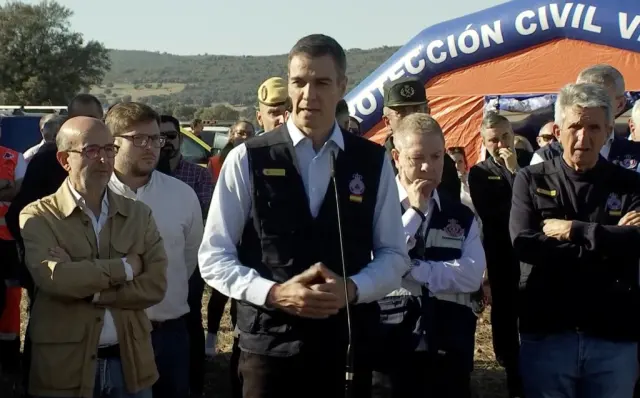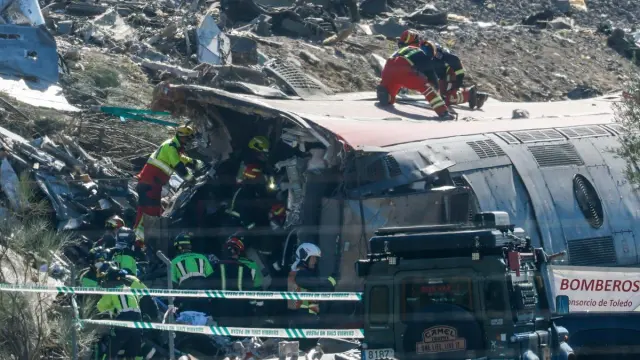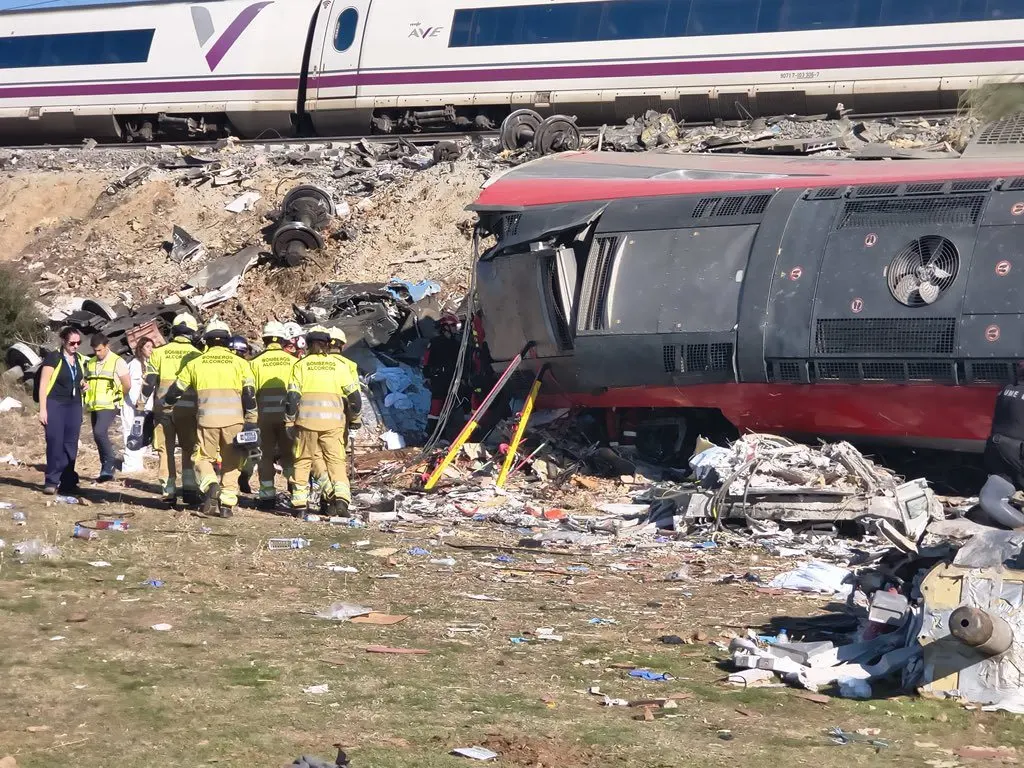
Newly released radio recordings have shed light on the moments before the high-speed train crash near Urda, in the province of Toledo, that killed at least 68 people and injured more than 50.
According to audio obtained by Spanish broadcaster RTVE, Adif's Atocha control centre instructed the driver of the Iryo train to resume movement. Shortly afterwards, the Iryo driver contacted the control centre to report the train could not restart — it was still stationary on the line.
In a separate exchange, the controller told the driver of the approaching RENFE AVE, travelling on the same high-speed corridor behind the stricken Iryo, to switch off and reconnect the train's systems and then "resume normal running". The AVE went on to collide with the stopped train from behind.
The recordings suggest the control centre was treating the situation as a routine restart rather than an emergency blockage, raising serious questions about how the outage was managed on one of Spain's busiest high-speed routes. The collision site lies on the Madrid–Andalusia high-speed line between Atocha station in Madrid and points south, a corridor used daily by thousands of commuters, business travellers and holidaymakers heading to cities like Córdoba, Seville and Málaga.
Spanish media outlets including RTVE and El País have been publishing the audio as the investigation continues, and further detail about signalling procedures, train system faults and responsibility is expected to emerge in the coming weeks. For now, travellers using the Madrid–south high-speed network should expect ongoing disruption, timetable changes and possible replacement services while checks and investigations run on the affected stretch of track.
For anyone planning rail travel in Spain, the practical takeaway is to check Renfe and Adif service updates before booking or travelling on the Madrid–Andalusia corridor, and to allow extra time or consider alternative connections. High-speed rail remains the fastest way between Madrid and southern Spain, but this incident is a stark reminder of how quickly schedules can be thrown into disarray when something goes wrong on a single line.
This story sits firmly in the traveller category: anyone with a trip to Toledo, Madrid or Andalusia on the books will want to follow developments, and those already holding tickets should watch for operator notifications. As the inquiry establishes what went wrong, safety changes on Spain's high-speed network could affect procedures and journey times more broadly. Original reporting and audio: Spain in English, drawing on RTVE and El País.