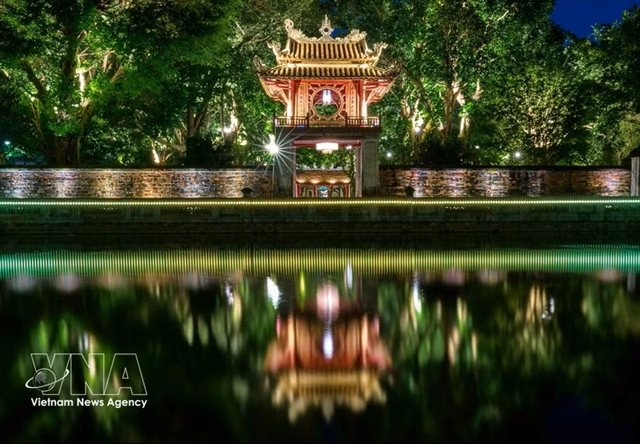
Hanoi's Văn Miếu – Quốc Tử Giám, better known to travellers as the Temple of Literature, is marking 950 years since it was founded in 1076 under King Lý Nhân Tông. That makes it Vietnam's first public university and the highest seat of learning in the feudal era, charged with training the scholars who ran the state. Its anniversary has prompted historians to reflect on what the site still teaches — and its UNESCO-listed stone steles remain one of the most compelling things to see in the Vietnamese capital.
The complex served as the imperial academy through the Lý, Trần, Lê and Nguyễn dynasties, and its story is written in stone. A collection of 82 steles records the names of men who passed the rigorous civil service exams, including a famous 1484 inscription honouring the 1442 doctoral cohort. It urges successful scholars to pair learning with integrity and public service — essentially an ethics code carved in rock. The steles were added to UNESCO's Memory of the World Asia-Pacific register in 2010, the international register in 2011, and declared national treasures in 2015.
Historians marking the anniversary point out that meritocracy here went beyond exam halls. Vietnamese folklore — tales of Saint Gióng, Sơn Tinh – Thủy Tinh, Lang Liêu — long celebrated wisdom and skill, and in 1428 King Lê Lợi issued a nationwide call for talent to help rebuild the country after expelling the Ming. That respect for learning lives on today: students still visit the temple before exams to pay their respects, a living tradition you can witness on any weekday morning.
For visitors, the site rewards a slow walk. Expect serene courtyards, the Khải Thánh pavilion, turtle-backed steles mounted on stone tortoises, and often students in traditional dress posing for graduation photos. Calligraphy sessions and cultural activities are frequently on offer, and the quiet grounds make a welcome contrast to Hanoi's frantic Old Quarter just nearby.
Why does this matter to a traveller? Because the Temple of Literature isn't just photogenic — it's the clearest window into how Vietnam came to prize education so fiercely, a trait you'll notice everywhere from classroom banners to the country's strong showing at international academic Olympiads. Come with a bit of context and 950 years of history click into place.