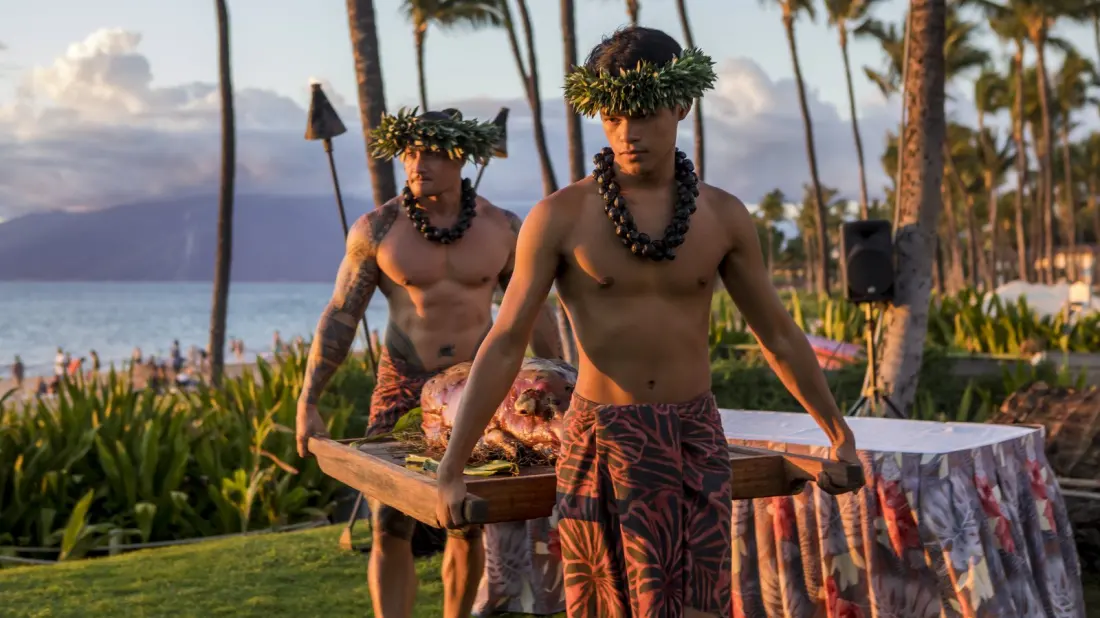
A luau is often the centrepiece of a Hawaii trip — the lei greeting, the kalua pork, the fire dancers. But arriving at one unprepared is how well-meaning mainland visitors end up accidentally breaking etiquette within minutes of walking in.
The first slip is timing. The advertised start time is not when you should show up. Most commercial luaus — from Aulani's KA WA'A on Oahu to the Mauka Warriors Luau — run pre-show activities like hula lessons, Polynesian games, and the umu, a ceremonial blessing of the food. Arrive roughly an hour early to catch these; even 30 minutes early is the standard advice for Maui's Old Lahaina Luau. Ticket tier matters too: at the Island Breeze Luau, Ali'i ticket holders are seated 15 minutes ahead of Ohana ticket holders.
Dress is the next stumbling block. A luau isn't formal, but it's also not an extension of your pool day. Think upscale beachfront restaurant rather than swimwear: sundresses, maxi dresses, or a decent floral shirt with linen trousers. Skip heels — you'll be on grass or sand — and absolutely leave the coconut bras and grass skirts at home. This is a celebration of living Polynesian heritage, not a costume party.
When you're greeted with a lei, treat it as more than a photo prop. Giving and receiving a lei expresses welcome, honour and affection in Hawaiian culture, so pause, say "mahalo," and keep it on all evening. Photos are fine at commercial luaus — the gesture just shouldn't be treated as a novelty.
Seating is usually assigned, either at booking or by section on arrival, so don't claim an empty table at random. Some guests swear mid-section tables facing the stage beat pricier VIP seats, while others find VIP tiers at venues like Drums of the Pacific worth the extra cost for the simplicity.
Food allergies need flagging at booking, not at check-in. Hawaiian and Polynesian dishes frequently involve shellfish, soy, sesame, nuts, and peanut or sesame oil, and buffet serving utensils add cross-contamination risk. Call ahead, pick the luau best equipped to accommodate you, and remind staff on arrival.
Finally, respect the opening ceremonies and the dancing. An oli (chant) or pule (prayer) often opens the evening — sit down, stay quiet, put the phone away. And don't call every Polynesian dance "hula"; the traditions are distinct, and lumping them together reads as careless to performers and locals alike.
For anyone booking a luau this year, the theme is simple: treat the evening as a cultural event you've been invited to, not a beachside show you've paid to consume. Arrive early, dress with a little care, and ask staff if you're unsure — they're generally delighted to explain what's happening.