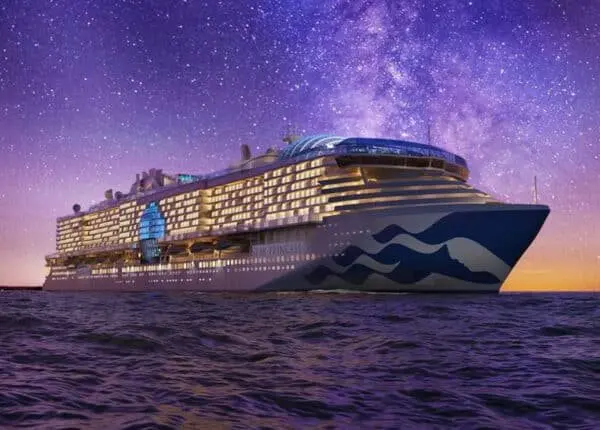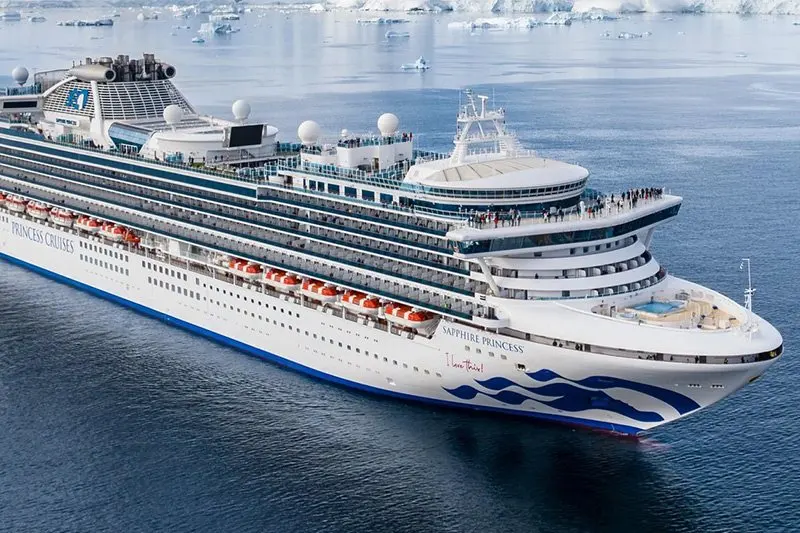
If you've ever wondered what happens to a cruise ship when the season ends, here's a nice example: the Sapphire Princess has waved goodbye to Canada and New England and is now working its way to Asia on a two-stage repositioning voyage that doubles as a genuinely appealing itinerary.
The first leg is a 16-night Panama Canal sailing from Fort Lauderdale to Los Angeles, with a full transit of the canal. Along the way the ship stops at ports across the Southern Caribbean and Central America, including Oranjestad in Aruba, Puntarenas in Costa Rica and Puerto Chiapas in Mexico — a tidy mix of Caribbean beach time and Pacific-coast Central America in one trip.
From Los Angeles, things get longer. The second stage is a 19-night transpacific crossing that hops through Hawaii before finishing in Tokyo. That means five Hawaiian ports in one itinerary: Kahului on Maui, Hilo and Kailua Kona on the Big Island, Honolulu on Oahu, and Nawiliwili on Kauai. Repositioning cruises are often the best value per night in the business precisely because they're one-way, unhurried and port-rich, and this routing is a textbook case.
Once in Japan, the Sapphire settles in for a Southeast Asia season alongside its sister ship, the Diamond Princess. The winter deployment opens with a 14-night cruise from Tokyo to Singapore, calling in Japan, Hong Kong and Vietnam. Across Princess's 2026-27 Asian season, the 2004-built ship will run roughly 20 cruises to 37 destinations in ten countries, sailing through early March before heading back to Japan for the summer.
With both Princess ships based in the Far East, the line will double its regional capacity: 78 departures from Japan across 50 itineraries lasting anywhere from seven to 28 days. Cherry blossom sailings and festival-themed cruises are on the menu, and beyond Japanese ports the schedules take in South Korea, Taiwan and other destinations across five countries.
Why does this matter to travellers? Two reasons. First, if you've been sitting on the idea of a Panama Canal transit or a slow crossing to Asia, these specific sailings are your window — repositioning ships don't repeat these routes. Second, the expanded Japan-based programme means far more choice for anyone eyeing an Asia trip in 2026-27: longer itineraries that string together Japan, Korea, Taiwan, Hong Kong and Vietnam without a single flight change in between, plus spring sailings timed for cherry blossom season. Repositioning fares are typically priced lower per day than standard cruises, so the Panama and Hawaii legs are worth watching for deals. Just remember you'll need to sort your own flight home from Tokyo or Singapore — that's the trade-off for the one-way format.