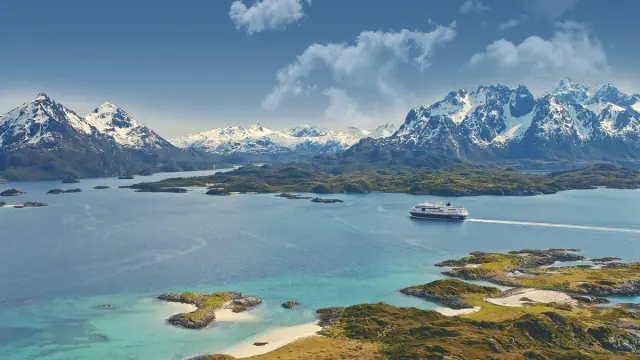
Norway has more than a thousand fjords, so picking ten favourites is a bold move — but that's exactly what travel site Life in Norway has done, and the resulting list is a genuinely useful planning tool. The ranking rewards variety rather than one-size-fits-all fame: there's a fjord for hikers, one for slow road-trippers, one you can reach on a city bus, and one best experienced in twenty jaw-dropping minutes from the deck of a coastal steamer.
At the classic end sit the Geirangerfjord and Nærøyfjord, the postcard landscapes of sheer cliffs and waterfalls most first-timers imagine. The Nærøyfjord and neighbouring Aurlandsfjord are branches of the Sognefjord — Norway's longest and deepest, stretching over 200km inland with water more than a kilometre deep in places. The Sognefjord only lands at number nine precisely because it's too big to be a single attraction. The author's advice: treat it as a week-long region rather than a photo stop, hopping between villages like Balestrand and Lærdal by boat and road, with the UNESCO-listed Urnes Stave Church and the book town of Fjærland thrown in.
The Hardangerfjord, Norway's second longest, rates higher for independent drivers. It pairs fjord scenery with fruit-growing country — blossom in spring, cider and apples later in the year — plus the Folgefonna glacier, the Sørfjord branch towards Odda, and the famous Vøringsfossen waterfall. Fair warning on Trolltunga: it's a demanding mountain hike, not a stroll from the car park.
Further north, the list gets more surprising. The Nordfjord around Olden and Loen combines glacier walks to Briksdalsbreen, the Loen Skylift cable car up Mount Hoven, and the green mountain-ringed lake Lovatnet. The tiny Trollfjord, wedged between Lofoten and Vesterålen, is barely a few kilometres long but delivers pure theatre — a narrow entrance framed by steep mountains that Hurtigruten and Havila ships squeeze into when conditions allow, often with sea eagles overhead.
Two entries challenge assumptions. The Aurlandsfjord, home to Flåm and the famous Flåm Railway, is among the easiest dramatic fjords to reach by public transport — just plan around cruise-ship crowds, or stay in quieter Aurland itself. And at number ten, the Oslofjord: geologically and visually nothing like the western fjords, but a great introduction to Norwegian outdoor life. Public ferries from central Oslo reach islands like Hovedøya, with swimming spots, woodland trails, a medieval monastery's ruins and views back to the city. The charming town of Drøbak makes an easy day trip south.
The article's most practical point might be its closing one: don't reroute a good itinerary to chase a higher-ranked fjord. Spectacular fjord scenery is everywhere in Norway, and the Hjørundfjord — praised for being overlooked — proves you don't need the biggest name for a memorable trip. For first-timers, the sweet spot is the Flåm and Nærøyfjord area; for road-trippers, Hardanger; for something quieter, Hjørundfjord or the Sognefjord's quieter arms.