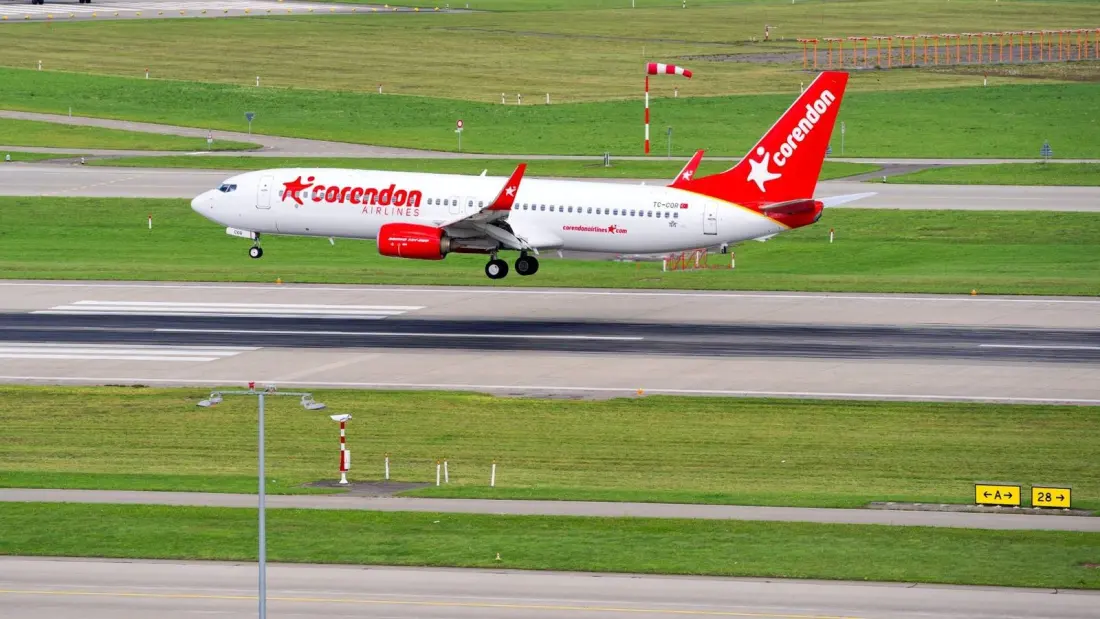
A routine holiday flight from Corfu to Nuremberg turned into a full-blown security operation on Tuesday, after the crew's Boeing 737-800 briefly transmitted the transponder code 7500 — the international signal for a hijacking — while still climbing out of the Greek island.
Corendon Airlines flight XR456 departed Corfu at 11:05 AM local time. Thirteen minutes into the climb, the squawk code switched to 7500, and around the same time air traffic controllers lost radio contact with the cockpit. German police later explained that the combination triggered multiple alarm scrambles, and Eurofighter Typhoons were sent up to shadow the aircraft for the rest of its journey.
According to the airline, the whole thing came down to a radio malfunction that accidentally set off the code. German authorities weren't willing to bet on that, though. Nuremberg Airport was closed while the jet approached, and the 737 touched down at 12:16 PM — just one minute behind schedule — with the fighters peeling off once it was safely down.
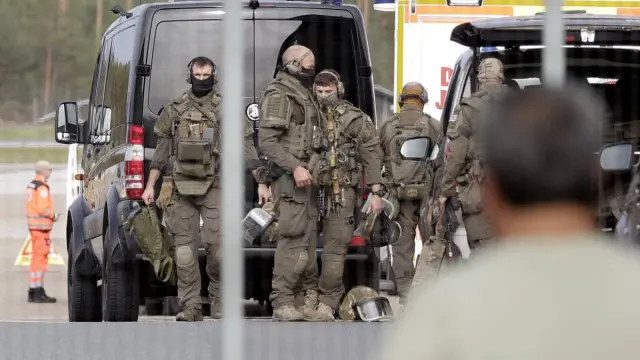
That wasn't the end of it. Police carried out on-site inspections of the aircraft before declaring there was no danger, and passengers only got off the plane at 1:33 PM, more than an hour after landing. The aircraft itself, registration 9H-CXD, was due to continue to Gran Canaria at 2:00 PM and faced a significant delay.
The closure rippled through the rest of Nuremberg's Tuesday schedule. By late afternoon, Flightradar24 counted 35 delayed flights and three cancellations at the airport, with a disruption index score of 3.4 out of five. Several inbound services diverted elsewhere: a Marabu flight from Mallorca landed in Stuttgart, another Corendon flight from Mallorca went to Munich, a Wizz Air service from Cluj diverted to Memmingen, and a Ryanair flight from Girona ended up in Prague.
Why should holidaymakers care? Squawk 7500 events are rare, but when they happen the consequences for travellers are very real — armed escorts, airport closures, hours stuck on board while police sweep the aircraft, and diversions that can leave you a couple of hundred kilometres from where you booked to land. If you're flying into a smaller European airport during peak summer season, a single incident like this can scramble an entire afternoon's schedule, so it's worth keeping an eye on your flight status and knowing your rights on delays and reroutes. For passengers on diverted flights, the nearest alternative airport isn't always close — the Girona flight ended up in another country entirely.
The good news is the system worked: a potentially alarming signal was treated seriously, the aircraft landed safely, and everyone disembarked unharmed. Occasional disruption is the price of that caution.