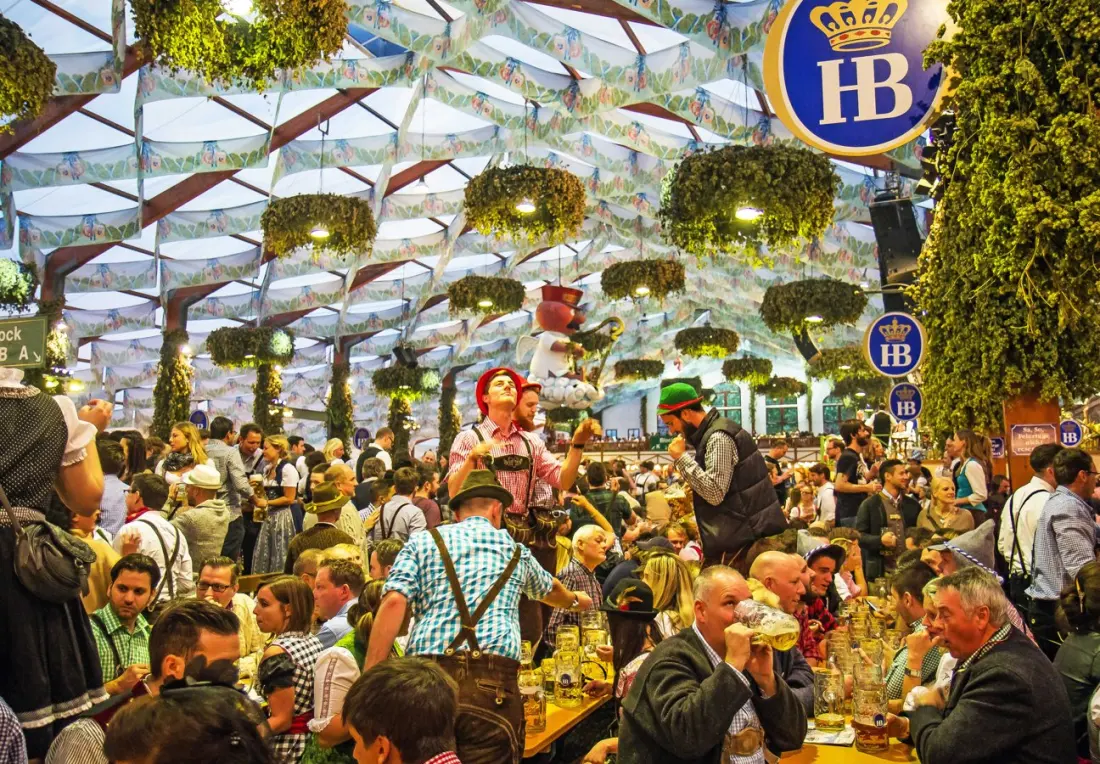
Before the giant tents and litre-sized glass mugs, Oktoberfest was a wedding party. In October 1810, Bavaria's Crown Prince Ludwig married Princess Therese of Saxe-Hildburghausen, and the celebrations wrapped up with a horse race on a Munich meadow named after the bride — the Theresienwiese, still the festival's home today. More than two centuries later, that origin story is a surprisingly good blueprint for a fall gathering at home.
The royal roots explain a lot. The wedding table featured bread, mutton, sausages, beer and Austrian white wine, and the event doubled as a unity exercise: Bavaria had just absorbed Franconia (home to Nuremberg), so the party helped knit a shared regional identity. An agricultural show joined in 1811, and over the 19th century food stalls, amusements and ever-grander beer halls turned a royal do into a public festival. By 1898, showman Georg Lang had combined five stall plots into a 2,000-square-metre tent seating 6,000. The festival also shifted into September for warmer, longer days — the modern event runs mid-September to early October despite its October name.
For hosting, the details matter more than the clichés. Dress the table in Bavaria's blue and white — plates, napkins, a runner — push tables together so plates can travel, station drinks separately, and put on Bavarian brass music. Dirndls and lederhosen are optional; the dirndl itself started as practical farmwear before Alps holidaymakers turned it into fashion in the 1930s.
The menu should go beyond sausages and pretzels — though those are legitimately the street food of Bavaria. In the 1870s the festival had 30 cheese stalls and 20 sausage stalls alongside fruit, sweets and fried pastries. Roast chicken is the sleeper hit: guests once brought their own birds to festival stands for roasting, and it only became a signature dish after WWII. Build a menu around herb roast chicken, bratwurst and soft pretzels with mustard, plus weisswurst cooked per packet instructions (not grilled) with radishes, pickles and sauerkraut. Vegetarians have old-school options too: cheese spaetzle — essentially German mac and cheese — mushroom dumplings in cream sauce, potato soup, and sauerkraut strudel. For sweets, think candied almonds, cake, and heart-shaped gingerbread cookies kids can decorate themselves.
Beer deserves its own moment. The golden festival lager is a recent invention: early drinkers had ordinary pale and dark beers, and the stronger Vienna-style pours arrived in the late 1800s. Munich's Augustiner brewery only developed a pale festival beer in 1953, and the style took off in the 60s and 70s. Run a tasting flight — Amber Märzen, Pale Festbier, Helles, and cloudy wheat beer — with small pours and identification cards. Stateside, Sierra Nevada's Oktoberfest collaboration with Bavaria's Hoppebräu is a biscuity 6% ABV Festbier worth seeking out.
Round it out with brass-band tunes, lawn games, and maybe a folk-costume contest — this year fairground culture was even added to Germany's National Register of Intangible Cultural Heritage. Do the cold sides the day before and keep the chicken, sausages and pretzels warm as guests arrive.
Who's it for? Anyone who loves the idea of Oktoberfest but not the crowds or airfare — one long table, a roast chicken and a good lager get you most of the way there.