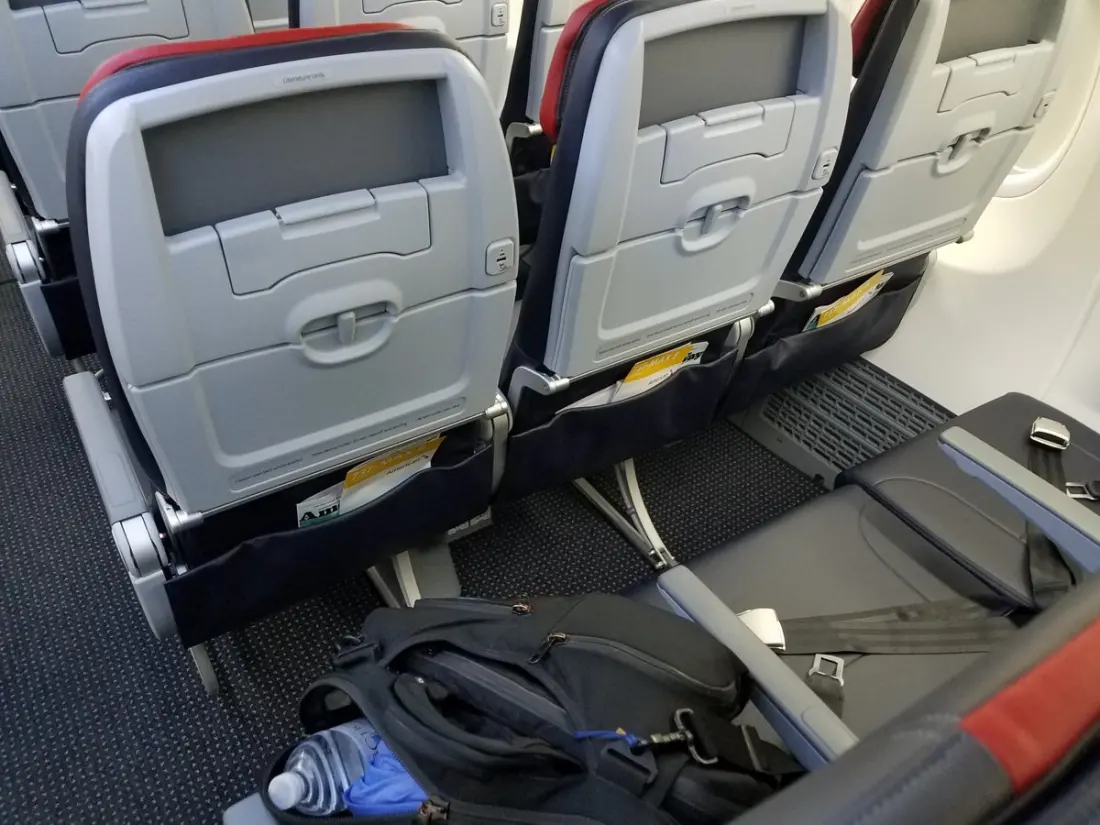
A passenger who paid extra for a more comfortable seat on an American Airlines flight says she ended up pinned against a neighbour who spilled well past the armrest into her space — and that he repeatedly touched her during the flight. She says cabin crew declined to intervene. Her account, posted on X by commentator Breanna Morello, racked up more than 15 million views.
What makes the story resonate is that the airline already has a policy covering exactly this. American requires anyone who cannot travel comfortably in a single seat to book a second one, either two adjacent seats at the same fare, a premium cabin seat with enough room, or a second seat arranged at the airport. If no extra seat exists on the flight, the airline says it will rebook you on another departure and honour the original price. When View from the Wing asked American about enforcement back in 2018, the described trigger was needing a seat belt extension that extends more than an inch past the outermost edge of the armrest. American's contract of carriage separately covers behaviour, dress and offensive odour — with an exception for odour caused by disability or illness — so the other complaints in this incident fall under existing rules too.
It keeps happening. The same outlet has reported an American passenger stuck for three hours contorted in a middle seat because his neighbour didn't fit, and another in 2024 who lost more than half his seat on a full flight and received a canned response to his complaint. Delta's policy is more explicit: it encourages passengers to arrange seating in advance, can move or upgrade an affected traveller, may rebook a full flight, and reserves the right to charge for all seats a person occupies.
So why don't the rules get enforced? Front-line staff have clear incentives to look the other way. Gate agents juggling boarding, bags and standby lists have little time for a sensitive conversation about whether someone fits — and any delay or complaint lands on them personally. Letting the passenger board simply transfers the cost to whoever ends up in the adjacent seat. Without firm standards and backing from management, avoiding the awkwardness is the easy call.
For travellers, the takeaway is practical. If you buy a specific seat, you're paying for that space, and a neighbour encroaching on it means you're not getting what you paid for. If you know you'll need more room, book two seats in advance rather than gambling on the day — and consider carriers whose policies on seating are spelled out more clearly. Some argue airlines should hand out free extra seats, but that just spreads the cost across everyone else's fare. A cleaner fix, as the piece suggests, is making it easy and normal to buy two adjacent seats at booking, with the airport alerted that both are taken. Space is a product; passengers should be able to purchase exactly the amount they need.