Beneath an ordinary street corner in the 14th arrondissement, a few steps from the Denfert-Rochereau metro, sits one of the largest ossuaries in the world. Around 550,000 people a year file into the Paris Catacombs, and opinions are split: some come out calling it the highlight of their trip, others wonder what the queue was for. Here's what you're actually signing up for.
First, a bit of backstory. These aren't ancient burial chambers. They're limestone quarries — the same stone that built much of Paris. By the late 1700s the city had a problem: the tunnels were causing street collapses while cemeteries above ground, notably Saints-Innocents (closed in 1780 after nearly ten centuries of use), had become a health hazard. From 1785, bones were transferred into the quarries at night, a process that ran in stages until 1860 and left millions of people resting below the streets.
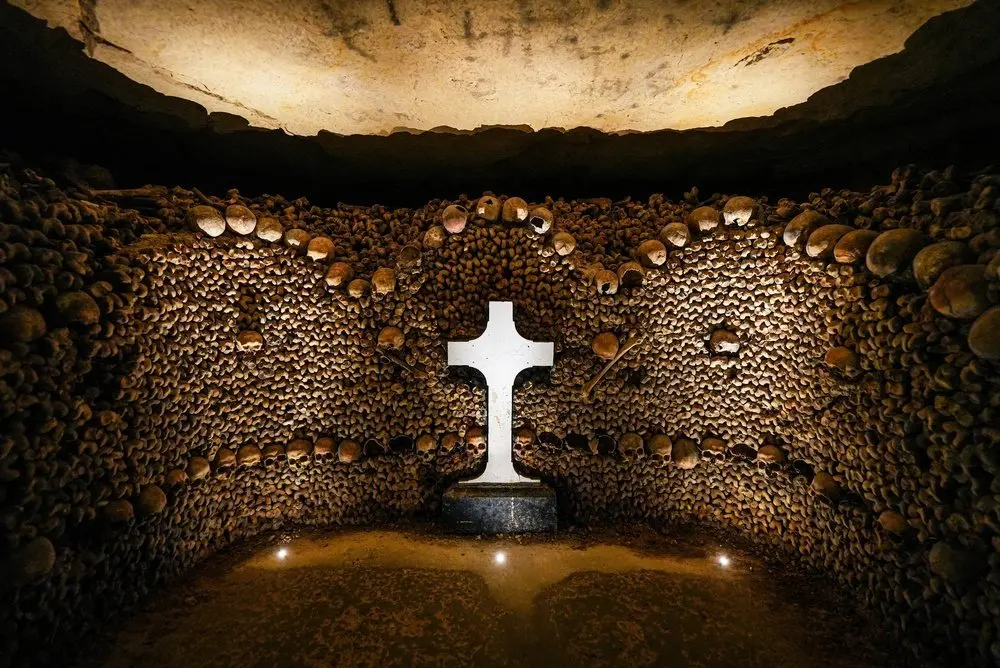
What strikes most visitors is the presentation. In the early 1800s, quarry inspector Héricart de Thury had the bones arranged deliberately: long bones stacked into neat walls with rows of skulls set into them, plus stone columns, altars and plaques. Over the entrance to the ossuary, carved words read "Stop! This is the empire of death." The site was designed to be toured — public visits began by appointment in 1809 — and the included audio guide is narrated in de Thury's voice.
The practical details matter here. The visitor route is about 1.5 km, 20 metres below street level, and takes 45-60 minutes. It's one-way, so no turning back once you're down. Expect 131 descending and 112 ascending steps, no elevator, uneven floors and low light. Tickets are timed and capped at 200 people underground at a time, with official releases only seven days ahead — book early. Adults pay €31 (audio guide included), under-8s go free. The site is closed Mondays and stays at a steady 14°C year-round, making it a genuinely good option for an August heatwave or a rainy January day. Rules are strict: no bags over 40 x 30 x 20 cm, no luggage, no touching the bones, no flash. And note the exit is nearly 700 metres from the entrance — meet anyone waiting on Avenue René-Coty.
Who is this for? If you like history with a bit of edge, have done the Louvre already, or want something you'll still be discussing over dinner, it's an easy hour to spend. Skip it if you're claustrophobic, struggle with stairs, or travel with small children — under-14s need an adult, strollers aren't allowed, and the site suggests age ten and up.