Big Bear Lake pulls in more than seven million visitors a year, which is exactly the problem if you like your mountain lakes quiet. Three hours north as the crow flies, straddling the Sierra Nevada crest on the Great Basin Divide, Peeler Lake delivers the same alpine-lake appeal — fishing, camping, big views — with a fraction of the foot traffic. Its closest major city is Reno, a two-hour drive away, and there's no road to the shore. You earn this one on foot.
The standard route links the Robinson Creek Trail with the Peeler Lake Trail: about 16 miles round trip, starting near the town of Bridgeport at the eastern edge of Twin Lakes. The trail threads forest and high desert, passes Barney Lake roughly at the halfway point, and crosses several streams. Past hikers describe the second half as noticeably tougher, though the trail is well maintained and the views keep improving as you climb. If 16 miles sounds like a very long day — it is — most people turn it into an overnight. There's also a nine-mile loop circling the lake and the terrain to its west, and fit hikers can push on to the summit of Crown Point for a bigger payoff.
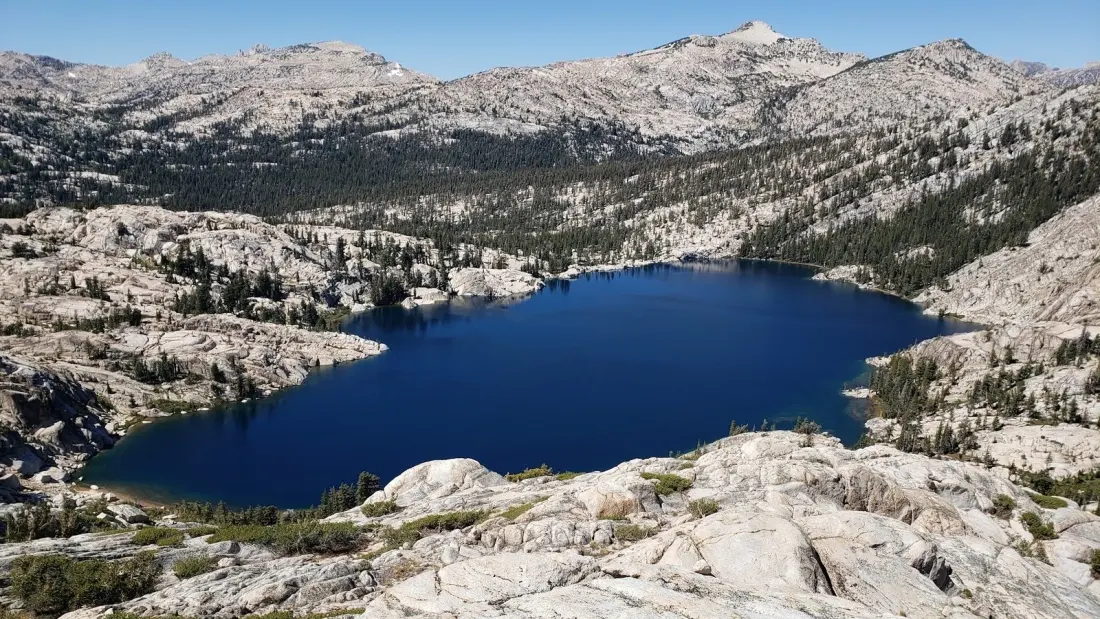
The destination justifies the effort. Peeler sits at 9,500 feet, practically brushing the Yosemite boundary, its 72 acres of blue water ringed by peaks and fringed by nearly two miles of shoreline. Three trout species live here — brook, cutthroat, and rainbow — so a rod and reel are worth the extra weight in your pack. Company is scarce by design: the short fair-weather season and the hike-in access keep the crowds away, especially for anyone willing to go in shoulder season.
Camping is straightforward. The southern shore has the best-established sites, and ledges around the lake let you pitch with a view of Crown Point looming above. If you'd rather not sleep on the ground, Bridgeport makes a good base — an underrated Sierra town with real beds and food. Permits are required for overnight trips and are picked up in Bridgeport.
A few practical notes before you go. Conditions change fast with elevation, and heavy snow can render the trails impassable well outside midwinter, so check current trail reports before committing. Summer campers should pack bug spray and a head net, and trekking poles earn their keep on the steeper, rockier stretches. The lake also sits within Humboldt-Toiyabe National Forest — the largest national forest in the lower 48 — so if you have extra days, the surrounding alpine country invites further exploration.
Who is this for? Anyone who has done Big Bear, Lake Tahoe, or an easier Sierra lake and wants the next step up: a genuine backcountry experience that still fits in a weekend from Reno or the Bay Area with an early start. Anglers, overnight backpackers, and solitude-seekers will get the most out of it. If you can't carry a pack 16 miles, this isn't your lake — but that's precisely the point.