The best part of a first safari might be the drive there. On the road out of Karatu, a highland town in northern Tanzania, guide Lemomo Lesaito cracks that it's "a beautiful day in the office" as the sun climbs over farmland, coffee and banana plantations, and cooler alpine air on the way to the Ngorongoro Conservation Area gates. Before a single lion appears, the landscape has already shifted from rainforest to moorland to sweeping savannah.
Ngorongoro itself is the world's largest inactive volcanic caldera, and the name is onomatopoeic – it mimics the cowbells Maasai herders hang on their cattle. Climbing to 2,500 metres gives you a misty look down into the crater before you descend to the wildlife-rich floor. There, animals come thick and fast: golden-maned lions close enough to see them lick their chops after a kill, flamingos balancing on one leg in Lake Magadi, zebras, Thomson's gazelles and giraffes ambling toward the acacias. Along the way you pick up the collective nouns – a tower of giraffes, a dazzle of zebras, a confusion of wildebeests, a kettle of vultures once they're airborne.
There's human history here too. The Tanzanian government relocated the Maasai from the crater floor in 1974 so wildlife could thrive, and their villages now ring the caldera's edge. Cattle remain the region's real currency: our guide, who's from nearby Makutuni, needs at least 10 cows to marry. He guides to fund his younger siblings' schooling.
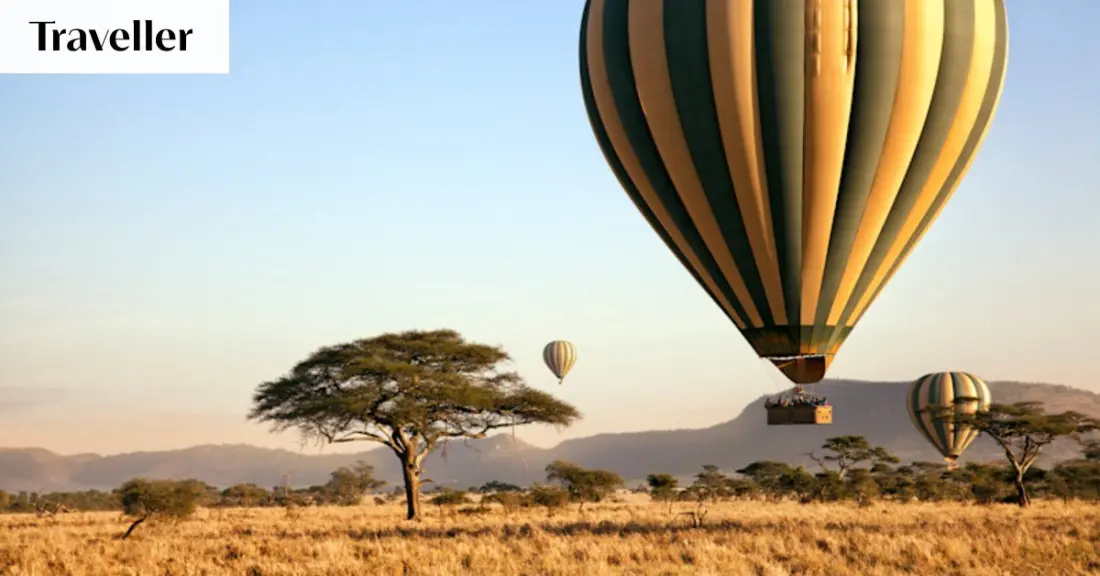
Further along, Tarangire National Park – nicknamed "elephant's paradise" – delivers mud-bathing baby elephants and night-time trumpeting in the distance. At Ndutu Safari Lodge on the Serengeti's edge, the guide swaps khakis for his traditional red-checked shuka over dinner, while a genet feeds her young in the rafters above. A stone cottage with a mosquito net makes for a short night: a 5am wake-up for a sunrise balloon flight. Strapped into the basket with 15 others, the writer drifts over acacias and Lake Ndutu as warthogs, cheetahs and marabou storks – "undertaker birds" – move through the golden light below, landing near a running confusion of wildebeests for a bush breakfast. A later game drive adds a mother cheetah with four cubs and a leopard in a tree, completing the "big five" photo checklist.
For travellers, the takeaway is that northern Tanzania rewards the journey as much as the sightings. If you want it organised, Inspiring Vacations runs a 13-day Serengeti and Masai Mara Premium small-group tour from May to November, from $14,695 a person, covering five game parks, 12 nights in four-star lodges, transfers and domestic flights.