Most travellers speed between Berlin and Hamburg on the train without ever stopping in between. That's a mistake, because the stretch of Brandenburg countryside connecting Germany's two northern heavyweights is dotted with small historic towns — and Perleberg might be the pick of them. Around 90 minutes by rail from either city and home to fewer than 12,000 people, it packs a proper Hanseatic old town, riverside walking trails, and a calendar of offbeat local festivals into a very walkable package.
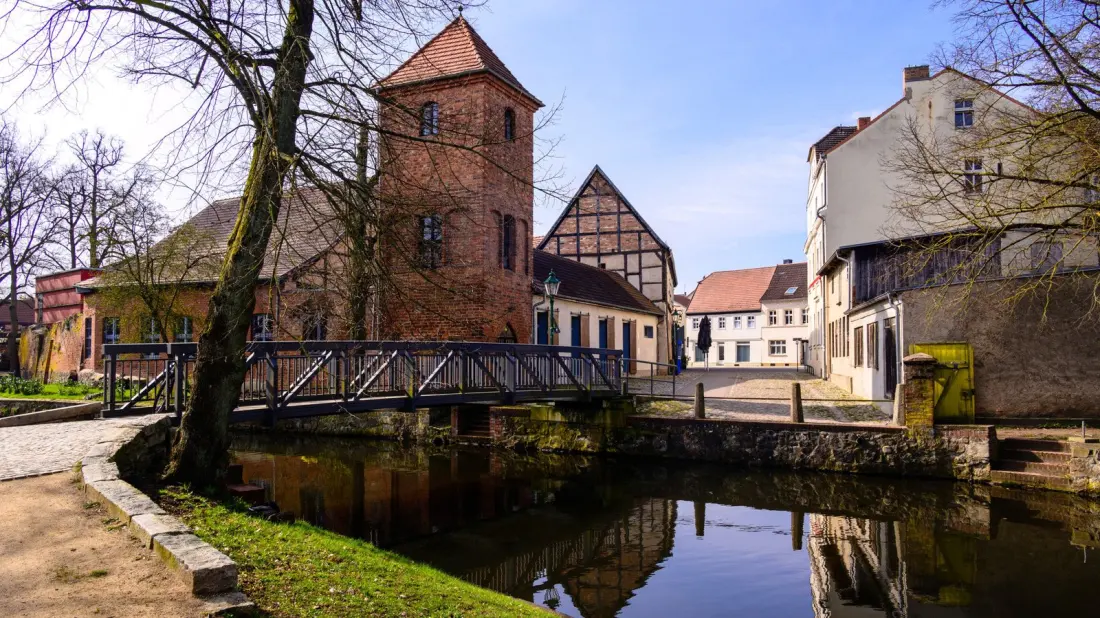
The town's story goes back to the early 12th century, when settlements formed around the churches of St. Nicholas and St. James. Officially founded in 1239, Perleberg grew rich thanks to its spot on the Stepenitz River, which links to the Elbe and the North Sea beyond — and membership in the Hanseatic League sealed its medieval prosperity. You can still read that history in the Altstadt: the Großer Markt square holds the Knaggenhaus, a brick-and-timber townhouse from the 1500s, and a medieval town hall that got a 19th-century renovation.
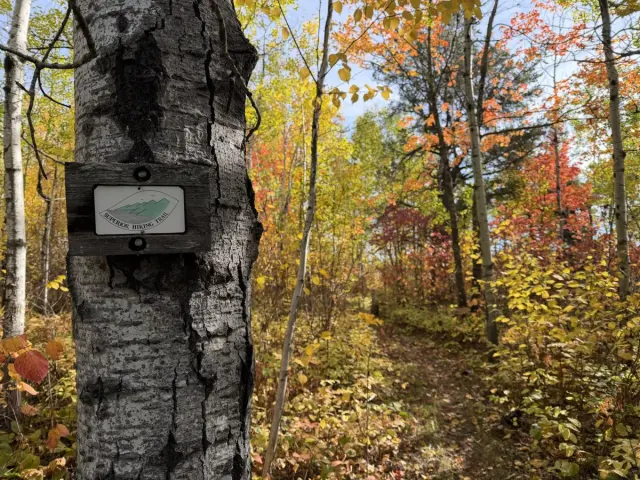
The river is the other big draw. The Stepenitz runs roughly 53 miles from near Meyenburg down to the Elbe at Wittenberge, and while it's not fully navigable, it's popular with paddlers and lined with walking and cycling paths. Two easy loops start right from town: a 5.6-mile circuit to Neue Mühle, a former mill turned riverside restaurant, taking a bit over two hours, and a gentler four-miler through the village of Lübzow that's done in under two. Free parking sits near the trailhead if you're driving. Cyclists have a bigger challenge in the 26-mile Perleberg Tour, which loops out of the Hagen marshland past village castles, a noble family's former estate in Groß Pankow, and the Bronze Age burial site of King Seddin.
If you're travelling with kids, Tierpark Perleberg is five minutes south of the centre — a 60-plus-year-old zoo with around 650 animals, including endangered northern bald ibises, plus play areas and a restaurant.
Time your visit around a festival and you'll see the town at its best. The two-day Roland Festival fills the market square at summer's end with live music, stalls and a talent contest; late February brings the Surn-Hansen-Markt, a competition celebrating knieperkohl, the tangy fermented-cabbage dish that defines the local Prignitz region (Newe Mühle serves it year-round). And in December, the five-day Weihnachtsmarkt delivers glühwein, sugar-coated nuts and grilled sausages — a low-key alternative to Germany's famous big-city Christmas markets.
Why it matters: Perleberg suits travellers who've done Berlin and Hamburg and want something slower — a day trip, a weekend stop, or a base for cycling the river countryside. Trains from either metropolis make it genuinely easy, and you'll be sharing the cobbled squares with locals rather than tour groups.
Islands