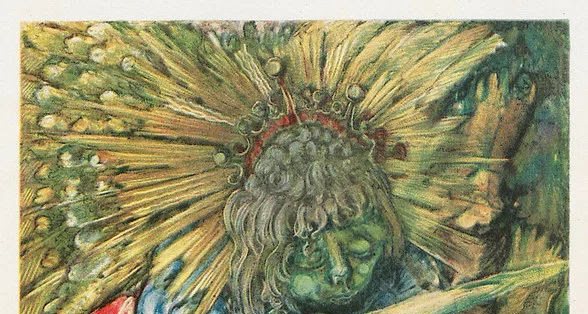
One of Europe's most moving art collections sits inside a hospital in Heidelberg, Germany. The Prinzhorn Collection began as a research archive of works made by psychiatric patients and grew into a museum holding roughly 40,000 pieces — drawings, paintings, sculptures, embroidered objects, texts and musical compositions, some dating back to around 1825.
The story starts around the turn of the 20th century, when psychiatrist Emil Kraepelin began gathering patient artworks at Heidelberg for teaching and study. His successors kept it going, and in 1919 clinic director Karl Wilmanns handed the project to Hans Prinzhorn, a doctor with an unusual combination of training in art history, philosophy and medicine. Between 1919 and 1921, Prinzhorn wrote to institutions across Germany, Austria and Switzerland asking for patient creations. Thousands of works arrived, made by around 450 people, many diagnosed with severe illnesses such as schizophrenia.
What set Prinzhorn apart was how he looked at the material. He saw art, not just symptoms. His 1922 book, Artistry of the Mentally Ill, argued that image-making springs from basic human drives — the urge to express, to play, to ornament, to order, to imitate and to symbolise — and that decorating the world with traces of ourselves is a fundamental human impulse, whether that means doodling on paper or planting a garden. The book resonated far beyond medicine.
The collection's 20th-century history is grim. In 1938, Nazi officials pulled works from it for the Degenerate Art propaganda exhibition, using them to smear modern artists by implying they shared the supposed pathology of psychiatric patients. Many of the original artists were later murdered under the Aktion T4 programme, which killed thousands of psychiatric patients. After the war the collection sat forgotten in university storage until Swiss curator Harald Szeemann rediscovered it in 1963 and staged an exhibition at the Kunsthalle Bern, sparking international interest. In 2001 it finally got a permanent museum at Heidelberg University Hospital — the dream Prinzhorn never saw realised before his death in Munich in 1933.
For travellers, this is one of Heidelberg's most distinctive stops: a collection you won't find in any other city, pairing outsider art with a sobering medical and social history. It suits art lovers, anyone interested in the history of psychiatry, and visitors who want something deeper than the castle-and-old-town circuit. Combine it with Heidelberg University's other museums and a walk through the Altstadt, and it's an easy add-on to a Rhine-Neckar or Stuttgart-region trip.