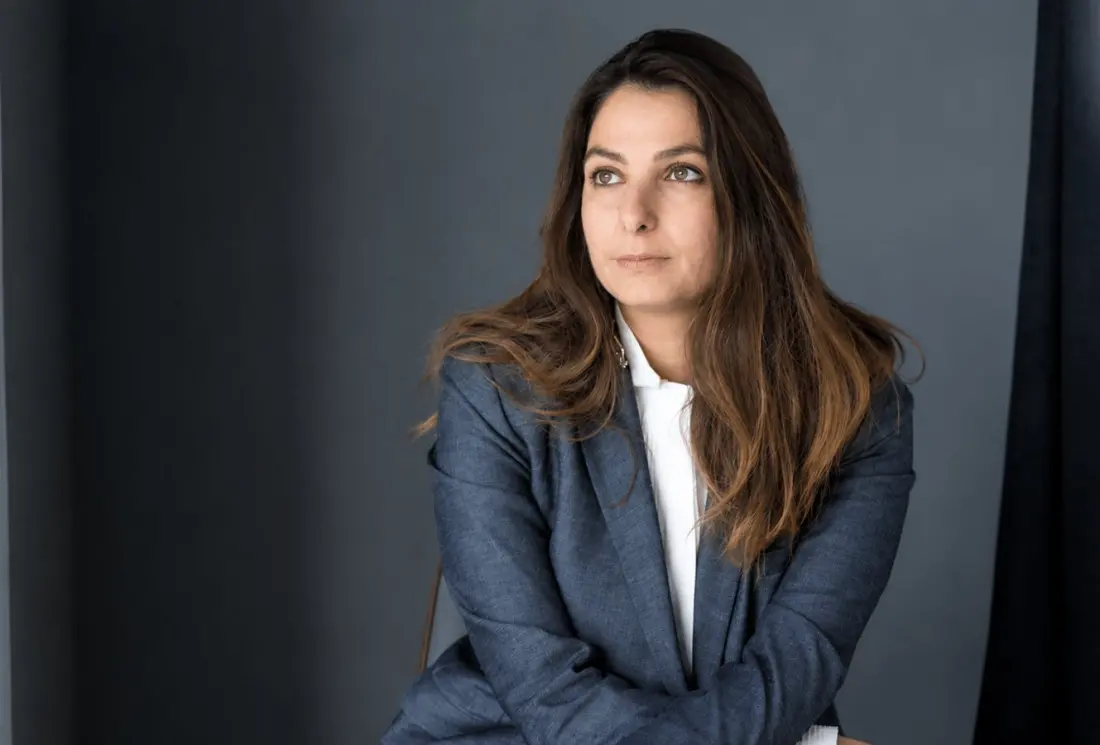
Beirut's creative scene has long punched above its weight, and few people have done more to push it onto the international stage than Joy Mardini. In a recent conversation with Lebanon Traveler, the Beirut-based art and design consultant traced a career that says a lot about the city itself: inventive, stubborn, and constantly reinventing.
Mardini grew up between France and Lebanon to Syrian parents, then trained in the Paris auction world at Tajan, Christie's and Artcurial. That experience taught her a lesson she has carried ever since: talent alone doesn't set value. Markets run on context, provenance and visibility — and geography shapes perception in ways that can box artists in. Being labelled a "Middle Eastern designer", she argues, brings visibility but can flatten the complexity of the work.
In 2011 she opened her own gallery in Gemmayze, one of Beirut's most characterful neighbourhoods, and took Lebanese designers to fairs in Dubai, Miami and Basel. The goal wasn't just sales. It was putting local work shoulder to shoulder with established international names, judged by the same standards — and, just as importantly, changing how the designers saw themselves. The experiment also exposed hard truths about production capacity, pricing and logistics, gaps she says young creatives must treat as seriously as the creative process itself.
Her gallery closed in 2019 as Lebanon's financial crisis took hold, but Mardini didn't leave. In 2023 she co-founded Babylon – The Agency with architect William Wehbe, representing designers, curating exhibitions and brokering collaborations between artisans, brands and institutions. She also runs an independent art advisory for private collectors, focused on acquisitions, valuations and collection building.
Her take on heritage is refreshingly unsentimental. Lebanon has lost a great deal of its past, and there's a tendency to romanticise what remains. Mardini would rather see a living heritage: young designers learning the traditional materials, techniques and knowledge, then interpreting them in their own language rather than stamping familiar symbols on new work. Her advice to emerging Lebanese designers is blunt and practical — develop your own voice, master the business side, collaborate genuinely with local craftsmen, travel, and be patient.
For travellers, this is a useful window into a side of Beirut most itineraries miss. Beyond the famous food and nightlife, the city supports a genuine design and contemporary art community concentrated in areas like Gemmayze and Mar Mikhael — galleries, concept stores and studios where you can meet the people shaping the scene. Mardini's story also explains a lot about Lebanon itself: a place she calls "complicated, passionate, occasionally exhausting, but never indifferent," and one where building anything lasting is an act of quiet defiance. If you're heading to Beirut, leave room in your schedule for the galleries. That's where the city's resilience is on display.
Story via Lebanon Traveler.