Boats are glorious money pits. Between the purchase price, trailer, dock fees, insurance and maintenance, owning one has always been a five-figure commitment before you've even started the engine. Freedom Boat Club has a different idea: treat boating like a gym membership, and let people just show up and go.
The club now runs roughly 450 locations across the US, Europe, Australia, New Zealand and the Middle East, including about 400 in the US alone — on oceans, lakes, rivers and bays. Joining costs around $5,000 up front plus roughly $500 a month. In exchange, members get access to a fleet of more than 5,000 boats. After a few mandatory safety and operation courses, you can reserve a boat almost anywhere, any time — up to four bookings at once, each running three to four hours, and you can double-book to claim a full day. Around 670,000 trips get booked through the club each year, and outside peak weekends like the Fourth of July, you usually only need to reserve a few days ahead.
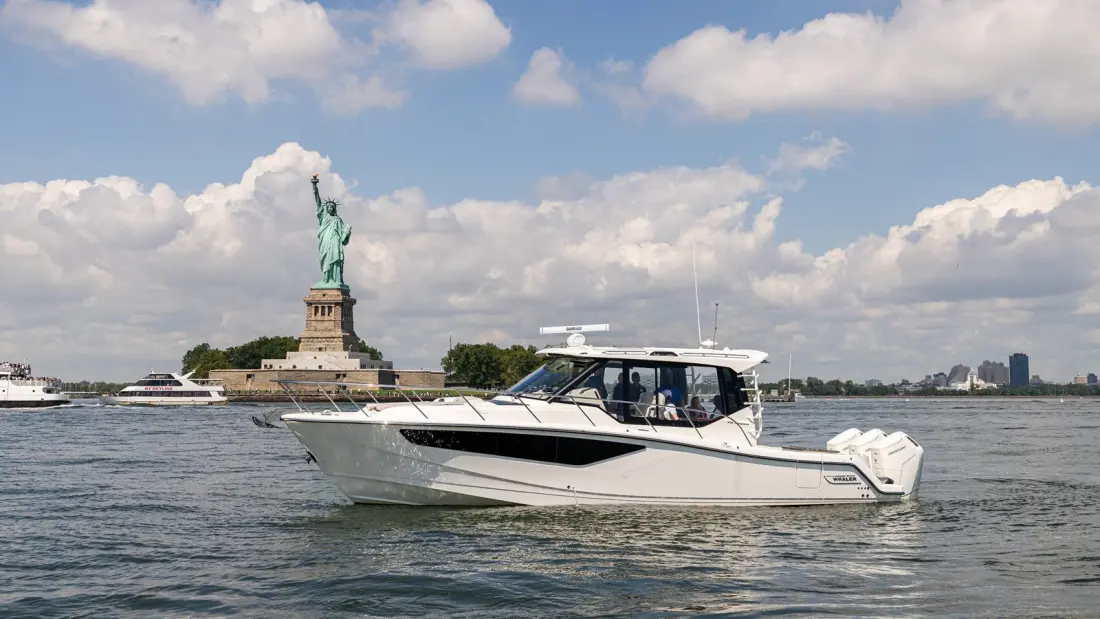
The fleet is more varied than you might expect: family-friendly pontoons and Boston Whalers, fast bow riders, inshore and offshore fishing boats, even sailboats. About 10 percent of the boats need extra training. And they're new — the club rotates its fleet every three years, so no clunkers. Because memberships work across locations, snowbirds can cruise Long Island all summer, then head south for winter without losing a day on the water. Think of it as a timeshare minus most of the strings.
The numbers explain why the model works. Around 100 million Americans get out on the water each year, but only about 150,000 new boats get sold. That's a huge pool of people who like boating but were never going to buy. The club is pulling them in: roughly four in ten members are brand new to boating, and the average member is in their late 30s to mid-40s — decades younger than the typical boat owner, who per the National Marine Manufacturers Association tends to be in their 60s or 70s. Women make up nearly 30 percent of membership, versus about 12 percent of traditional ownership.
For holidaymakers, the appeal is straightforward. You get the pontoon-afternoon-on-a-lake experience — or a fishing run offshore, or a bachelorette cruise on Lake Austin — without any of the storage, fuel and maintenance bills, and without hoping a friend with a boat invites you along. If you'd rather spend your money on time on the water than on a depreciating asset sitting in a marina, this is a genuinely practical alternative to both ownership and one-off rentals, which can be pricey and inconsistent. Do the maths before committing though: at roughly $11,000 in the first year, it pays off only if you'll genuinely use it regularly — which, given how easy the reservations are, many members clearly do.
Story via Outside Online.