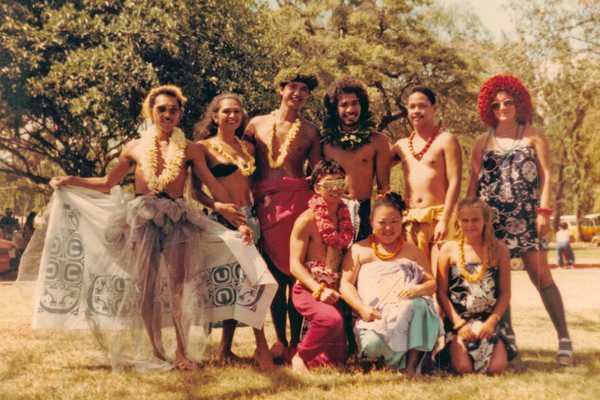
Between the Barefoot Cafe and the Honolulu Aquarium lies a short stretch of sand with a story most sunbathers walk right past. Queen's Surf Beach, on the eastern end of Waikiki, has been a gathering place for Hawaiʻi's LGBTQ+ and Māhū communities since the 1970s, and it is now formally recognised with a historical plaque installed by Lei Pua Ala Queer Histories of Hawai'i.
What made Queen's Surf unusual in its heyday was its openness. Gay beaches of that era tended to be hidden away, but this one sat in plain view of locals and tourists alike — a sign of how comparatively accepting Hawaiʻi was at a time when gender and sexual diversity were only starting to be discussed openly anywhere in the United States. For Māhū, a community with deep roots in Hawaiian culture, the beach offered space to relax and exist publicly as themselves.
The crowds thinned from the late 1980s as HIV/AIDS took its toll, and the decline continued as dating apps replaced in-person cruising and queer beachgoers spread out to other shores. But the story isn't over. The Māhūi, a subgroup of the Hawaiʻi LGBT Legacy Foundation, now runs monthly potlucks at the beach, drawing a new generation to reclaim the spot as a place of community.
For travellers, this is a chance to experience a different side of Waikiki. Most visitors come for the surf lessons and sunset cocktails and never learn that this beach was, for decades, one of the most visible queer gathering places in the Pacific. Read the plaque, join a potluck if your dates line up, or simply appreciate the stretch of sand with its fuller history in mind. The beach is public and everyone is welcome — which was rather the point all along.
It also pairs neatly with the rest of Waikiki's eastern end: the Honolulu Zoo and Waikiki Aquarium are steps away, Kapiolani Park sits right behind the sand, and the Barefoot Cafe makes an easy spot to start or end a stroll along the beachwalk.