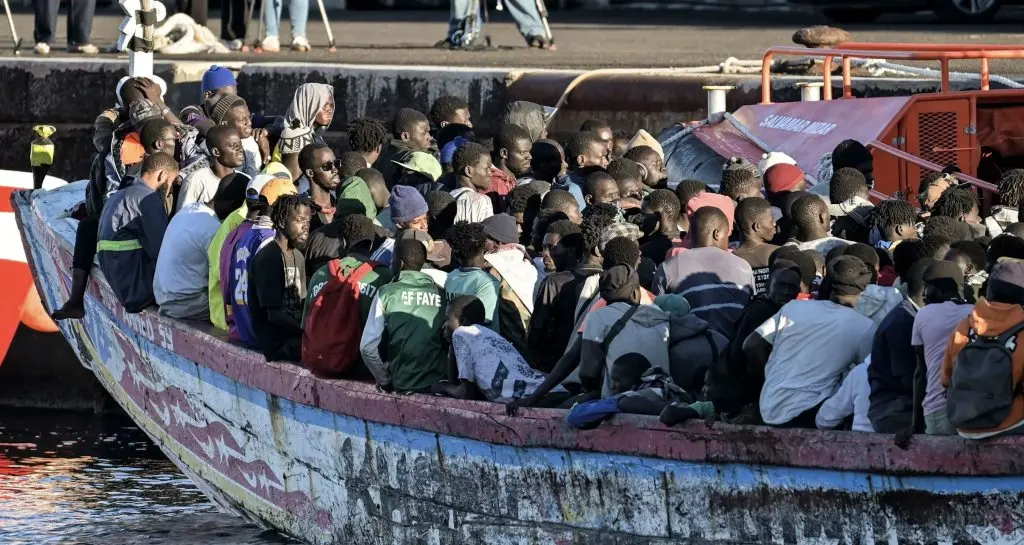
El Hierro, the smallest and quietest of Spain's Canary Islands, is dealing with an unprecedented situation. On a single Saturday in mid-November, a provisional count by Spain's EFE news agency recorded 1,488 people arriving by boat across the archipelago — a new one-day record, beating the previous high of 1,461 from November 2020.
Most of them, 1,235, came ashore at La Restinga on El Hierro, an island home to only about 11,400 people. The remainder landed on Gran Canaria and Tenerife. Rescue crews handled twelve boats at El Hierro alone in 24 hours. Many of those brought ashore had spent four to seven days at sea after departing from Senegal, The Gambia or Mauritania, including one group of 240 people — 36 of them minors — who said they had crossed from Gunjur in The Gambia over six days.
The arrivals follow a tense start to the month: 4,587 people reached the islands in the first six days of November, prompting Madrid to declare a migration emergency in the Canaries. At an emergency meeting on 10 November at La Moncloa, attended by Canary Islands president Fernando Clavijo and El Hierro council president Alpidio Armas, the government pledged an extra €15.18 million for state-run reception centres and transfers between islands and to the mainland, plus €1 million for the Red Cross to boost medical care. An additional maritime rescue vessel and more staff to process unaccompanied minors were also announced.
For visitors, the practical impact is concentrated at La Restinga, which is both the main landing point for rescues and a working harbour. Local officials report that rescued boats crowding the marina have squeezed out fishing crews and disrupted dive centres, one of the island's main draws. A compensation fund for affected businesses — fishing operators, dive shops, restaurants and accommodation — has been promised, though with no timetable. On the Saturday of the record, 158 people were moved off the island to Tenerife by scheduled ferry, meaning some regular sailings are being used for transfers. The San Andrés temporary reception centre was already holding 317 people before the latest arrivals, and hospitals on Gran Canaria also took in patients assessed at Arguineguín port.
None of this means travellers should skip El Hierro — the island's diving, volcanic scenery and slow pace remain intact away from the port. But anyone heading there in the coming weeks, especially to La Restinga, should expect a heavier official presence, possible pressure on ferry capacity and reception facilities operating near their limits. Spain's territorial policy minister Ángel Víctor Torres was due to visit the port the day after the record landings, so the situation is being actively managed. Checking ferry schedules before booking and building flexibility into inter-island plans is the sensible move right now.