Two European budget airlines flew the same routes, the same customers and through the same fuel shock this summer. One came out almost intact. The other got hammered.
Ryanair reported a 15% drop in half-year profit after tax, landing at €2.15 billion on revenue of €10.08 billion, with traffic up 6% to 125 million passengers. Wizz Air, reporting for the six months to September 30, saw net profit collapse 66.6% to just €108.1 million despite revenue climbing nearly 14% to €3.8 billion and passenger numbers jumping 26% to 46 million. Its planes were full — a 92.5% load factor — but full seats alone don't pay the bills.
The first gap was fuel hedging. Ryanair had locked in roughly 80% of its fuel at around $67 a barrel well before the Middle East conflict pushed prices up. Wizz's fuel cost per seat kilometre rose 14.5%, and its hedges only came later and dearer — 82% of second-half fuel is capped at $860 per tonne, which works out well above $100 a barrel.
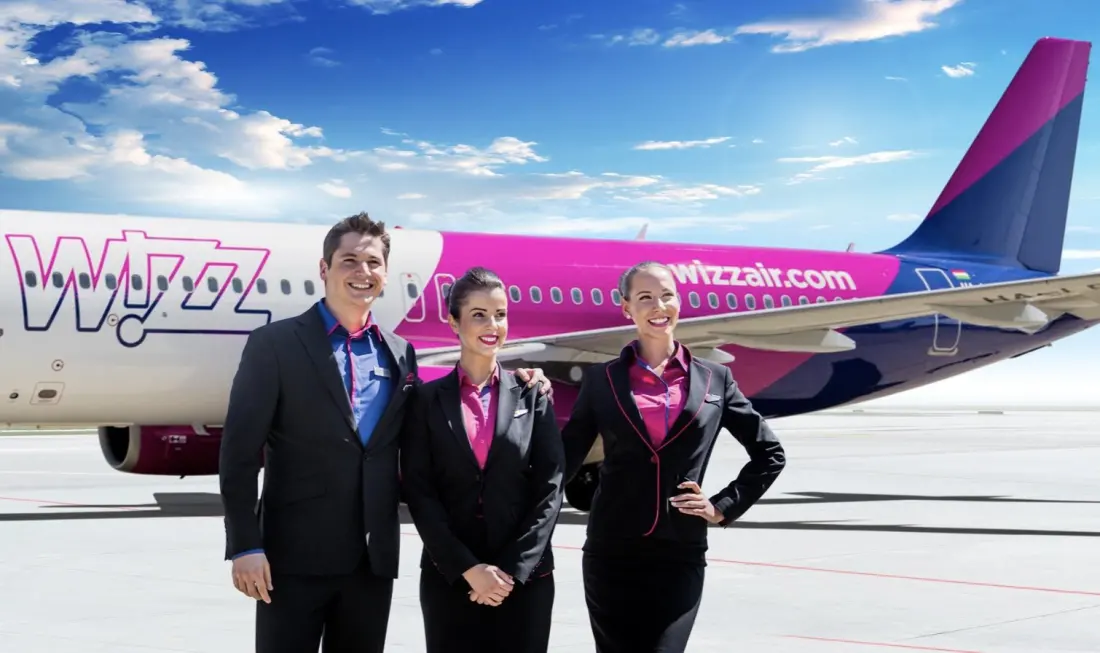
The second problem sits on the tarmac. Wizz had 22 Airbus A320s grounded at the end of September awaiting Pratt & Whitney GTF engine inspections, down from 35 a year earlier but still a costly chunk of its 276-aircraft fleet. Ryanair flies Boeing 737s with CFM engines and has no equivalent headache. Wizz expects aircraft to remain grounded into late 2027 and now forecasts non-fuel unit costs rising this year.
For anyone booking intra-European flights next year, the outlook is uncomfortable. Ryanair's average fares actually fell 4% this summer, but chief executive Michael O'Leary has already warned prices will climb once cheap hedges roll off — only a quarter of its fiscal 2028 fuel is hedged, at about $95 a barrel. With both of Europe's biggest low-cost carriers short on cheap fuel at the same time, rock-bottom fares are likely to get scarcer. There's also a knock-on angle for the US: Frontier just hired a Wizz Air executive as its new COO, and how that playbook travels will be watched closely. The wildcard, of course, is geopolitics — if the Ukraine and Iran conflicts wind down, fuel may stop being the story entirely.
The takeaway is simple: in the low-cost game, the cheapest seat only wins when paired with the lowest cost. Right now that airline is still Ryanair.