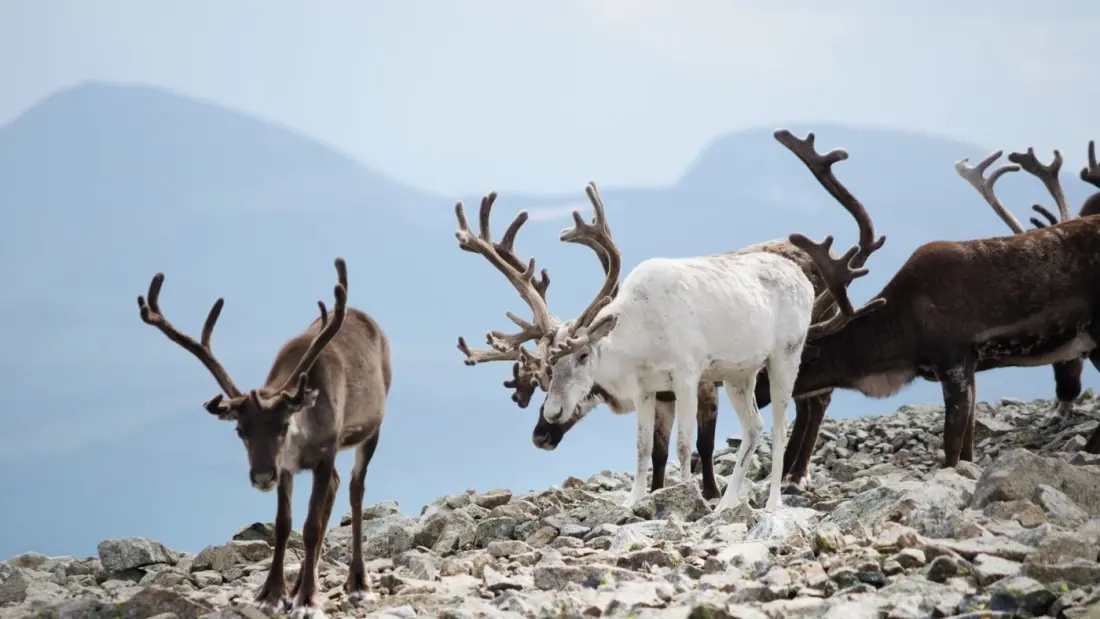
Norway's Rondane mountains are famous for two things: wild reindeer and hikers. New research suggests those two things don't mix as well as we'd like. Scientists at the Norwegian Institute for Nature Research (NINA) have found that the Rondane reindeer area has become so fragmented by roads, trails and foot traffic that the animals now effectively live as four separate sub-populations.
The team combined GPS tracking data from the reindeer with information about traffic and human movement through the region. What they found is striking: between the northern and southern parts of Rondane, traditional migration has all but stopped. These aren't animals that move on a whim — wild reindeer need to travel between winter grazing grounds, summer pastures and calving areas, and they've been doing it for thousands of years.
The interesting wrinkle is that it's often not the road or trail itself that blocks them. Reindeer are extremely shy of people, and NINA says busy human traffic can form a stronger barrier than the tarmac underneath it. Crossings happen mainly when few people are around, and the animals seem to prefer daylight and moving into the wind — presumably so they can catch a scent of danger coming. When a herd decides a corridor is too risky, it may simply stay on one side for a whole season, or a whole year.
That has knock-on effects. Senior researcher Brage Bremset Hansen notes that cut-off herds likely have poorer access to good grazing, which over time can affect body condition and calf survival. There's a genetic cost too: when animals rarely mix, inbreeding risk rises and the population loses its ability to adapt to change.
Fixing this is harder than it sounds. Norwegian authorities are working on plans to reopen migration corridors and reduce disturbance, and one trial even closed the Grimsdalsvegen road at night to help the animals cross. It lasted a short while and produced little measurable effect — partly because factors like wind direction seem to matter as much as the closure itself. Researchers say only a coordinated package of measures, sustained over years, is likely to help. And Rondane is just one piece of a wider pattern: across southern Norway, cabins, roads and trails have carved once-continuous reindeer ranges into scattered islands.
Why should hikers care? Because Rondane is one of Norway's most beloved walking destinations, and this research is a reminder that where and when we walk matters. The herds cross routes when trails are quiet — so sticking to marked paths, avoiding known migration corridors at peak movement times, and giving wildlife space genuinely makes a difference. Norway's wild reindeer are the last of their kind in Europe, and travellers who come for the mountains have a real stake in keeping the population healthy. The alternative is a Rondane where the reindeer you came to glimpse slowly disappear into ever-smaller pockets of mountain.
Full story via Life in Norway.