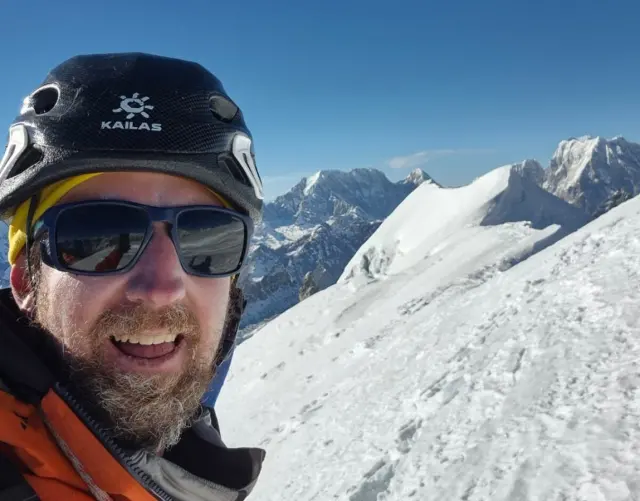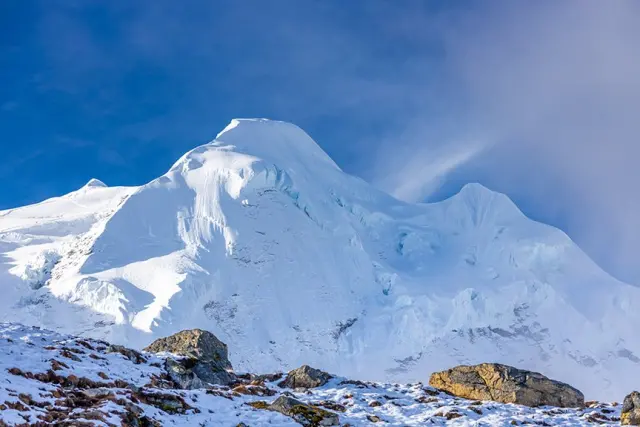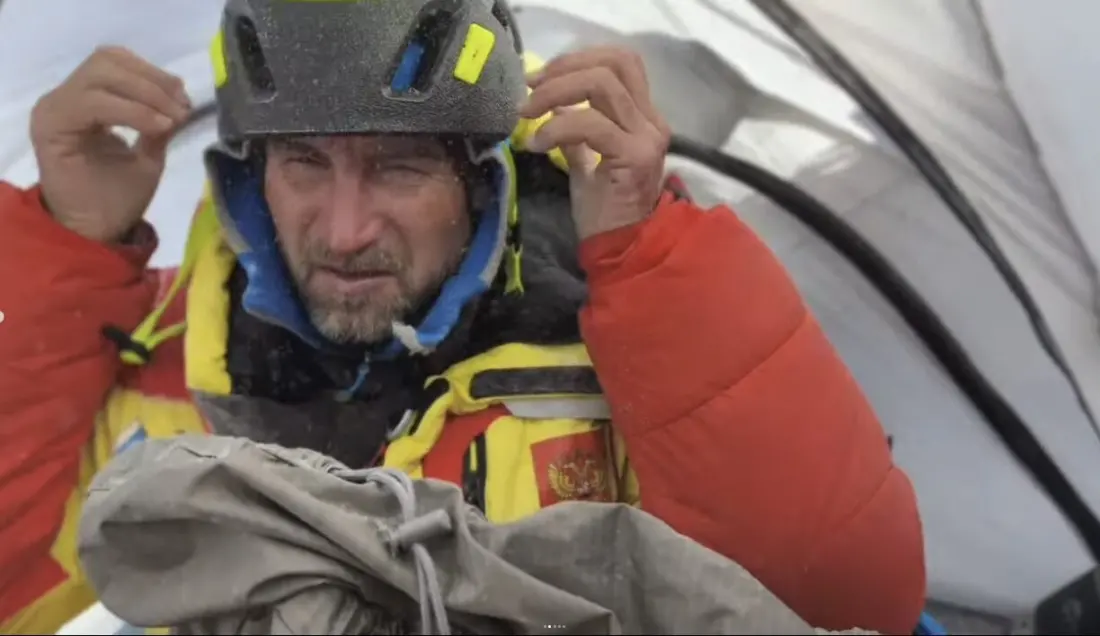
A three-man Russian expedition trying to climb Everest's West Ridge this winter is back where it started, literally. Andrei Vasiliev, Sergey Kondrashkin and Vitaly Shipilov left base camp with hopes of reaching at least 7,500m, but fierce jet-stream winds stopped them well short, at a cached tent site at 5,600m.
The team's plan was pragmatic: forecasts showed brutal winds near the summit through Wednesday, so they intended to work and sleep at lower elevations where conditions were survivable, then push higher as the window opened. Even that proved optimistic. On the second day, the wind above 5,600m was strong enough that the climbers decided simply to stay put rather than risk the route.
Where exactly are they? Tracking data from the team's InReach device, shared by MountainClub.com, puts them midway up the steep mixed climbing section between the Khumbu Glacier and the Lho La pass — the gateway to the West Ridge route. German climber Jost Kobusch, who is chasing his own winter West Ridge attempt on the same mountain, confirmed the position for ExplorersWeb.
The stakes are rising. This is the team's fourth trip up the hill, and by Vasiliev's own account, the final shot at acclimatizing before any realistic summit push. Their Nepali climbing permit reportedly runs out on December 15, so the calendar is tightening as fast as the weather.
What happens next comes down to the forecast. Multi-model charts compiled by High Asia Avalanche Watch, which average seven separate weather models, suggest winds will drop on Thursday — but not to nothing. The projections show summit winds staying at or above roughly 45kph on Thursday and Friday before strengthening again. In other words: a marginal, uncomfortable window, not a green light.
For anyone following winter Himalayan climbing, this story is a good reminder of what separates a winter Everest attempt from a spring one. Everest is usually climbed in May, when the jet stream retreats and winds briefly calm. In December, that help never arrives. Climbers wait days or weeks for narrow lulls, acclimatize in fragments, and gamble each foray against frostbite and exhaustion. The Russians' incremental approach — cache, acclimatize, retreat, repeat — is the standard playbook, but it only works if the mountain eventually offers a real gap in the wind.
Why does this matter to a general traveller? Even if you'll never rope up on the Khumbu Icefall, Everest in winter is worth understanding. The region's trekking season is effectively over by late November, teahouses close, and passes like Cho La or Kongma La become serious undertakings. Stories like this one show exactly why: the same winds that stall elite alpinists at 5,600m make winter trekking in the Khumbu a cold, lonely, logistically tricky business. If you're dreaming of Everest Base Camp, aim for the October–November or March–April windows, when the weather is stable and the trails are alive. And if you're simply following along from a warm room, the next few days will tell whether these three get their last shot at acclimatizing — or whether December's wind wins again.