
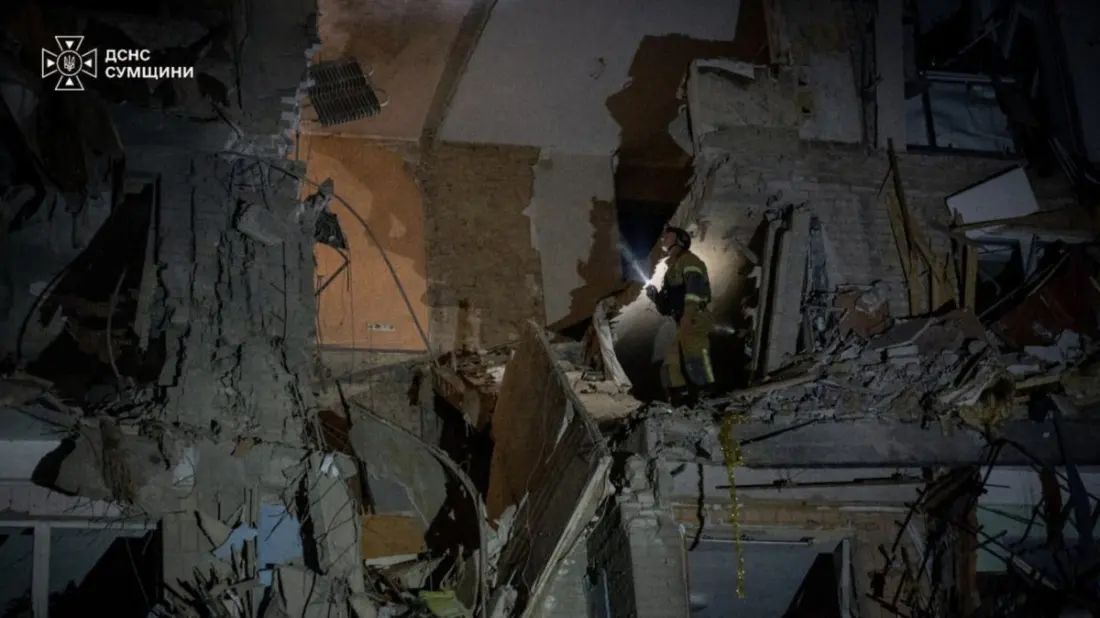
A Russian glide bomb slammed into a residential apartment building in Sumy, a city in northern Ukraine close to the Russian border, on Friday, killing two people and injuring seven others. Ukrainian officials said the bomb hit directly between the third and fourth floors of the block, shattering much of its facade and trapping residents under the debris.
President Volodymyr Zelenskyy called it an "absolutely inhuman strike" and said emergency crews had pulled four people alive from the rubble, including a child, though he warned that more could still be buried. The head of Sumy's city council said both of those killed were city employees. Regional Governor Oleh Hryhorov said three of the seven injured were in serious condition, among them a 13-year-old girl.
The Sumy strike was not an isolated incident on a violent day across the country. Zelenskyy reported that Russian forces also hit a clinic in the central city of Pavlohrad and a logistics centre outside Kyiv, with no casualty details immediately available. Earlier in the day, a separate strike on the northeastern city of Balakliia in the Kharkiv region killed two people and wounded two others, according to the head of the city's military administration. Balakliia was occupied by Russian forces in the opening weeks of the 2022 full-scale invasion before being retaken in Ukraine's counteroffensive later that year. Kyiv itself came under a missile attack on Friday evening, though Mayor Vitali Klitschko reported no immediate casualties or damage.
Sumy has been hit repeatedly because of its position near the Russian border, in a region where Moscow says it aims to create a so-called buffer zone. Both sides in the war continue to deny deliberately targeting civilians.
For anyone following the region, the practical takeaway is stark: Ukraine remains under active foreign office advice against all travel, with airspace closed since 2022 and daily strikes affecting cities well beyond the front lines. Even cities far from the fighting, such as Kyiv and Pavlohrad, are being targeted, and residential areas are not spared. Bordering countries such as Poland, Romania and Slovakia remain open and are the usual transit points for those with humanitarian or family reasons to be near the region. Aid organisations and travellers with legitimate reasons to be in Ukraine should monitor local alert systems and follow Ukrainian authorities' shelter guidance. Otherwise, the story is a reminder of why neighbouring destinations like eastern Poland have absorbed so much displaced life and aid traffic — and why travel insurance policies universally exclude the conflict zone.