
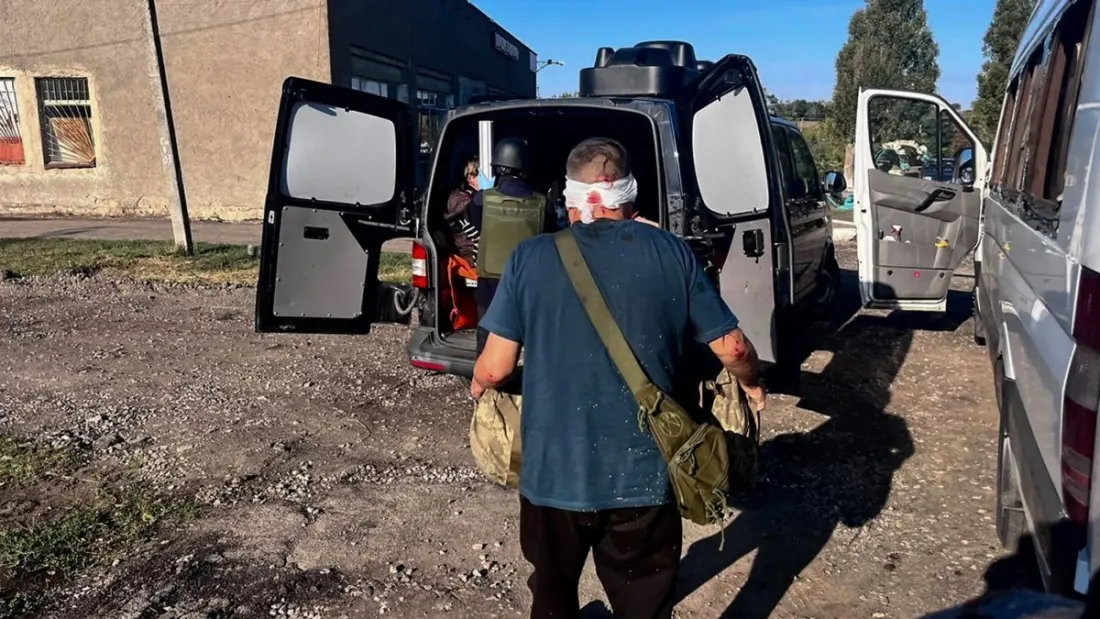
Five people died and at least seven were wounded when a Russian drone hit a passenger minibus in the Nikopol district of Ukraine's Dnipropetrovsk region, close to the southern front line, early on Wednesday 16 September. Regional military administration head Oleksandr Hanzha said all five victims were killed at the scene. President Volodymyr Zelenskyy called the strike an atrocity with no military rationale.
The bus was not an isolated incident. The same day, a passenger train in the Mykolaiv region was hit, damaging a railway station and a diesel locomotive — though nearly 170 passengers were evacuated before the strike. An electric locomotive in the northwestern city of Kovel was also struck. Ukraine's Foreign Minister Andrii Sybiha has tallied more than 500 locomotives damaged or destroyed since the full-scale invasion began in February 2022, with over half of those hits happening this year alone. He described the campaign as a systematic effort to paralyse civilian logistics, evacuations and the wider economy, and urged partners to help source locomotives compatible with Ukraine's 1,520-millimetre rail gauge.
The wider picture from the same 24 hours was grim: 17 sites damaged in the Kyiv region, a guided bomb injuring six people including a 14-year-old girl in Sumy, and one person killed in an attack on Odesa. Kherson, Donetsk and Poltava regions also came under fire.
Diplomatically, Zelenskyy pushed back on a claim by US President Donald Trump that Ukraine and Russia had agreed to halt attacks on each other's energy infrastructure. Speaking to CBS News, Zelenskyy said Ukraine was ready for such a truce — but only if Russia stopped striking Ukrainian energy facilities entirely. He raised the idea during a recent Kyiv meeting with Trump's envoys Steve Witkoff and Jared Kushner. Previous partial cease-fire attempts have collapsed within hours, with both sides trading accusations of violations.
For travellers, the takeaway is blunt: Ukraine remains an active war zone, and civilian transport — buses, passenger trains, stations — is being deliberately targeted. Governments across Europe and beyond advise against all travel to the country, and rail links that once carried tourists between Kyiv, Lviv and Warsaw now operate under constant threat. Anyone with family or humanitarian reasons to travel near Ukraine should monitor their foreign ministry's advisories closely and avoid border regions like Sumy, Kharkiv and the Dnipropetrovsk front area altogether.