
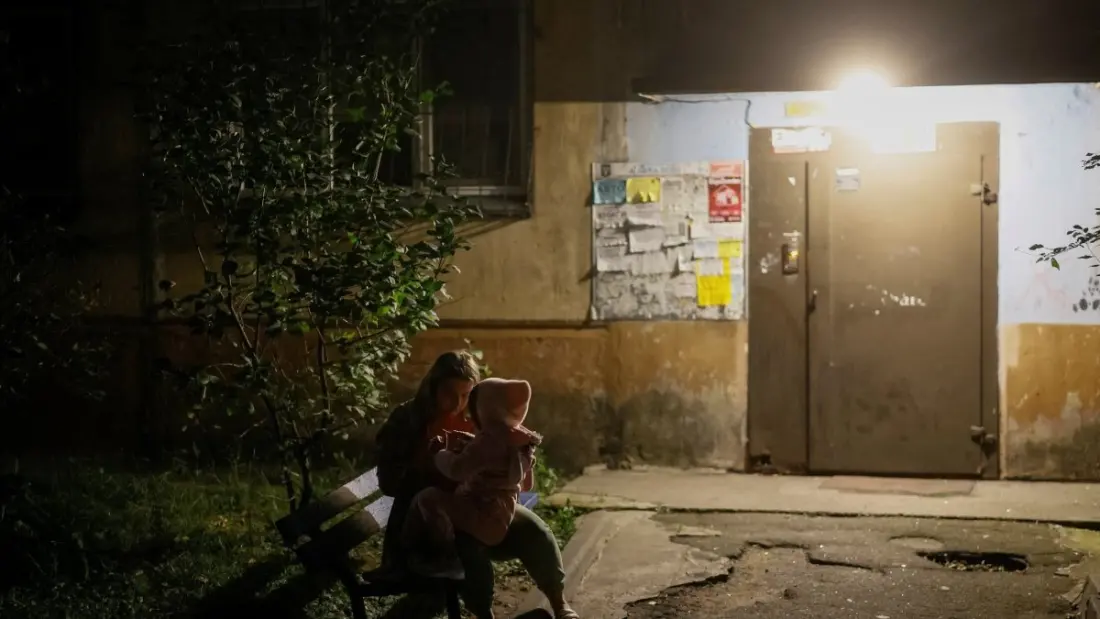
The UN Human Rights Office has published one of the starkest accounting exercises of the Russia-Ukraine war to date: 1,004 verified cases of conflict-related sexual violence between Russia's full-scale invasion on 24 February 2022 and 31 July 2026. The cases range from rape and attempted rape to sexual assault, genital mutilation, forced nudity and electric shocks to the genitals — carried out, the report says, overwhelmingly by Russian personnel.
By the UN's figures, 89% of verified cases are attributed to Russian authorities, including the armed forces, prison service and security agencies; the remaining 11% are attributed to Ukrainian authorities. Russian forces committed violations in occupied areas of Ukraine and inside Russia against prisoners of war and detained civilians, at multiple stages of captivity — during capture, transfer, interrogation and detention. Most victims in detention settings were men, a point UN officials stressed is often overlooked: Danielle Bell, head of the UN's monitoring mission in Ukraine, noted that in this conflict the majority of survivors are men, and that recovery support needs to be tailored accordingly. Women and children were also affected, mainly in Russian-occupied territory.
The true scale is likely far worse. Russia has refused the UN access to occupied Ukrainian territory, prisoners of war and civilian detainees, and the report draws on confidential interviews with hundreds of survivors plus court and official records — a method that by definition captures only what can be verified. There were no documented cases of Russian prisoners of war being raped by Ukrainian forces, though nearly half of the violations attributed to Ukrainian authorities involved threats of sexual violence and beatings to the genitals at ten official detention facilities and 55 unofficial or transit locations. Ukraine's foreign ministry welcomed the report for highlighting Russian abuses; Russia's Geneva mission declined to comment. UN Human Rights Commissioner Volker Türk said he fears the abuses are almost certainly continuing.
For travellers, the takeaway is unambiguous: Ukraine remains an active war zone, and every major source of travel guidance advises against visiting. The areas where these violations were documented — occupied territories and detention settings — are closed to civilians, and even government-controlled regions face daily strikes. If you had a trip to Kyiv, Odesa or the Carpathians on your list before 2022, this report is a sobering reason to keep those plans on hold and consider destinations that offer similar experiences — from the Baltic capitals to Georgia's Caucasus foothills — in the meantime.