Order salmon nigiri anywhere in the world and you're eating something with a surprising backstory: raw salmon only became a sushi staple because Norway sent a delegation to Japan in 1985 to pitch its booming farmed fish to sceptical Japanese buyers. The campaign, nicknamed Project Japan, took years to land, but it worked.
In Norway itself, salmon is everywhere — sliced beside scrambled eggs on hotel breakfast buffets, piled on open sandwiches, stirred into creamy fish soup. And almost all of it is farmed. Norway's Directorate of Fisheries recorded around 1.75 million tonnes of farmed salmon sold in 2025, making up 93% of the country's aquaculture by weight. Wild Atlantic salmon still runs in Norwegian rivers, but returns hit roughly 456,000 fish in 2025 — among the weakest since the early 1980s — with sea lice from fish farms named the biggest human-caused threat.
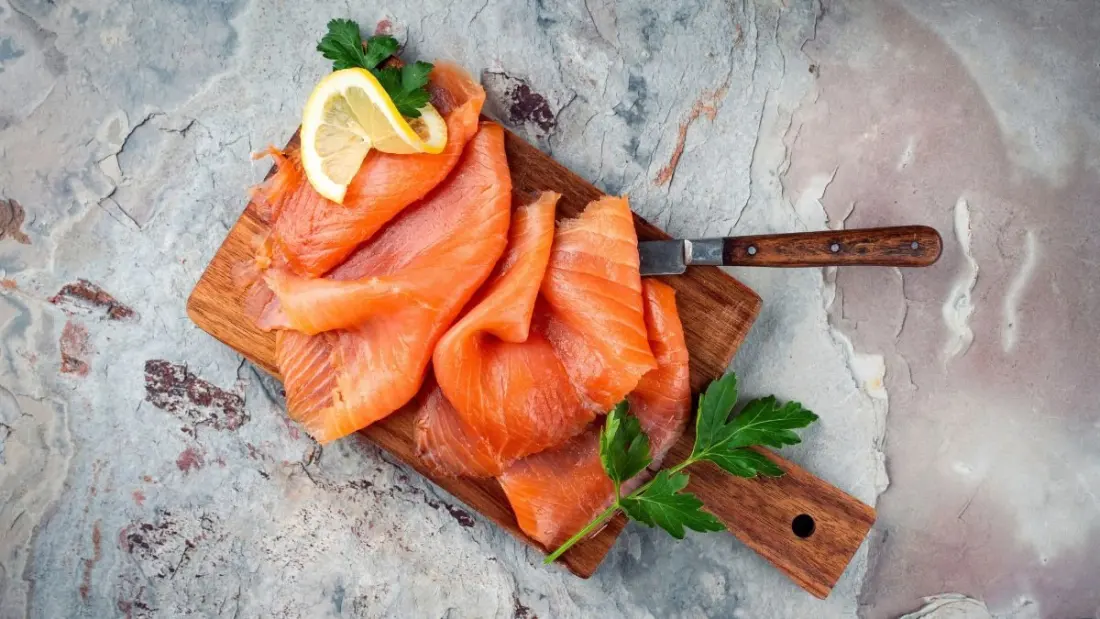
For visitors, the practical upshot is simple: try the fish, know what you're eating. The classics worth hunting down are røkelaks (smoked salmon), and gravlaks — salmon cured with salt, sugar and dill, served cold with mustard-dill sauce. The name comes from an old practice of burying fermented fish in the ground, though nothing so rustic happens today. Along the coast, look for fiskesuppe, a creamy fish soup that may feature salmon, cod or both, ideal on a grey Norwegian afternoon. And no, farmed salmon isn't "dyed": wild fish get their pink pigment, astaxanthin, from their diet, while farmed fish get the same compound added to their feed.
Is it safe? Norway runs official monitoring on farmed fish, and in 2025 the Institute of Marine Research analysed 1,913 fillet samples, finding only traces of two authorised sea-lice treatments, all below legal limits. The bigger debates in Norway are about fish welfare and environmental impact rather than food safety.
Anglers should note the rules are strict. Fishing for salmon in a Norwegian river requires both the national fishing fee and a local permit, with seasons and quotas varying river by river — check current rules shortly before you go, as stocks have declined. Gear must be dried or disinfected between rivers to stop the spread of the parasite Gyrodactylus salaris, which has devastated some waterways.
The scale of the industry is hard to overstate: Norway exported nearly 1.415 million tonnes of salmon worth NOK 124.7 billion in 2025, well over two-thirds of all Norwegian seafood export value. Fifty years ago, it barely existed. Eating salmon in Norway — at breakfast, in a soup, on a slice of bread — is one of the easiest ways to taste both the country's traditions and its modern economy at once.
Story via Life in Norway.