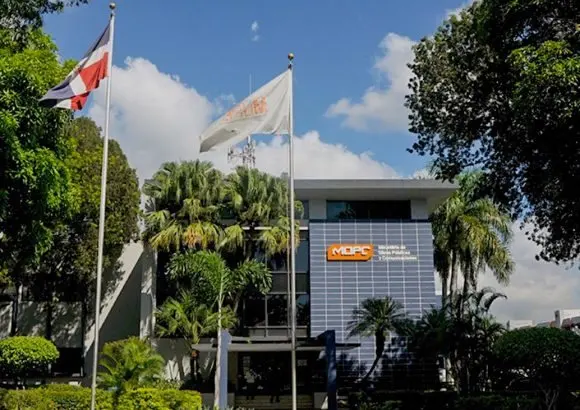
Santo Domingo briefly became the hemisphere's policing capital this month, as President Luis Abinader opened the XVI Ordinary Summit of the Community of Police of the Americas (Ameripol), drawing delegations from across the Americas and Europe.
Abinader used the platform to push a familiar but urgent message: crime no longer stops at borders. "Crime is not national, crime is regional, crime is international," he told delegates, arguing that criminal organizations exploit national boundaries and that only shared intelligence and joint operations can deny them safe havens. He framed citizen security not just as a policing issue but as a precondition for economic development and quality of life — a point of direct interest to a country whose economy leans heavily on tourism.
The summit attracted heavyweight partners beyond Ameripol's own membership: Interpol, the Organization of American States, the UN Office on Drugs and Crime and the European Anti-Fraud Office all sent representatives, alongside police authorities from Spain, Portugal, Germany, France, Italy, Australia and South Korea.
Interior and Police Minister Faride Raful reiterated the Dominican Republic's commitment to tackling drug and arms trafficking, human trafficking, cybercrime and money laundering, and pointed to an ongoing transformation of the National Police. She also urged ratification of the Brasilia Treaty, which would give Ameripol its own legal personality and, in theory, a stronger institutional footing.
There were honours too. Ameripol awarded Abinader its Grand Extraordinary Order for his contribution to citizen security and international cooperation, while National Police Director Major General Ernesto Rafael Rodríguez García received the Ameripol Order for his leadership on regional security.
Domestically, Abinader acknowledged that challenges remain — "a single homicide, a single robbery is one too many for our country," he said — but pointed to a weekly security task force that tracks crime trends and coordinates responses across agencies.
Why should travellers care? The Dominican Republic welcomed record visitor numbers in recent years, and tourist zones such as Punta Cana and Puerto Plata are heavily policed. A government openly prioritizing citizen security, investing in police reform and deepening ties with Interpol and regional partners is, on paper, good news for anyone planning a beach holiday or a city break in Santo Domingo. Crime statistics and tourist-safety perceptions matter enormously to the country's image, and summits like this one are part of the pitch that the Dominican Republic is a safe, well-managed destination. Whether the reforms deliver is another question, but the direction of travel is clear.