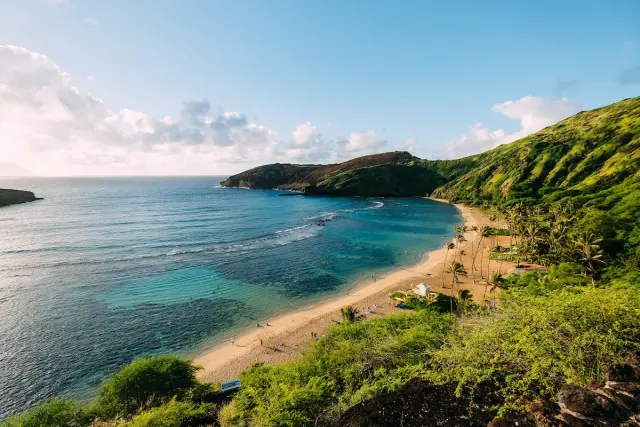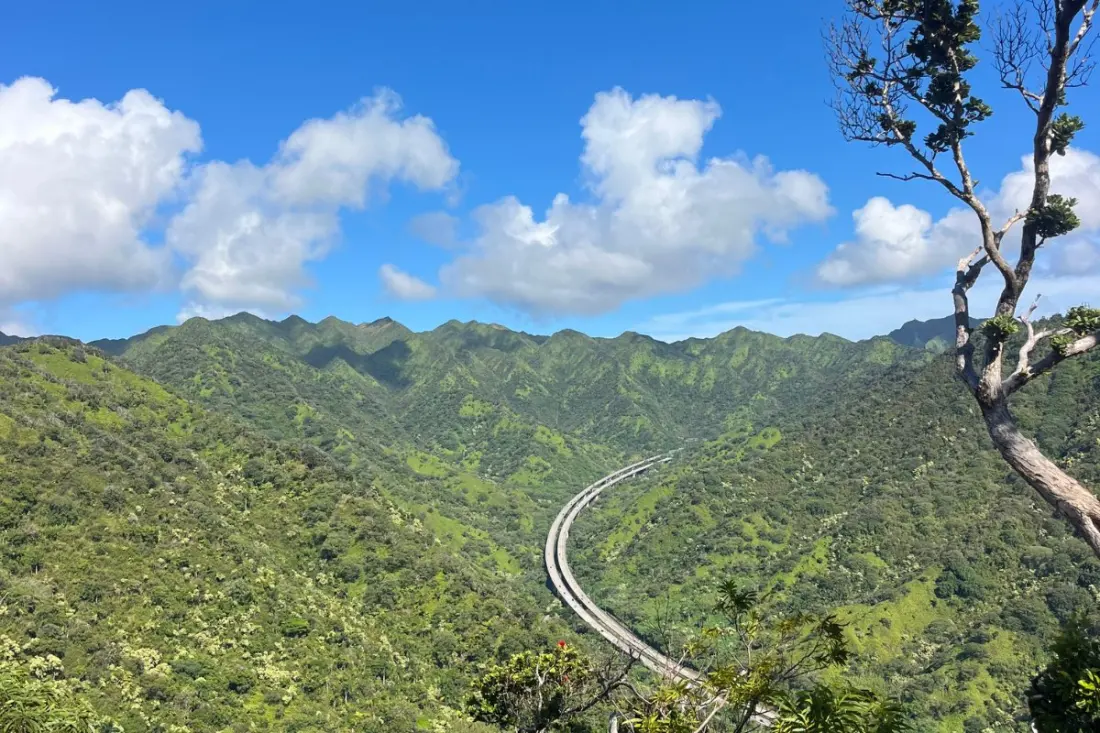
Beaches get all the attention, but Hawaiʻi's best views might come with hiking boots on. From wartime relics on Oʻahu to a solidified lava lake on Hawaiʻi Island, the islands offer everything from casual seaside strolls to full-day crater treks. Here's a roundup of seven standout trails across four islands.
On Oʻahu, the ʻAiea Loop Trail is a shaded 4.8-mile circuit starting at Keaīwa Heiau State Recreation Area. It's mostly gentle, with views over Hālawa Valley, Pearl Harbor and the Koʻolau Mountains — plus a sobering detail: wreckage of a B-24 bomber that crashed here in 1944 still sits along the route. For wildlife, head west to Kaʻena Point, a flat five-mile round trip to a protected reserve that holds one of the last coastal dune ecosystems in the main islands. Wedge-tailed shearwaters and Laysan albatrosses nest there, monk seals haul out on the sand, and humpback whales pass offshore in winter. Short on time? The ʻEhukai pillbox hike on the North Shore takes just 20 to 30 minutes to reach a historic military bunker, though the opening climb is steep. The payoff is a panorama of coastline and surf breaks.
Maui offers two very different options. The Kapalua Coastal Trail is an easy 3.5-mile return along the island's northwest shore, crossing lava fields, grass and boardwalk — with humpback whale sightings in winter. At the other end of the scale is Keoneheʻeheʻe, better known as Sliding Sands, an 11-mile one-way route into the Haleakalā crater. It's a serious, full-day effort through an alien-looking volcanic terrain dotted with silverswords. There are no park shuttles, so you'll need to sort transport between trailheads before you set off.
On Kauaʻi, Kōkeʻe State Park packs roughly 45 miles of trails into 4,345 acres. The Awaʻawapuhi Trail drops through native dryland forest for three miles before revealing sheer cliffs and the valleys of the Nāpali Coast. Fair warning: the return is entirely uphill.
Finally, on Hawaiʻi Island, the Kīlauea Iki Trail in Hawaiʻi Volcanoes National Park descends through rainforest of ʻōhiʻa trees and hāpuʻu ferns, then crosses the floor of a crater that was once a molten lava lake. Plants now grow straight out of the cracks in the rock — few places on Earth let you walk across something like it.
Wherever you go, pack sturdy shoes, plenty of water, snacks, rain gear and a charged phone. Check trail conditions before you leave and tell someone your route — conditions can change quickly, especially at elevation.
These trails suit almost any kind of traveller: families and casual walkers will love Kapalua and Kaʻena Point, while experienced hikers can earn their beach time on Sliding Sands or Awaʻawapuhi. Either way, you'll come home with a picture of Hawaiʻi that goes well beyond the sand.
Story via Hawaii Magazine.