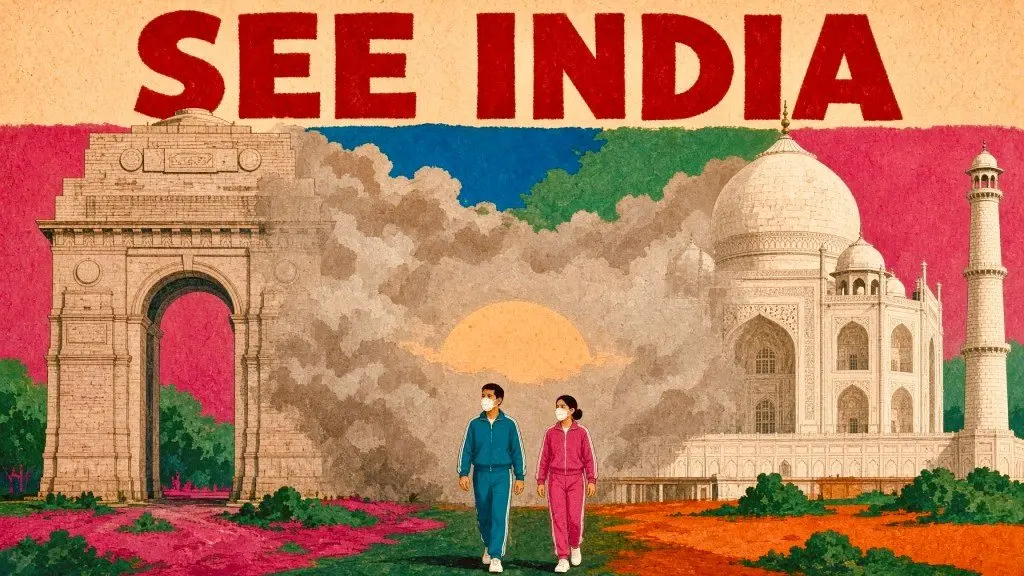
A Skift columnist has floated a tongue-in-cheek idea that says a lot about travel in India right now: pollution tourism. The argument starts with an arrival in Delhi, where the writer stepped out of the airport into the city's thick seasonal smog and watched locals continue their morning walks through it, almost nobody wearing a mask. If cities sell themselves on golden light and fresh sea air, why not lean into what you actually have?
The piece leans into irony. Luxury hotels spend fortunes developing signature lobby scents, the writer notes, while Delhi offers one that arrives free with your airport transfer. The famous fog of North Indian winters, a nostalgic memory for anyone who grew up there, is now available around the clock. There's even a historical echo: biologist Paul Ehrlich opened his 1968 book The Population Bomb with a taxi ride through a smoky, crowded Delhi and wrongly predicted mass famine. The city that was once described as a crisis is now, the argument goes, one of the world's most important young markets — even if the air hasn't improved much.
Satire aside, there's a serious point underneath. Delhi's winter air is genuinely hazardous — levels regularly far exceed WHO safety limits between roughly November and February, driven by crop burning, vehicle emissions and cold air that traps it all over the city. Tourism boards elsewhere quietly work around this: itineraries shift to hill stations, the Himalayan foothills or Rajasthan's desert cities when the capital's air quality index turns toxic.
For travellers, the piece is a useful nudge rather than a sales pitch. If Delhi is on your India itinerary, timing matters more than you might think. The same winter months that bring pleasant daytime temperatures also bring the worst air of the year. Travellers with asthma, young children or heart conditions should think carefully about visiting the capital between November and February, or at least pack N95 masks and check daily AQI apps. The rest of the year — and much of the rest of the country — is a different story.
Who should care? Anyone planning a first trip to India who has Delhi pencilled in as a stopover. The city's monuments, food and markets absolutely justify a visit, but the smart move is knowing what season you're walking into — or routing through Mumbai, Bengaluru, Kochi or the hills instead. And if a tourism minister somewhere does end up filming joggers in the haze, remember you read the pitch here first.