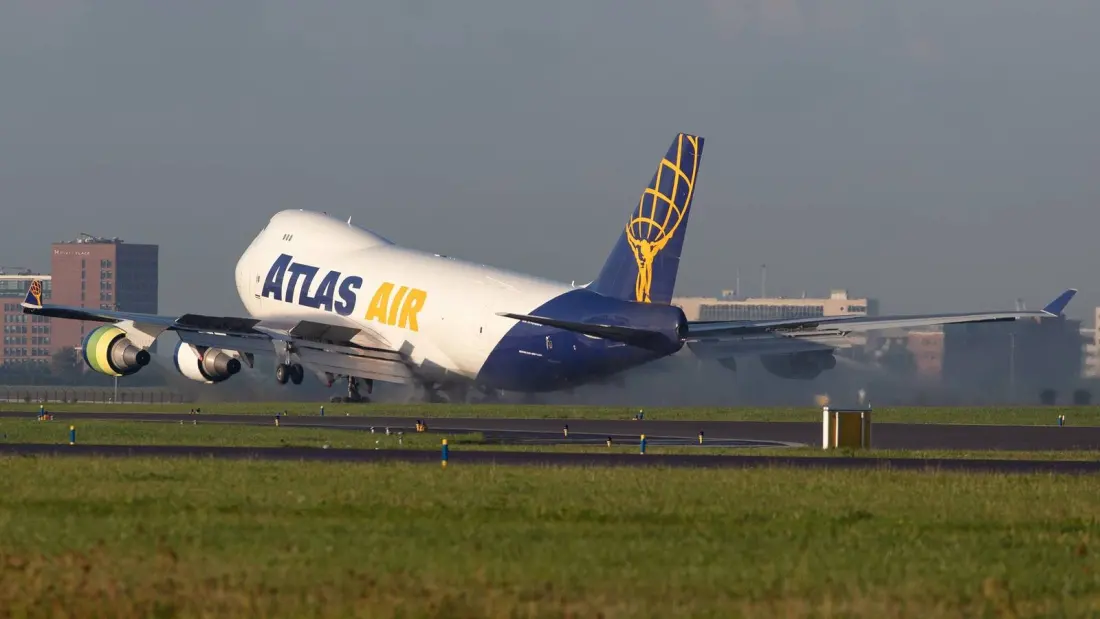
Miami International Airport had a tense Monday evening when an Atlas Air Boeing 747-8 freighter slammed the brakes mid-takeoff because air traffic control could see smoke trailing from the aircraft.
The jumbo, registered N864GT, was working flight 5Y8096 to Houston on October 26 and had been cleared from Runway 8R. Seconds into the roll, the controller radioed the crew to warn of smoke appearing to come from the right engine — later corrected to the nose landing gear. The pilots rejected the takeoff immediately. That left a very large cargo jet sitting on an active runway just as American Airlines flight AA2323, an Airbus A321neo inbound from Chicago O'Hare, was on final approach to the same strip. The controller sent it around, and the A321neo eventually touched down safely at 9:12 PM after circling back.
The Atlas 747 itself didn't stay grounded for long. It departed Miami at 9:38 PM and landed in Houston at 11:00 PM, though what caused the smoke in the first place remains unclear. The airline's heavy delay that day — the flight had originally been slated to leave at 9:05 AM — is also unexplained.
The aborted takeoff rippled across the airport. With Runway 8R blocked, the tower had to juggle the 747's removal while keeping departures moving, a scene one controller summed up as "an absolute mess".
The aircraft itself has an interesting backstory. It's a 12-year-old 747-8 freighter that first flew in May 2014 and spent years with Russian cargo carrier AirBridgeCargo before sanctions over the invasion of Ukraine grounded that fleet in March 2022. Lessor BOC Aviation repossessed it, and it joined Atlas Air in 2024. Notably, its travels since the Miami incident include a diversion to Dubai's Al Maktoum airport on October 28 during a Dammam–Hong Kong cargo run — no confirmation yet that this was linked.
Why should a holiday traveller care? Miami is one of the busiest air cargo hubs in the Americas, and Atlas Air is its largest cargo operator, moving over 500,000 tons of freight through MIA each year. Incidents like this are a good reminder of how quickly a single aircraft problem can cascade into delays across an airport — and of how well-trained crews and controllers contain them. The rejected takeoff ended without reported injuries or damage details, and both the 747 and the American jet went on to complete their journeys the same evening.
If you're flying through Miami, the practical takeaway is simple: build a buffer into tight connections, especially in the evening peak when runway space is at a premium, and check your airline's app rather than relying on airport boards when things go sideways. As for the aircraft, it's back in the air — your next holiday might even travel on the same cargo network that brings in everything from flowers to electronics before you land.
Story first reported by Simple Flying.