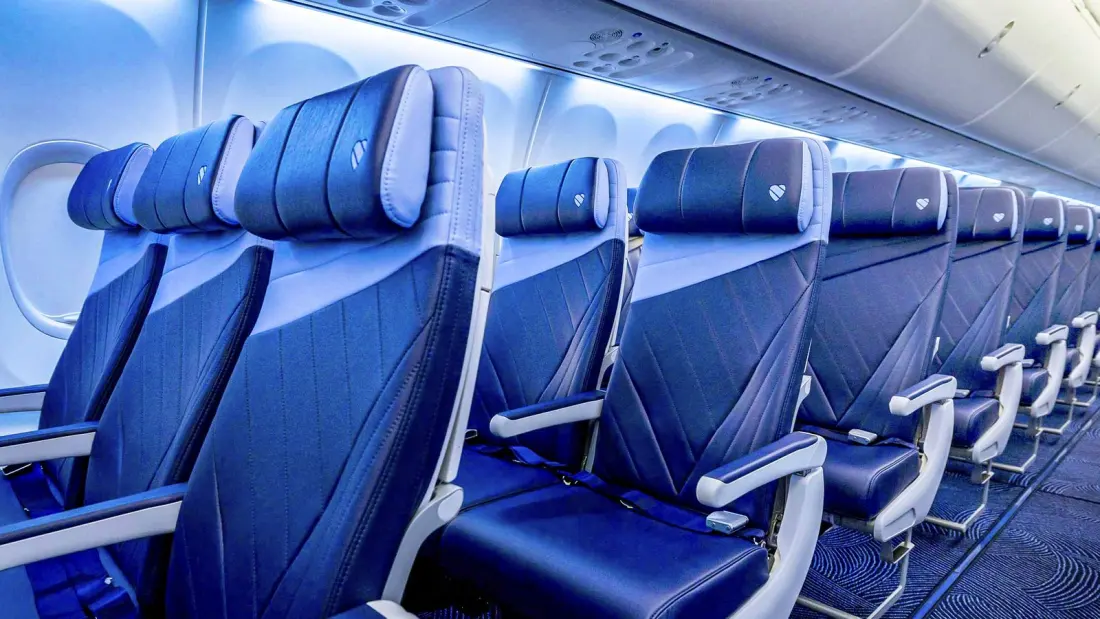
Southwest Airlines has overhauled how it seats passengers, ending roughly five decades of open seating on January 27, 2026 in favour of assigned seats, eight numbered boarding groups and four fare bundles (Basic, Choice, Choice Preferred and Choice Extra). But tucked inside the new system is a rule that could matter more than legroom for many travellers: the refund terms attached to its Customer of Size policy.
Here's how it works. Passengers who can't fit comfortably within a single seat — with the armrest down as the boundary — are advised to buy a second seat in advance, booked as an extra passenger using the airline's "XS" name format. That part is straightforward, and Southwest says booking ahead is the only reliable way to guarantee the space, since airport staff may have no adjacent pair to offer on a full flight. In some cases the airline will provide a complimentary second seat at the airport, or rebook you on another departure, but neither is assured.
The catch comes after you land. To get the second fare refunded, the flight must actually depart with at least one empty seat, both tickets must be in the same fare class, and you have to file the refund request within 90 days of travel. With Southwest's flights running at around 80% load on average, that sounds safe — on a typical 175-seat Boeing 737-800, roughly 35 seats would be free. But averages don't describe individual departures. Holiday peaks, busy business routes and rebooking surges after cancellations can fill planes completely, and if your flight departs full, you eat the cost of the second seat.
The financial exposure is real. Buying two tickets doubles the upfront spend, and the payout hinges on a variable no passenger controls: how many other people show up. Travellers juggling connecting flights face another wrinkle — each leg is judged separately, so a refund on one segment says nothing about the next.
The policy lands amid broader changes at Southwest. The airline now charges for checked bags on many standard fares ($45 for the first bag, $55 for the second on applicable US mainland fares), and premium seat assignments start around $70 per leg, with Extra Legroom seats offering up to five inches more space. Worth noting for plus-size travellers: extra legroom is not extra width. A premium seat doesn't replace the need for a second seat if you can't fit within one seat's boundaries, so it's worth assessing your needs before picking a fare bundle.
The practical playbook: treat the second seat as money spent until a refund is confirmed. Read the official policy before booking, buy both seats in the same fare class, follow the "XS" booking instructions exactly, keep all documentation, and submit any claim well inside the 90-day window.
The open question is whether Southwest will soften these conditions as assigned seating beds in. For now, the airline guarantees the space if you plan ahead — but not the price of it, and that gap is where plus-size passengers carry the risk.
Simple Flying