After 102 years as a national monument, Arizona's Chiricahua has finally been upgraded to America's 64th national park — the first new park in six years. The Senate passed the redesignation bill on September 30, 2026, and President Trump signed it on October 20, exactly a century after the monument was first created by Calvin Coolidge in 1923.
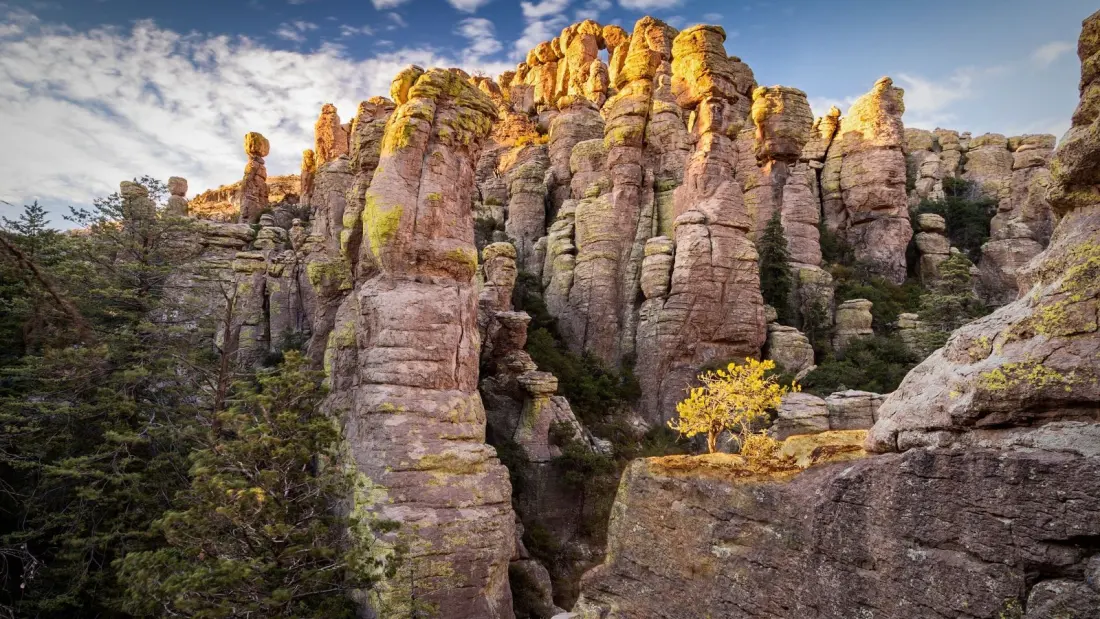
So what's the big deal? The Apache name for this place translates to "Land of Standing-Up Rocks," which says it all. Thousands of rhyolite pinnacles and hoodoos — sculpted by ancient volcanoes, then wind and water — rise from a mountain range about 120 miles east of Tucson. It becomes Arizona's fourth national park, joining Grand Canyon, Petrified Forest, and Saguaro.
What makes Chiricahua genuinely unusual is how many environments it packs into one small area. It sits at the meeting point of four ecoregions: the Sonoran and Chiricahuan deserts plus the Rocky Mountains and Sierra Madre highlands. Hike a single route — say the classic line from Mushroom Rock through the Heart of Rocks Loop, past landmarks like Big Balanced Rock and Duck-on-a-Rock — and you move from cacti meadows to manzanita thickets to pine forests. That blend makes it a serious birding destination, since many Mexican species reach their northern limit here. Wildlife on the wish list includes coatimundis, javelinas, Chiricahua fox squirrels and the occasional rattlesnake.
The park also carries real human history. It has deep ties to the Chiricahua Apache people, and archaeologists are still piecing together how the area was used. The Faraway Ranch, an early homestead turned dude ranch you pass on the drive out, is part of the story too: its last owners, Lillian Erickson and Edward Riggs, campaigned for national park status back in 1923 and got a monument instead. A hundred years on, their wish has finally come true.
Practical stuff: the only in-park accommodation is Bonita Canyon Campground, a shady pine-and-oak site with water, flush toilets and little else — book expectations accordingly. Spring brings wildflowers, while fall offers quieter trails and better campground availability. A late-February visit means possible snow and near-empty trails, which is exactly what honeymooning writer Sylvia Dekker got when she hiked Echo Canyon with barely another soul around.
Who should care? Anyone who loves National Park checklists — this is a new stamp for the map — plus hikers, birders and geology nerds who'd rather have a wonderland of stone spires without the crowds of Grand Canyon, just a few hours away. The new status should pump tourist money into southeastern Arizona, but it also locks in stronger protection for a landscape that really is one of a kind.