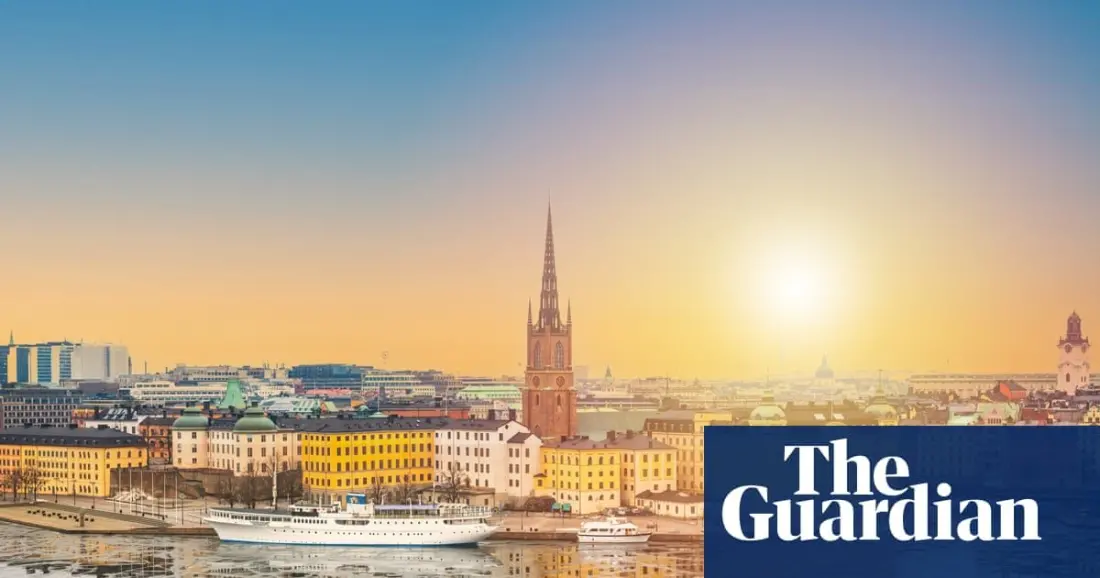
Stockholm locals have a sneaky habit of steering visitors towards summer and keeping the capital's December magic to themselves. Fair enough — but if you time a trip for the festive season, you'll find a city that swaps its polished, minimalist image for something warmer and altogether more human.
Darkness arrives around 4pm, and the city responds by lighting everything it can. Paper stars glow in windows, wooden Advent candelabras appear on sills, and hockey-puck candle holders flicker along pavements — a tradition with roots in a 16th-century Spanish ritual of guiding people to midnight mass. Sergels torg, the central square, gets its own spectacle when the Kristallvertikalaccent glass obelisk lights up. In early December, City Hall (Stadshuset) hosts projection light shows celebrating the new Nobel laureates before their banquet with the king and queen.
The most dazzling seasonal sight is the animated window display at Nordiska Kompaniet, the city's oldest luxury department store — last year it marked 80 years of Pippi Longstocking. Then on 13 December comes St Lucia's Day, when children in white gowns and candle crowns take part in processions honouring the saint who died in AD304. The best-known procession happens at Storkyrkan cathedral beside the Royal Palace, with Lucia concerts staged across the city all day.
Stockholm in winter isn't just about admiring the glow — you can get out in it. When the harbour freezes, skates come out: Kungsträdgården, Zinkensdamm and Vasaparken all run family-friendly rinks, sometimes with disco music, while braver souls head for lake ice at Hellasgården. For something more unusual, the city has its own ski slope at Hammarbybacken — beginner-friendly, with rentals on site so you only need to bring layers and a thermos.
Food is the other half of the story. Cafés swap cinnamon buns for saffron lussekatter during fika, and the Stortorget Christmas market in Gamla Stan fills the old town with the smell of roasting candied almonds. Its oxblood-red stalls sell gingersnaps, glögg, smoked meats and Västerbotten cheese. The classic Swedish ornament souvenirs live here too: gnome-like jultomtar and the straw julbock Christmas goat, a tradition dating to the 1800s.
To eat a proper julbord — the Swedish Christmas spread of pickled herring, meatballs, gravadlax, glazed ham and Jansson's temptation potato casserole — you'll ideally need a local invitation. Without one, julbordsguiden.se lists restaurants and dinner cruises serving the feast, or you can head 20 minutes out of town to Sweden's largest Ikea in Kungens Kurva, which serves an affordable version all season.
Dedicate at least a day to Drottningholm, the royal family's official residence, whose winter market focuses on artisans like blacksmiths and weavers; the 20-minute ferry to Fjäderholmarna, nicknamed craft island, for ceramics and jewellery workshops; and Skansen on Djurgården, the world's oldest open-air museum, where costumed artisans work among red falu cottages and a mini Christmas market.
For a bed near the action, Downtown Camper by Sergels torg has doubles from £95, a rooftop sauna and heated pool, and a cocktail lounge with city views. Pack thermals, embrace the dark, and Stockholm will do the rest.