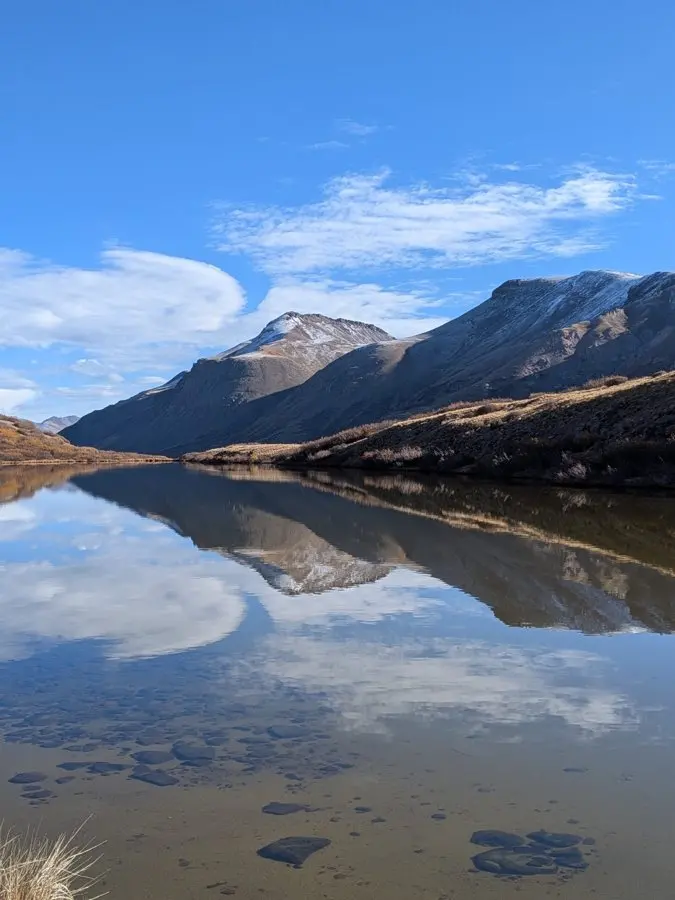
A long-distance hiker working through week 16 of the Continental Divide Trail has wrapped up the last Colorado stretch — and it was anything but a gentle send-off. The southern San Juan Mountains, the final section before the New Mexico border, kept the route above 11,000 feet with cold mornings, hard frost and snow lingering on the peaks.
The week's stats tell the story of how demanding this trail is: another 6,314 metres of climbing in just seven days, taking the total elevation gain to more than 106,700 metres — the rough equivalent of ascending Everest twelve times over.
One of the quieter rewards came early in the section, where the trail passes the headwaters of the Rio Grande. From here the river runs some 1,900 miles to the Gulf, and the hiker spent a day following it through a peaceful valley and reservoir, spotting wildlife before climbing back onto the high ridgelines. It's a reminder that the CDT isn't just relentless summits — it threads together the sources of some of America's biggest rivers.
Then the terrain bit back. Erosion and weather have left parts of the southern San Juans in rough shape: trails washed into streams after rain, sections collapsed entirely into steep slopes of loose rock and scree, and slips an everyday occurrence. The weather threw in everything from rain and hail to high winds, plus a close call with lightning on an exposed mountainside.
Around 2,000 miles and nearly four states in, the gear also started to give up. A backpack toggle snapped, a trekking pole tip broke off somewhere in the San Juans, and — most seriously — a tent pole cracked during a night of freezing wind, forcing a dash to the nearest town for repairs. The tent held, and with three failures on the board, the hiker is hoping the bad luck is spent before the desert section ahead.
For anyone considering the CDT, this update is a useful window into what the Colorado high country actually demands in autumn: serious elevation, volatile weather and fragile trail surfaces, even as the scenery and river valleys deliver moments worth every climb. It's also a practical nudge to carry repair supplies and know your nearest resupply town — a broken tent pole deep in the San Juans is a very different problem than one at a trailhead.