If you've ever been startled awake by a random bleep from a depth sounder and spent ten confused seconds hunting for the right screen, help is coming. A wave of new voice-based alerting systems for sailing yachts is turning the traditional chorus of beeps into plain-language instructions — and there's plenty of other practical kit in the latest roundup from the sailing press.
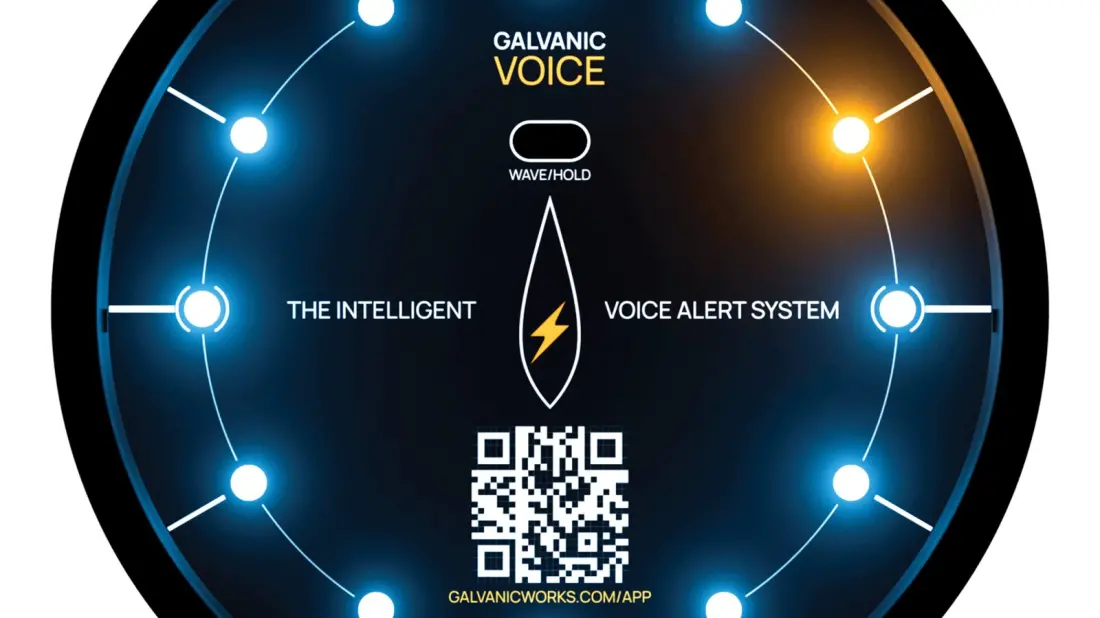
The headline act is Galvanic Voice, a standalone NMEA 2000 unit developed by CERN scientist Piero Zucchelli and co-founder Natalie Smith, tested on Zucchelli's Hanse 588. Instead of a generic bleep, it speaks: AIS collision alerts, man overboard, anchor dragging and more, sorted into four urgency levels from 'emergency' down to 'caution'. The logic isn't improvised — it's a deterministic system compliant with the collision regulations (IRPCS), drawing on a pre-written lexicon of over 100 messages. Each alert follows a consistent format: what's wrong, what's happening, what to do, then the numbers. For a dangerous AIS target, for example, it can name the vessel, give the Closest Point of Approach and suggest the size and direction of your course change.
The idea borrows from aviation, which adopted similar voice alerts over 50 years ago, and from commercial shipping bridges. But yacht crews differ — especially on a long passage overnight, when one tired person may be on watch alone. That thinking produced the Pulse Bracelet, a wearable that doubles as an MOB trigger and sleep/fatigue tracker, and can receive haptic or audible alerts aimed at one crew member or everyone aboard. The system costs €1,140 with two bracelets, extra bracelets €480 for four.
It's not alone. Garmin's Cortex (from £1,500) combines an AIS transponder, VHF radio and monitoring, with spoken alarms for anchoring, collision avoidance and MOB — think 'collision alert, starboard bow'. Exocet offers a customisable voice alarm add-on with automatic prioritisation, so critical messages always cut through first.
Beyond the talking alarms, the gear list covers plenty for cruising sailors. Båtsystem's DV32 folding davits (€3,240) fold flat against the transom, solving the retrofit problem of telescopic models. ACR's RCL200 LED searchlight puts out a serious 720,000 candela, with optional remote control for night man-overboard recovery. PredictWind's Datahub Pro (US$599) links onboard NMEA 2000 kit to the internet, offers AI-generated polars for weather routing and can pull AIS targets from shore stations up to 300 miles out. For charter sailors and coastal cruisers there are also Raymarine's 'point and go' autopilot remote (from £550), Icom's ultra-shallow IC-M430 VHF (£475), Blood Red's recycled dry bags (£33-£91), and a £30 Scanstrut deck gland for tidily routing Starlink cables.
Why care if you don't own a boat? Because voice alerts and fatigue-aware wearables will filter down to charter fleets and sailing schools first, making skippered and bareboat holidays safer — and if you do charter regularly, several of these upgrades are easy to request or check for before you book.