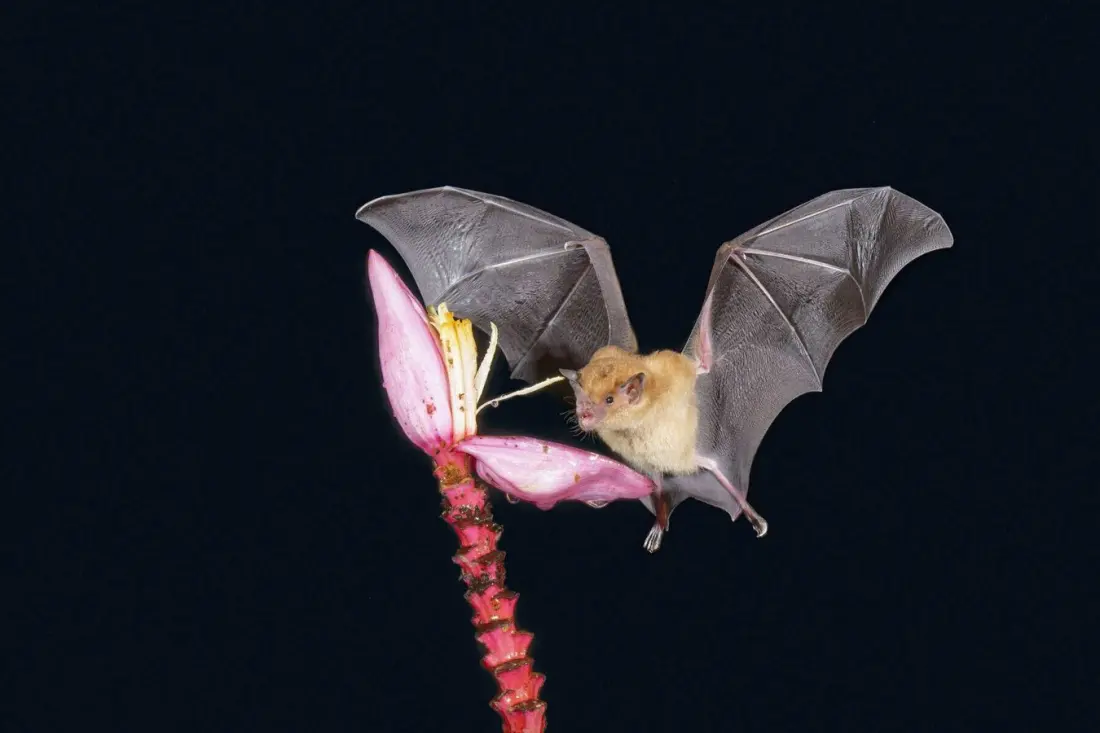
A quiet corner of Costa Rica's central highlands turns out to be a bat hotspot. Researchers at the University of Costa Rica have confirmed at least 56 bat species living in and around San Ramón — close to half of every bat species ever recorded in the country.
The tally got a boost from a study near the Alberto Manuel Brenes Biological Reserve, where scientists caught and examined 407 bats across 39 species at seven sites. Ten of those had never been documented in the area before. The research isn't just about counting: teams are tracking how bats handle a landscape increasingly chopped up by farms, pastures and towns.
Their findings carry a hopeful message. Fruit-eating bats are thriving, and that matters well beyond the forest edge — those bats disperse seeds and drive the regrowth of tropical forest on abandoned or degraded land. Insect-eating species look equally useful: UCR graduate student Katherine Álvarez is investigating whether they help control pests that attack potato crops in Cartago, hoping to convince farmers that bats are allies rather than nuisances.
The researchers also argue that conservation shouldn't stop at big reserves. Small patches of trees and hedgerows connecting habitats across farmland can still hold real biodiversity, according to Daniel Zamora, one of the project's researchers.
The work is expanding. Other projects look at how bats use city green spaces in San Ramón and Liberia, map species by recording their echolocation calls, and examine the parasites bats carry. A study on bat anatomy and evolutionary relationships is planned for 2027. The university pairs the science with community education, working with schools, landowners and conservation groups to push back against the myths that give bats a bad name.
Why should a traveller care? Because San Ramón offers something rare: a genuine ecotourism scene without the crowds of Manuel Antonio or Arenal. The Alberto Manuel Brenes Biological Reserve is a cloud-forest reserve you can actually explore, and UCR's Western Campus sits right in town, occasionally hosting community science and environmental events. If you're the kind of traveller who'd rather hear about research findings from people doing the work than buy a keychain, this is your kind of destination. Bats, meanwhile, are a reminder that Costa Rica's famous wildlife show doesn't stop when the sun goes down — night walks here come with their own cast.
San Ramón also makes a practical base. It sits along the route between San José and the northern lowlands, close to reserves, waterfalls and small coffee towns, with far lower prices than the country's headline destinations. Add the growing evidence that even fragmented farmland here supports dozens of mammal species, and you have a place worth slowing down in.