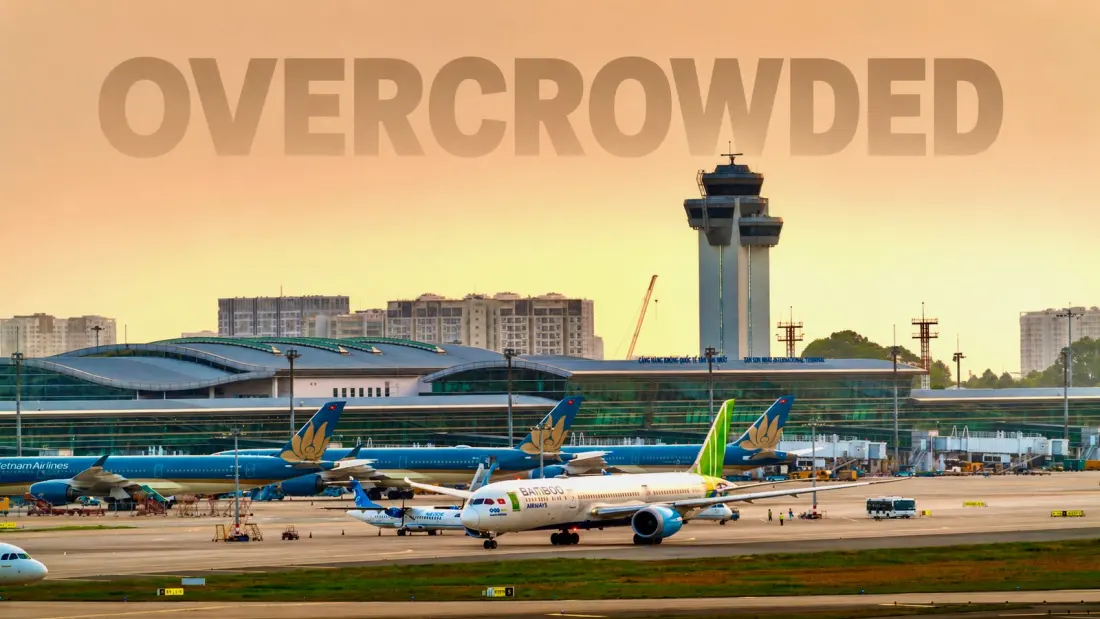
Ho Chi Minh City's Tan Son Nhat International Airport is buckling under its own success. The international terminal (Terminal 2) was designed for 8-10 million passengers a year, expanded to 13 million in 2018, and is now processing more than 18 million annually. A long-term resident and frequent flyer through the airport recently described what that means in practice: emigration queues that routinely hit 45 minutes (sometimes a full hour), VietJet check-in lines snaking across the terminal, and airport noodle soup priced around $25 when the same bowl costs roughly $3 outside.
It's not all grim. Despite the crush, the airport functions well enough - even on a single runway, flights are rarely delayed, and security after immigration usually takes only another 15 minutes. The waiting areas are dated and vendor options are limited, but the terminal's windows and main dining area have genuinely great runway views, which is partly why so many plane-spotting photos of Vietnamese aviation come from here. Duty-free exists but is modest, both landside and at baggage reclaim.
Practical differences between airlines matter here. Vietnam Airlines, AirAsia and other major carriers generally have acceptable check-in waits; VietJet is the outlier, and its passengers should arrive early. Arrivals are much the same story - 45 minutes at immigration is normal, 20 is a good day. All booths are typically staffed, and a few e-Gates exist but see little use. You'll need to complete Vietnam's online arrival card, and if you're using an eVisa, bring a printed copy - visa-free entry applies to British and most European passport holders, while Americans, Australians and New Zealanders can get a 90-day eVisa. Watch out for unofficial third-party eVisa sites.
On arrival, Grab e-hailing accepts international credit cards, but regular taxis usually want cash. A useful money tip: ACB bank ATMs reportedly charge no fees for international card withdrawals, which is rare in Vietnam. SIM cards are sold before immigration.
The airport layout has quirks worth planning around. Terminal 1 (VietJet domestic) and Terminal 2 (international) are a five-minute covered walk apart. Terminal 3 - modern, bright and efficient, home to Vietnam Airlines' domestic flights plus Bamboo Airways, Pacific Airlines, Vasco and Sun PhuQuoc Airways - is isolated, reachable only by a free shuttle or a 10-15 minute taxi through dense city traffic.
Relief is coming, but not immediately. Long Thanh International Airport, about an hour outside the city, is expected to open in late 2026 or early 2027 with an initial capacity of 25 million passengers, eventually scaling to 100 million. It will take over long-haul international flights, leaving Tan Son Nhat as a domestic and regional hub still handling around 40 million passengers by 2030. Terminal 1 is slated for demolition and rebuild, and new rail and road links between the two airports are underway, though connectivity remains the weak point for now.
For anyone flying through Saigon in the next couple of years, the takeaway is simple: pad your schedule, especially with VietJet, budget for inflated airport food, and expect immigration to eat most of an hour.