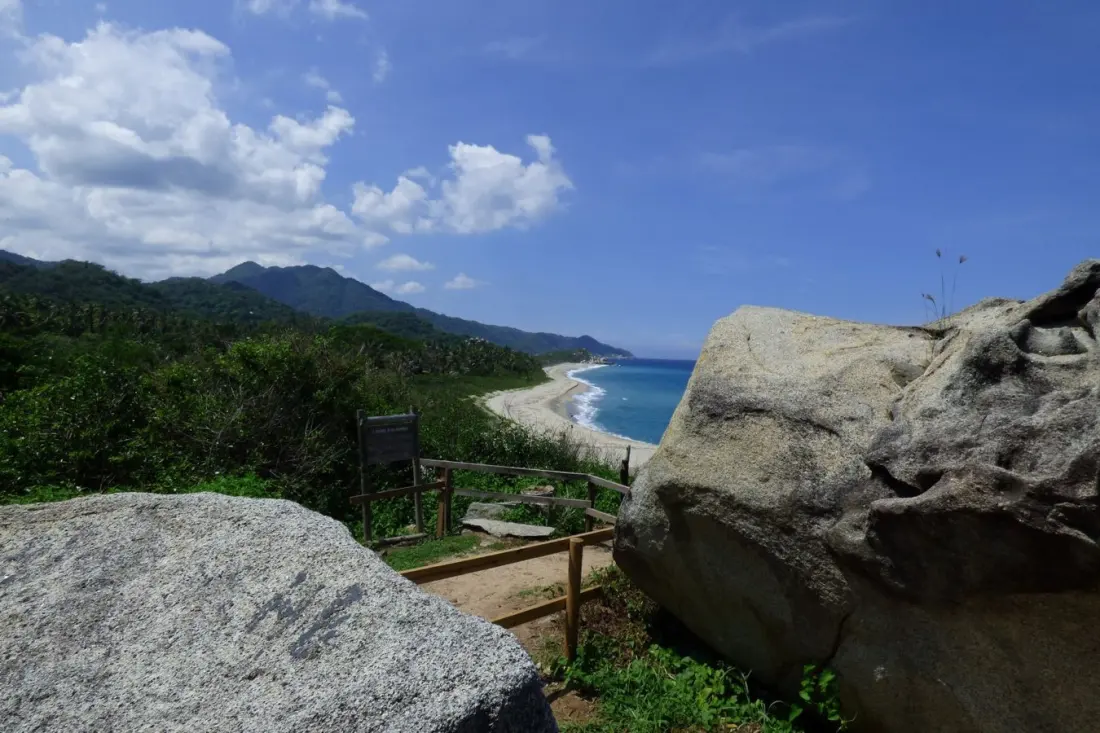
An hour or so from Santa Marta on Colombia's northern coast, Tayrona National Natural Park packs an unusual combination into one protected area: tropical rainforest sliding down to Caribbean beaches, the mountains of the Sierra Nevada de Santa Marta looming behind, and archaeological remains of pre-Hispanic settlements scattered through it all. It's one of the country's standout destinations — with a few quirks travellers need to plan around.
The park's headline attractions are its beaches, and they're not all equal. Cabo San Juan del Guia is the postcard: lush vegetation, rocky outcrops and turquoise water, usually reached on foot via forest trails — bring decent shoes and plenty of water, because the hike takes time. Playa Cristal, with its clear water and snorkelling when conditions allow, is typically accessed through the Palangana sector by land transfer, authorised boat, or a mix of both. Bahia Concha is the low-effort option, roughly 45 minutes from El Rodadero by road or a shorter boat ride, and a good pick if you want coastal scenery without a long trek. One warning applies park-wide: not every beach is safe for swimming, so stick to authorised areas and follow ranger instructions.
Beyond the sand, the trails are the point. The park protects forests, mangroves and marine ecosystems that shelter monkeys, reptiles and a long list of bird species, making it popular for hiking, birdwatching and photography. Sightings aren't guaranteed — walk quietly and stay on marked paths.
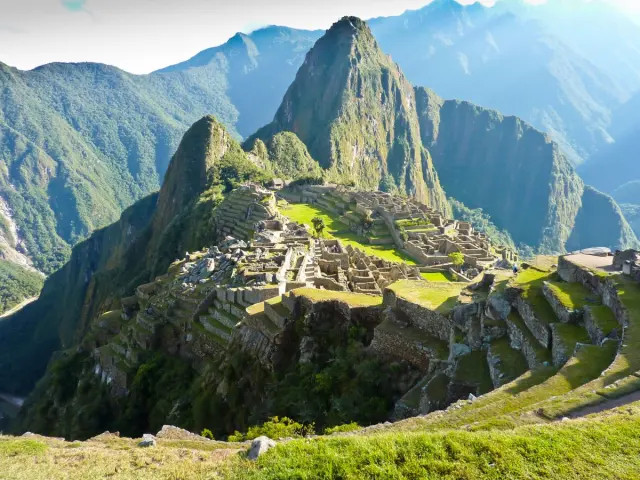
Tayrona is also culturally loaded. The territory belongs to the ancestral landscape of the Kogui, Wiwa, Arhuaco and Kankuamo peoples, and the archaeological site of Pueblito (Chairama), with its stone pathways and terraces, hints at how complex pre-Hispanic settlements here were. Access to archaeological areas can be restricted, and sacred sites are off-limits — treat any closure as non-negotiable.
The biggest practical detail: the park closes temporarily every year. The closures are a conservation measure that also allows Indigenous communities to carry out ceremonies and spiritual practices, and dates are announced by the Parques Nacionales Naturales de Colombia authority. Confirm the park is open, which entrances are operating, and entry times before you travel — don't assume all areas are accessible at once.
Who is this for? Anyone heading to Colombia's Caribbean coast who wants more than city-and-beach — hikers, wildlife watchers and travellers interested in Indigenous heritage will get the most out of it. Come prepared: comfortable footwear, sun protection, enough drinking water, and a commitment to packing out your own rubbish (single-use plastics are best avoided entirely). Entry may also require visitor assistance insurance and a fee, so check current requirements in advance. Swim only where permitted, don't feed or disturb animals, and leave plants, stones and shells where they are.
Done right, Tayrona rewards you with something rare — a Caribbean coastline where nature and living Indigenous traditions clearly set the rules, and visitors are guests rather than the main event.