There are two ways to reach Machu Picchu, and the choice shapes the whole shape of a Peru trip. The classic Inca Trail covers 43 kilometres over four days, topping out at Dead Woman's Pass at 4,215 metres — higher than Cusco and higher than the citadel itself. Walking days run six to nine hours on uneven stone steps, with camping at altitude in between. The train, by contrast, gets you from Ollantaytambo or Poroy to Aguas Calientes in one and a half to three hours, followed by a 25-minute bus ride up the switchbacks.
Surprisingly, fitness matters less than most trekkers assume — steady walkers in decent shape manage the trail. Altitude tolerance is the real variable, and it's hard to predict in advance. A quick rule of thumb: knee or heart issues, children under twelve, trips shorter than eight days, or no acclimatisation time all point to the train. If the walk itself is the point of your trip, the trail is the only answer.
The booking commitment differs sharply. Trail permits are capped at 500 per day including porters and guides, leaving roughly 200 spots for trekkers. Independent walking is illegal — you need a licensed operator — and June to August dates often sell out five or six months ahead. Permits are non-transferable: change your dates or your name and you lose the permit and the money. The trail also closes every February for maintenance. Train tickets with PeruRail or IncaRail are released closer to travel and rearranging costs only a change fee, though entry to the citadel itself requires a timed ticket on a fixed circuit with a four-hour window and no re-entry.
Costs aren't directly comparable. A four-day trek runs roughly $600–1,000 per person with a mid-range operator, but that bundles in permits, guides, porters, camping gear, all meals, entry and the return train. Train packages price separately — around $250–500 for a day trip from Cusco, with hotels, meals and guiding added on top — so a two-night version with a Sacred Valley stop can end up costing as much as the trek.
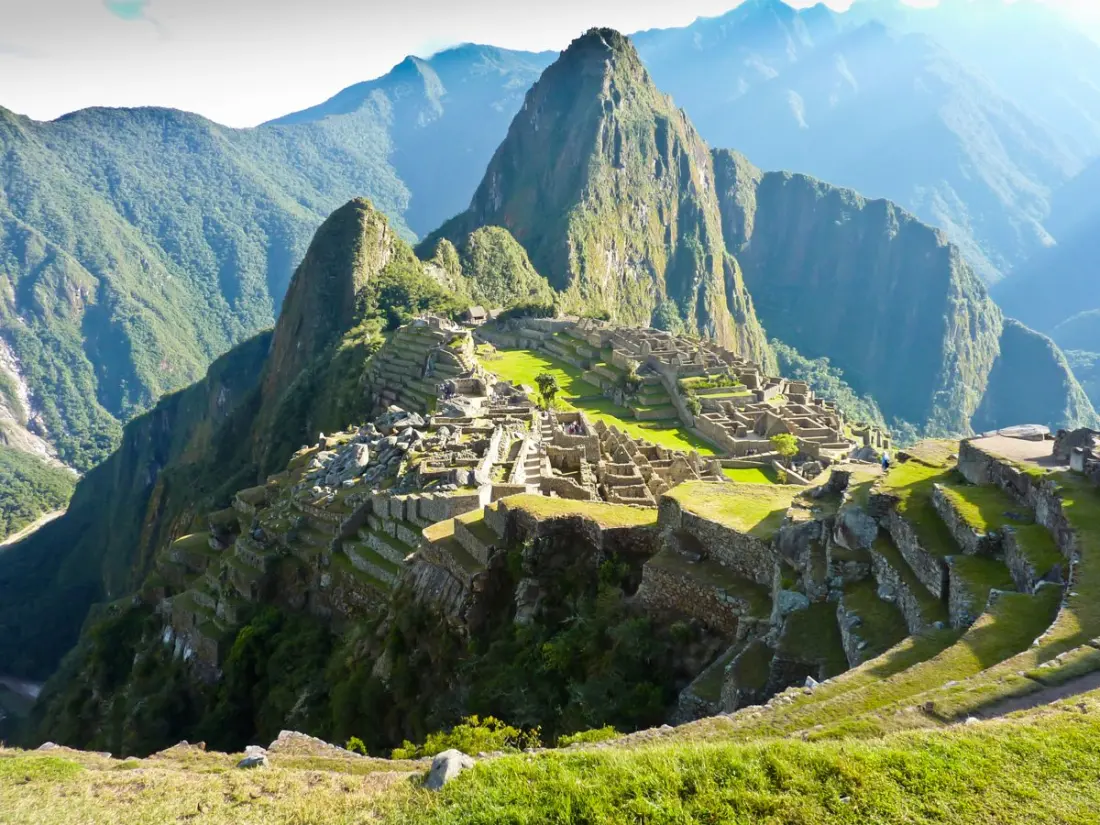
Arrival feels different too. Trekkers come in via the Sun Gate (Inti Punku) at around 6–7am on the final morning, seeing the citadel from above — weather permitting — after three nights of tents. Train passengers arrive rested through the main gate, and anyone staying overnight in Aguas Calientes can catch the first bus and have the terraces nearly empty at opening. The Sun Gate viewpoint is also walkable from inside the site, and the Huayna Picchu climb needs only a separate permit, so day visitors can taste some of the trek's rewards without the four-day slog.
Season matters for both. May to September brings the driest, most reliable conditions and the clearest views, but also the biggest crowds. November to March means muddy trail sections, occasional rail disruptions and far fewer people at the ruins. The practical first step: check permit availability for your dates. If they're gone, the decision makes itself — and the rest of your itinerary can be built around whichever route fits.