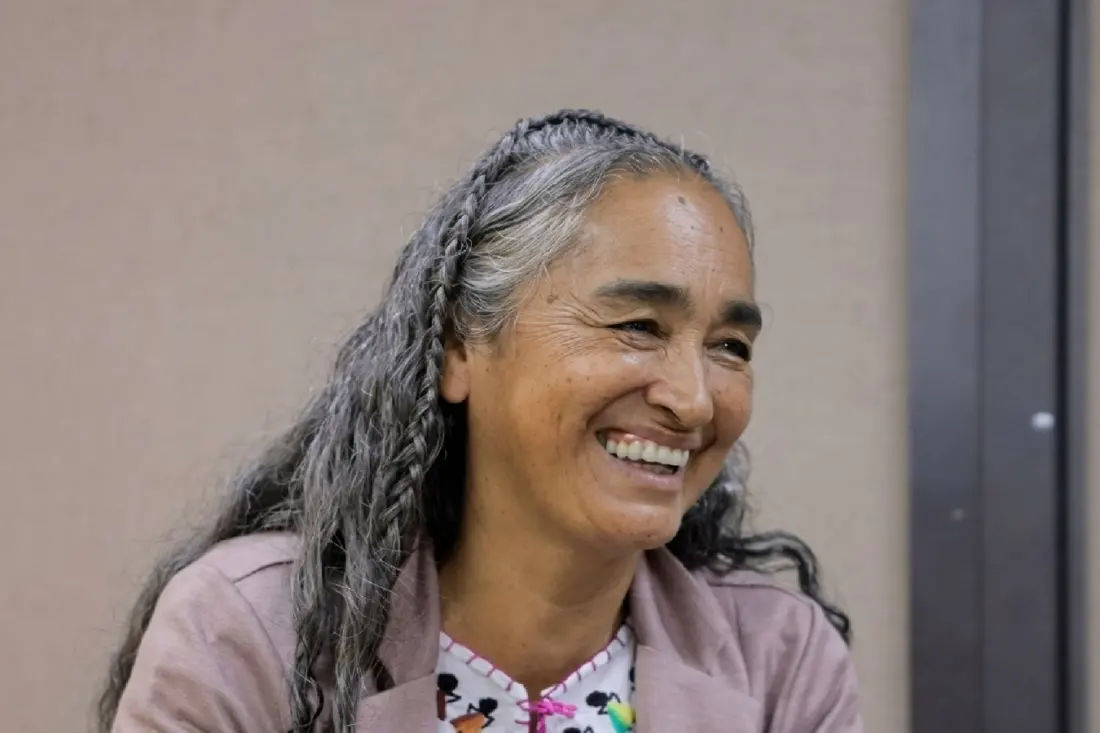
A coffee grower from Cauca in southern Colombia has set a national record, selling her beans for US$400 per pound at the International Hybrid Grand Auction in Bogotá — the highest price ever paid at a coffee auction in the country.
The story behind the sale is remarkable. Maria Nilsa Garzon Diaz lost her house in Rosas to a fire, and her municipality is regularly hit by natural disasters and security problems. She nearly missed the event altogether after a terrorist attack on the Pan-American Highway, the main route connecting Colombia's southwest with the capital. She made it anyway, taking a sample of her coffee to the fair organised by the National Federation of Coffee Growers (FNC) and Corferias.
Her 200-pound lot, sold under her Frutífero brand, drew 135 bids from an international field. Café 18, the specialty brand of exporter Banexport, ultimately secured it. Bids at these auctions usually start around US$100, according to Banexport co-owner Julián Ruiz — US$400 per pound is in a different league entirely.
The competition itself was sizeable: 1,048 lots were submitted, 55 preselected and judged by an international jury, and 12 reached the final. Buyers from Belgium, Japan, China, South Korea, Spain, the US, the UK, Germany, Taiwan, Malaysia, Turkey and Colombia took part. Antioquia fielded the largest grower delegation with 14, followed by Tolima with 13 and Huila with nine; Garzon Diaz was one of only two growers representing Cauca.
The record sale coincided with another notable announcement: the FNC unveiled Celestra, a new coffee variety developed by the National Coffee Research Center (Cenicafe). A cross between red Caturra and a wild Ethiopian lineage called ET42, Celestra is aimed squarely at the specialty market. It offers bright citrus acidity, a creamy body, and aromas of chocolate, coconut and caramel with grapefruit, ripe orange and yellow flower notes. The variety already proved itself at the Ninth National Filtered Coffee Championship, where barista Carlos Escobar used it to win. One caveat for growers: Celestra is susceptible to coffee leaf rust, so the FNC deliberately chose cup quality over disease resistance.
For travellers, this is a good moment to pay attention to Colombian coffee beyond the usual café con leche. Coffee-region destinations like Salento and Manizales, plus finca stays around Cauca and Huila, increasingly let visitors taste exactly these competition-winning lots — often at a fraction of the auction price. And the record underlines how much the specialty scene here has matured: the beans international judges fight over are grown, in many cases, by smallholder farmers a short drive from the towns travellers already visit.