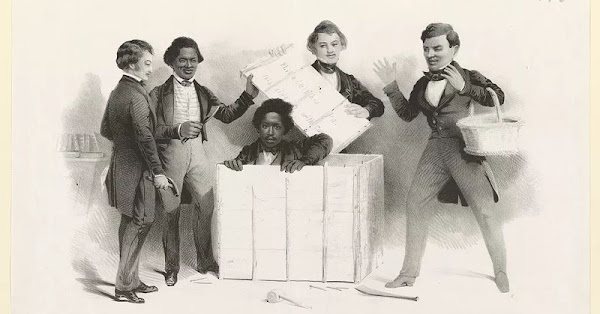
On 23 March 1849, a wooden crate about three feet long and two feet wide was nailed shut in Richmond, Virginia, and handed to the Adams Express Company. Inside was Henry Brown, an enslaved man who had decided the only way out of slavery was to post himself to freedom. Twenty-seven hours later, abolitionists in Philadelphia pried open the lid and he stepped out a free man — and history gave him the name Henry "Box" Brown.
Brown was born around 1815 in Louisa County, Virginia, and sent to Richmond as a young man to work in a tobacco factory. He earned extra money through overtime, rented a home for his wife Nancy and their children, and even paid Nancy's enslaver in the hope of keeping the family from being sold. It didn't work. In August 1848, Nancy — pregnant with their fourth child — and the three children were sold to a Methodist minister in North Carolina. Grief-stricken, Brown began plotting his escape.
He confided in James Caesar Anthony Smith, a free Black man from his church choir, who connected him with Samuel Alexander Smith, a white shoemaker willing to help. Together they settled on a plan that sounded absurd: pack Brown into a crate and ship him to Philadelphia, where Pennsylvania's abolitionist network — including James Miller McKim of the Pennsylvania Anti-Slavery Society — would receive him. Brown carried only water, biscuits and a tool for boring extra air holes. During the trip, carriers repeatedly ignored the "handle with care" markings, and the box spent hours upside-down at one point, leaving Brown with swelling eyes and blood pounding in his head. He survived, emerged on 24 March 1849, and toured the northern United States telling his story for the abolitionist cause.
After the Fugitive Slave Act of 1850 allowed enslavers to reclaim escaped people, Brown moved to England, performing as a hypnotist, magician and entertainer with a panorama depicting his escape. He returned to the US in 1875 after slavery was abolished by the Thirteenth Amendment, and continued performing until his death in Toronto in 1897. Today his story lives on in films, plays and an opera, and stands as one of the defining accounts of the Underground Railroad.
Why it matters for travellers: both ends of the route are visitable. Richmond, Virginia, has extensive Black history sites including the Liberty Trail through its old slave-trading district, while Philadelphia's Pennsylvania Anti-Slavery Society legacy is woven into Independence National Historical Park and the city's Underground Railroad landmarks. Anyone road-tripping the mid-Atlantic can trace the same corridor Brown's crate travelled — by wagon, rail and steamboat — in far more comfort than 27 hours.