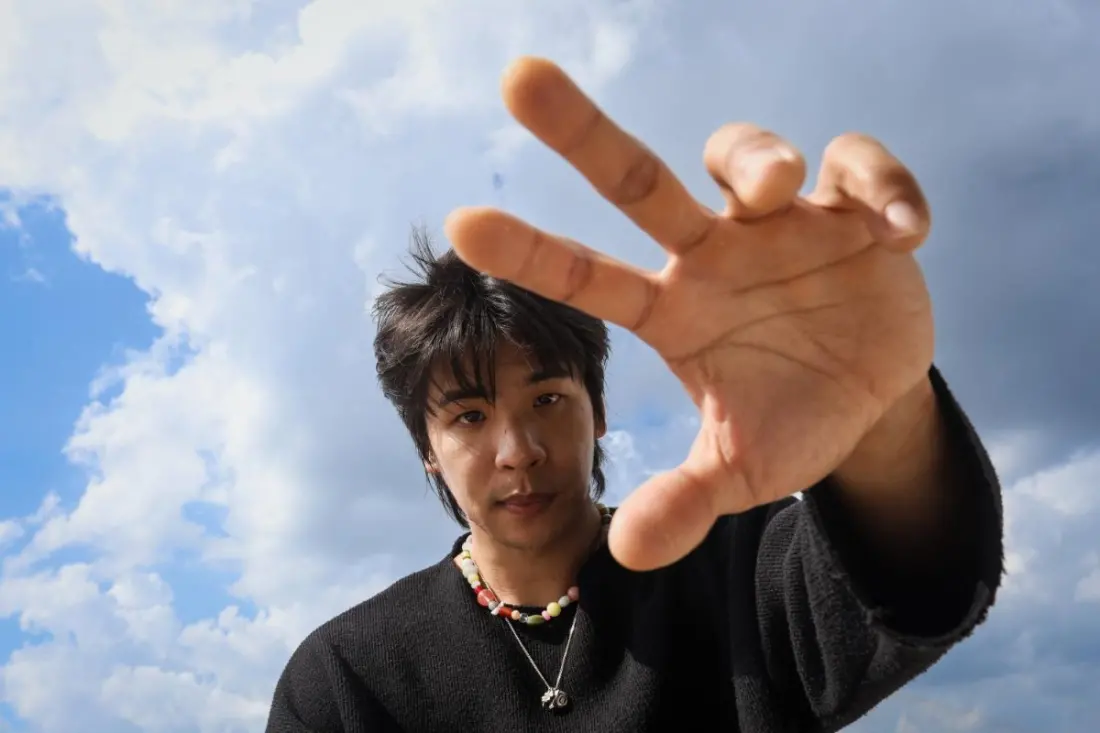
Aunna Tuamcharoen is eleven, has allergies, and spends most haze-season nights on medication. When she first tried a new rap song that doubles as a breathing exercise, she could only manage half the breath-hold challenge at its core. A month of daily practice later, she performed it on stage at the Dead Air Fest at Lhong 1919 in Bangkok — one day before the official event.
The track, called Lung Test, was written by rapper Tawanwad "TangBadVoice" Wannawat and launched on 7 September, International Day of Clean Air for Blue Skies. It's the latest chapter of #CountMeIn, a three-year Unicef Thailand initiative putting children's voices at the centre of climate conversations, created with the Thailand Clean Air Network (ThaiCAN). The song's centerpiece challenge — holding a single vowel for one breath — is a playful self-check on lung capacity, and Unicef Thailand wants kids to record it, share it online and challenge their friends.
Tang knows the problem personally. He grew up breathing haze in Chiang Mai, which ranked among the world's most polluted cities during this year's burning season, and spent years closing windows and running purifiers — his family once had five in a single room. At first he declined the commission. Then he reframed it: some days he was more haze than he was his own mother's son. For Lung Test, he turns the sound of breath into a call for something bigger — every child's right to clean air, enshrined in the Convention on the Rights of the Child.
The numbers behind the campaign are stark. PM2.5 levels topped 1,000 micrograms in one Thai province last year — twenty times the World Health Organization's safety threshold. Unicef estimates around 11 million Thai children are highly exposed, with under-fives most at risk because their lungs and brains are still forming. Globally, air pollution was linked to 8.1 million deaths in one year, according to the 2024 State of Global Air report. Research by Kasetsart University economist Witsanu Attavanich put the annual cost to Thai households at 2.26 trillion baht in 2023 — 11.94% of GDP — with Bangkok alone shouldering roughly 400 billion baht in losses, and families spending an estimated 6,152 baht per household during the 2019/2020 dust season.
The timing is deliberate. The Clean Air Act is now in its final stages of parliamentary consideration, and ThaiCAN's communication lead, Kanhana Apiripinok, says the campaign is meant to keep public pressure loud while legislators work. Tang, who says he never knew unhealthy air was something that could be changed until he sat down with air-quality experts to write the song, will help push the Act over the line through public talking — and may write a second or third campaign track if needed.
Organisers are clear-eyed about expectations: they don't expect a song to change adult behaviour directly, but hope kids having fun with it will catch parents' attention and build a louder youth voice for the generation growing up thinking smog is just weather. For travellers, it's a reminder that Thailand's haze season — typically January to April — is a real planning factor, especially in the north.