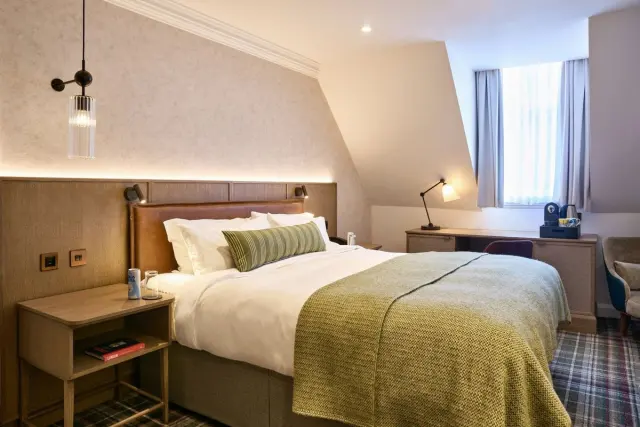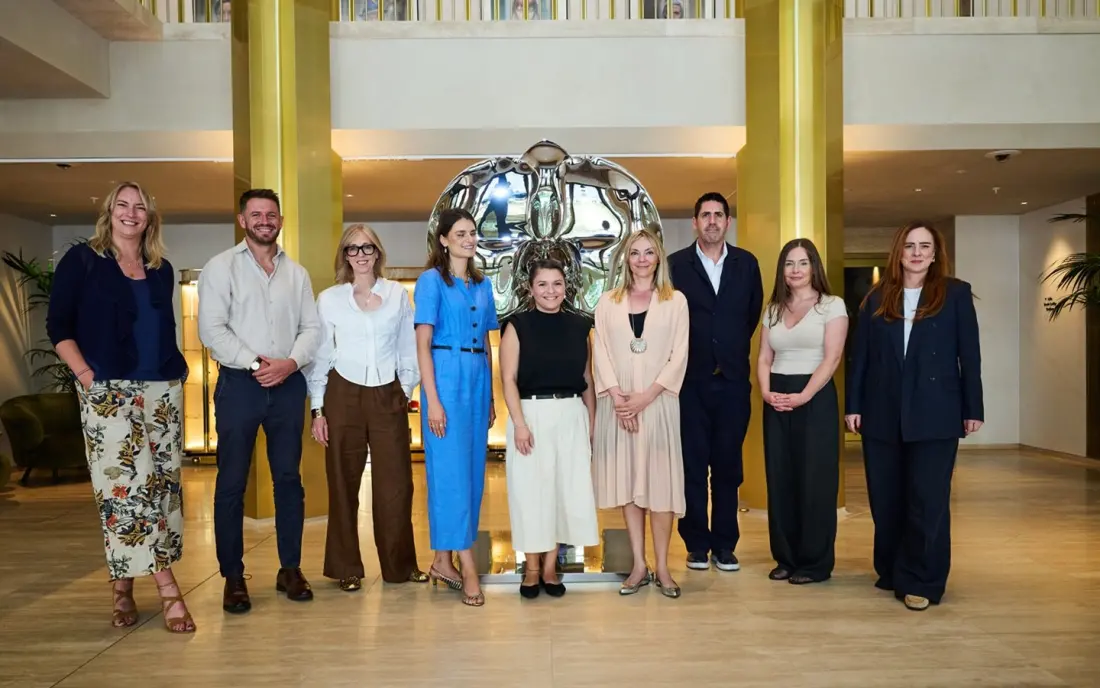
The Chancery Rosewood in Mayfair used to be the American Embassy. Today its rooms host hotel guests instead of visa queues — and that transformation was the backdrop for a recent Hotel Designs roundtable, held with lighting specialists Lutron, where architects and designers behind some of London's biggest hotel conversions compared notes on turning historic buildings into working hotels.
The consensus: heritage projects live or die on commercial maths. Natalia Miyar described the most common deal-killer — fire safety and environmental upgrade requirements eating so much internal volume that the room count drops below viability. Paul Gallacher of EPR Architects pointed to the NoMad London as a case study in flexibility: the building was first earmarked as a Hilton, but the brand's standards kept clashing with what the historic structure could physically accommodate. Switching to the NoMad brand solved the problem, because the concept fitted the building rather than fighting it. A similar recalibration happened elsewhere, where a client set on a Raffles was gently redirected to Fairmont after the story didn't ring true.
Technology came up as the quiet hero. Lutron's Nicolla Farry made the case for engaging specialists at concept stage — brought in late, wiring decisions become budget-driven compromises that show. Designers agreed the goal is infrastructure you never notice: in heritage buildings there's often no ceiling void or joinery to hide systems in, so placement takes invention. Done right, controls disappear entirely; one hotel is still running its 18-year-old public-area lighting system happily.
The panel also pushed back on two failure modes. Kim Partridge warned against over-sanitising — the creaks and quirks are part of the charm, and stripping them strips the soul. Maria Wojtowicz of Omnam flagged the opposite trap: treating a historic building like a museum. The best conversions, she argued, are contemporary interpretations, not nostalgia exercises. Nick de Klerk of Purcell framed it as an evolution — designers adding another layer to a building designed by long-dead collaborators, working with its nature rather than against it.
Community buy-in matters too. Gallacher recounted the Montcalm Brewery project near the Barbican, where EPR won over a famously exacting residents' association by consulting genuinely — learning names, listening, adjusting. Hotels that give neighbours somewhere good to get a coffee, he noted, can flip local opinion entirely.
Sustainability is increasingly the deciding factor. Jess Morrison of GA described the 1 Hotel Mayfair: the former Holiday Inn site was headed for demolition until the brand partnership made retention the obvious choice. Working within existing bay windows and a cramped footprint was hard, but the result is exactly the kind of understated, authentic luxury the brand promises. As Gallacher put it, the skill is seeing what a building should be, not what you want it to be.
For travellers, this is why converted landmarks feel different: the rooms that fit awkwardly, the entrance that now opens onto a public square, the invisible tech that lets a grand old shell function like a modern hotel. The panel unanimously preferred working on existing buildings to new builds — and that's a good sign for the next wave of heritage hotels. — Hotel Designs