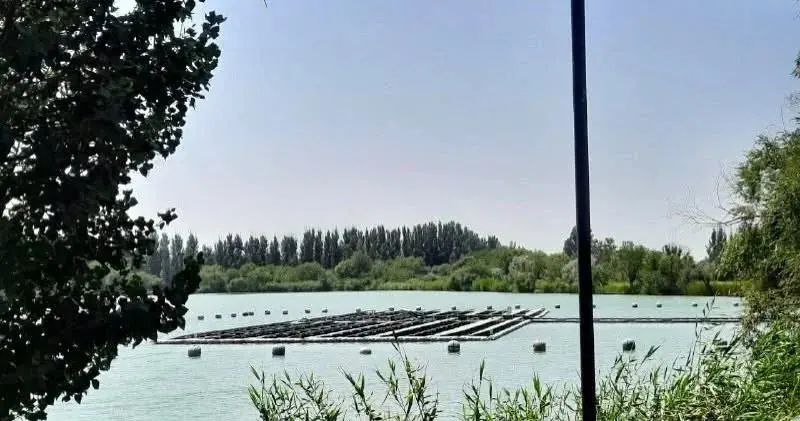
Kyrgyzstan is taking its solar ambitions onto the water. The Energy Ministry has confirmed plans for a 15-megawatt floating solar power plant, to be sited on the water surface next to hydropower plant No. 5 (HPP-5). The project will be delivered by Chakan HPP OJSC together with the Asian Development Bank, and it would be 150 times more powerful than the small pilot installation already floating at the same site.
The tender process is well under way. An international call for consultants to prepare the project drew applications from 22 companies across several countries, published via the ADB's tender portal. Six bidders have now been shortlisted to submit full proposals. What hasn't been announced yet: the construction cost, a start date, or when the plant might come online.
There's already a working proof of concept. A tiny 0.1 MW pilot floating solar plant was commissioned at HPP-5 on 1 March 2024, and it has been quietly producing ever since — roughly 133,900 kilowatt-hours in 2024, 141,100 kWh in 2025, and 132,500 kWh in the first ten months of 2026. The new plant will scale that experiment up dramatically.
The logic of floating solar is straightforward. Panels mounted on water don't eat up farmland or valley slopes — a real consideration in a mountainous country where flat land is scarce. The water also cools the panels and reduces evaporation from the reservoir. And by plugging into existing hydropower infrastructure — grid connections, transmission lines, operational expertise already on site — the project avoids building a lot of costly new supporting works. HPP-5 has experience running this kind of facility, which the Energy Ministry flagged as an advantage.
For Kyrgyzstan, the project fits a broader push to raise the share of renewables in its electricity mix. The country leans heavily on hydropower, which leaves it exposed in dry years, so adding solar capacity — especially hybrid setups that pair solar with existing dams — is a practical hedge. The ministry expects the plant to boost generation from renewable sources and expand solar's role in the national energy system.
For travellers, the takeaway is subtle but real. Kyrgyzstan has become a solid pick for trekkers, horseback riders and road-trippers around Issyk-Kul and the Tian Shan, and its appeal often depends on basic infrastructure working in remote areas. A grid that's adding diversified renewable capacity is better placed to keep guesthouses, mountain camps and small towns supplied, particularly through winter peaks when hydropower output dips. The HPP-5 site sits in the Chui valley corridor that most visitors cross en route from Bishkek to the lake region, so this is infrastructure built into the country's main travel artery.
Nothing is visitable yet — the 15 MW plant exists only as a tender, and even its pilot predecessor is a working facility rather than an attraction. The story to watch is whether Kyrgyzstan becomes one of Central Asia's more serious players in hybrid hydro-solar generation, a model other mountain states with big reservoirs are also eyeing.