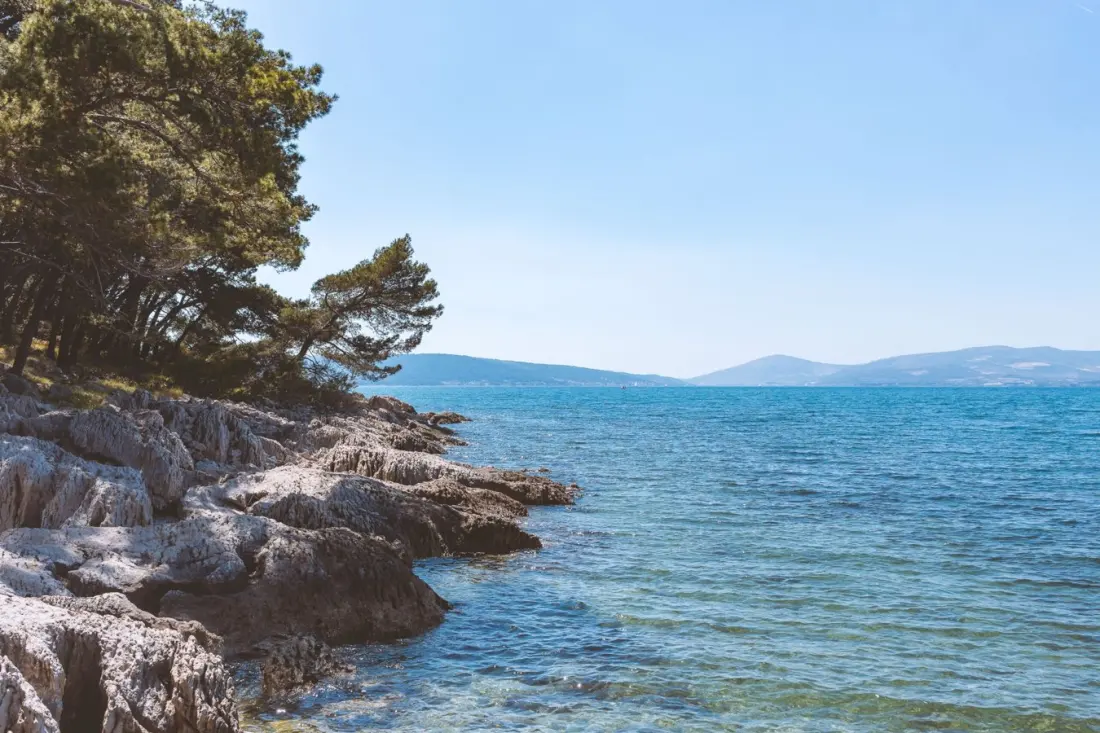
The Adriatic is heating up faster than almost anywhere in the Mediterranean. In its southern half, the upper 20 metres of water are warming at roughly 3°C per century in places, and this autumn's research shows deep waters accelerating too. For a country whose summers depend on that sea, this is not an abstract headline.
The wider Mediterranean region has warmed about 1.5°C above pre-industrial levels since the 1980s — ahead of the global pace. That means harsher heatwaves, droughts, fires and water shortages, all of which hit tourism, agriculture and forestry hardest. The World Bank estimates climate damage has cost Croatia around 0.7 percent of GDP every year since 1980.
So what can actually be done? Quite a bit, says Nicolas Entrup of OceanCare, a Swiss marine conservation NGO with UN consultative status. Some measures are immediate and surprisingly simple — like slowing ships down. Cutting just one or two knots from cruising speed lowers emissions, underwater noise and the risk of collisions with whales, and applying it fleet-wide across the Mediterranean would level the playing field for shipowners.
The bigger ask is political. OceanCare is pushing Mediterranean countries to agree a joint emissions reduction plan under the Barcelona Convention — which would be a first for any regional seas convention — and to halt exploration of new offshore oil and gas. France, Portugal and Spain have already stopped new drilling. A Basque Centre for Climate Change analysis warns the Mediterranean will burn through its share of the global carbon budget by 2035 unless emissions fall around six percent annually from 2030.
Croatia gets its moment in December 2027, when it hosts the Barcelona Convention parties. Entrup calls it a chance to "make history" — though the plan only works if Turkey and North African states come on board.
There are encouraging precedents. Since 2017, fishing restrictions in the Jabuka Pit between Croatia and Italy have let hake and Norway lobster stocks recover — visible proof, fishermen say, that protection pays. OceanCare wants a bottom-trawling ban starting in marine protected areas, citing habitat damage and carbon released from disturbed seabed sediment.
For travellers, the stakes are practical: warmer seas mean shifting catches, tropical and sometimes poisonous species moving in, and summers defined more by fires and water rationing. The places that act now — capping coastal development, cutting shipping emissions, protecting fish stocks — are the ones that will still be worth visiting in a couple of decades. Croatia hosting the 2027 summit is a small detail with potentially outsized consequences for everyone who swims in its water.
Story reported by Total Croatia.